



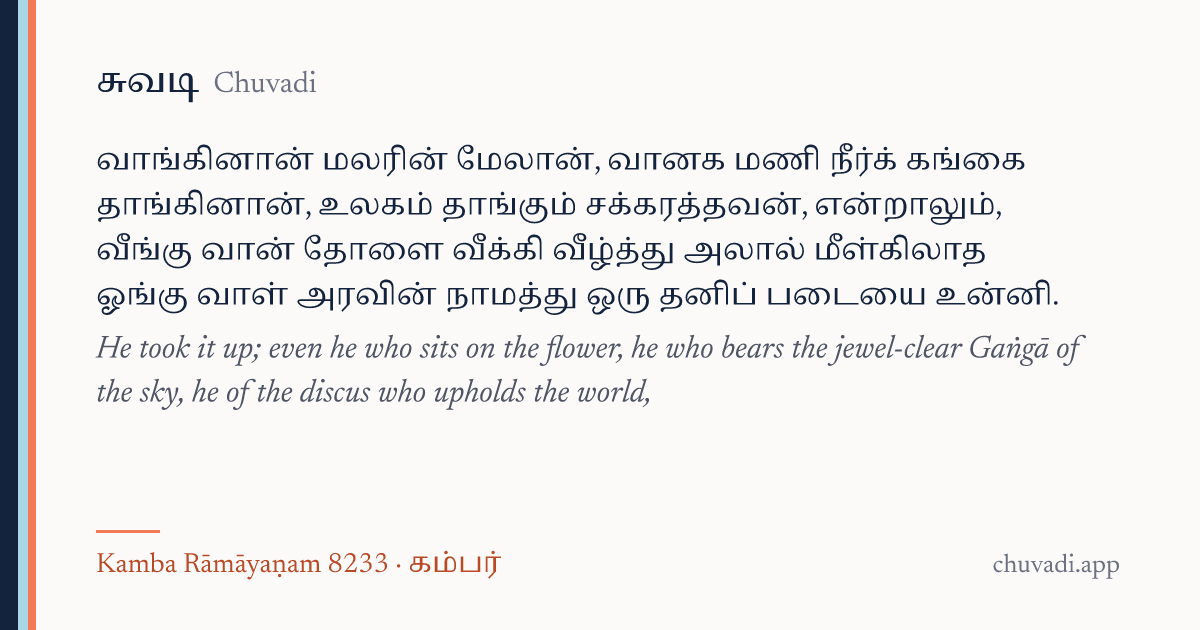
கம்பராமாயணம் 8233 · யுத்த 18.186
பாடல் · The poem
Tap a word to see its gloss in the commentary and where else it occurs.
பொருள் · Meaning in Tamil
மலரின் மேலான் - மாலின் திருஉந்தி வந்த பிரமனும்; வானக மணி நீர்க் கங்கை தாங்கினான் - வானத்தில் உள்ள நீலமணி போன்ற நீரினை உடைய ஆகாய கங்கையைத் தன் சடை முடியில் அணிந்த சிவனும்; உலகம் தாங்கும் சக்கரத்தவன் - உலகத்தைக் காக்கும் கடவுளாகிய சக்கரப் படையை ஏந்திய திருமாலும்; என்றாலும் - ஆகிய இவர்கள் என்றாலும்; வீங்கு வான் தோளை வீக்கி வீழ்த்து அலால் - பருத்த பெரிய தோள்களைக் கட்டி வீழ்த்தி அல்லது; மீள்கிலாத - வெறுமனே, மீண்டு வராத; ஓங்கு வாள் அரவின் நாமத்து - சிறந்த ஒளியுடைய பாம்பின் பெயரைக் கொண்ட, ஒரு தனிப்படையை உன்னி - ஒப்பற்ற கணையைச் சிந்தித்து; வாங்கினான் - அதற்கு உரிய மந்திரம் சொல்லி எடுத்தான்.
உலகம் தாங்கும் சக்கரத்தவன் - ஆதி கூர்ம ரூபியாய்க் கீழிருந்து உலகங்களைத் தாங்குகிற திருமால் எனக் கொள்ளலாம் என்பர் வை. மு.கோ.
ஆங்கிலம் · English translationAI
Translation
- He took it up; even he who sits on the flower, he who bears
- the jewel-clear Gaṅgā of the sky, he of the discus who upholds the world,
- it would bind their swelling, mighty shoulders and throw them down, and never return without doing so:
- thinking upon that one matchless weapon bearing the name of the great gleaming serpent.
What the poem says
Intiracittu calls up the nākapācam, the serpent-noose. Even Brahmā on his lotus, Śiva who carries the Gaṅgā in his hair, and Viṣṇu who holds the discus would be bound and thrown down by it, because once released it never comes back without binding its target.
He recites its spell and takes it in hand. The commentary adds that "he who upholds the world" may mean Viṣṇu as the cosmic tortoise who bears the worlds from below.