



கம்பராமாயணம் 8235 · யுத்த 18.188
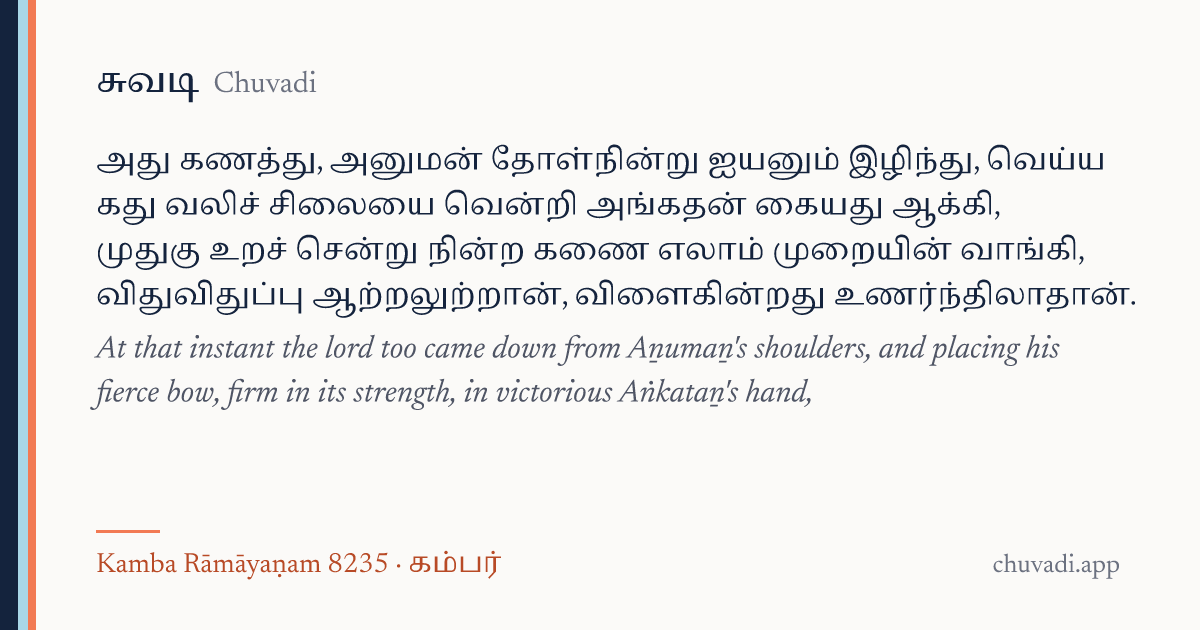
பாடல் · The poem
Tap a word to see its gloss in the commentary and where else it occurs.
பொருள் · Meaning in Tamil
அதுகணத்து - அந்தப் பொழுதில்; ஐயனும் - தலைவனாகிய இலக்குவனும்; விளைகின்றது உணர்ந்திலாதான் - நடக்க விருப்பவை எவற்றையும் உணராதவனாய்; அனுமன் தோள் நின்று இழிந்து - அனுமனது தோளில் இருந்து இறங்கி; வெய்ய வலிகது சிலையை - கொடுமையான வலிமை பொருந்திய வில்லினை; வென்றி அங்கதன் கையது ஆக்கி - வெற்றி பொருந்திய அங்கதன் கையில் உள்ளதாக ஆக்கி; முதுகு உறச் சென்று நின்ற - மார்பில் பட்டு முதுகு வழியாகப் பாய்ந்து (ஊடுருவாது) நின்ற; கணை எலாம் - (பகைவர்களுடைய) அம்புகளை எல்லாம்; முறையின் வாங்கி - முறைப்படி பறித்து (எடுத்துவிட்டு); விதுவிதுப்பு ஆற்றலுற்றான் - போரினால் ஏற்பட்ட களைப்பைப் போக்க இளைப்பாறத் தொடங்கினான்.
கதுவலி - வலிகதுவு என இயைக்க. கதுவுதல் - நீங்காது பற்றல். விதுவிதுப்பு - போர்க்களைப்பு, விதுவிதுப்பு எனக் கொள்ளின் போர் செய்தலினால் ஏற்பட்ட உணர்வுக் கழிப்பு எனலாம்.
ஆங்கிலம் · English translationAI
Translation
- At that instant the lord too came down from Aṉumaṉ's shoulders,
- and placing his fierce bow, firm in its strength, in victorious Aṅkataṉ's hand,
- he drew out one by one all the arrows that had gone in and stood lodged towards his back,
- and began to ease the strain of battle, not knowing what was coming.
What the poem says
Ilakkuvaṉ, unaware of the danger, climbs down from Aṉumaṉ's shoulders, gives his bow to Aṅkataṉ to hold, and starts pulling out the enemy arrows lodged in his body.
He sits down to rest from the fatigue of battle. The commentary explains vituvituppu as battle weariness and the word kaduvali as strength that never lets go.