



கம்பராமாயணம் 8236 · யுத்த 18.189
பாடல் · The poem
Tap a word to see its gloss in the commentary and where else it occurs.
பொருள் · Meaning in Tamil
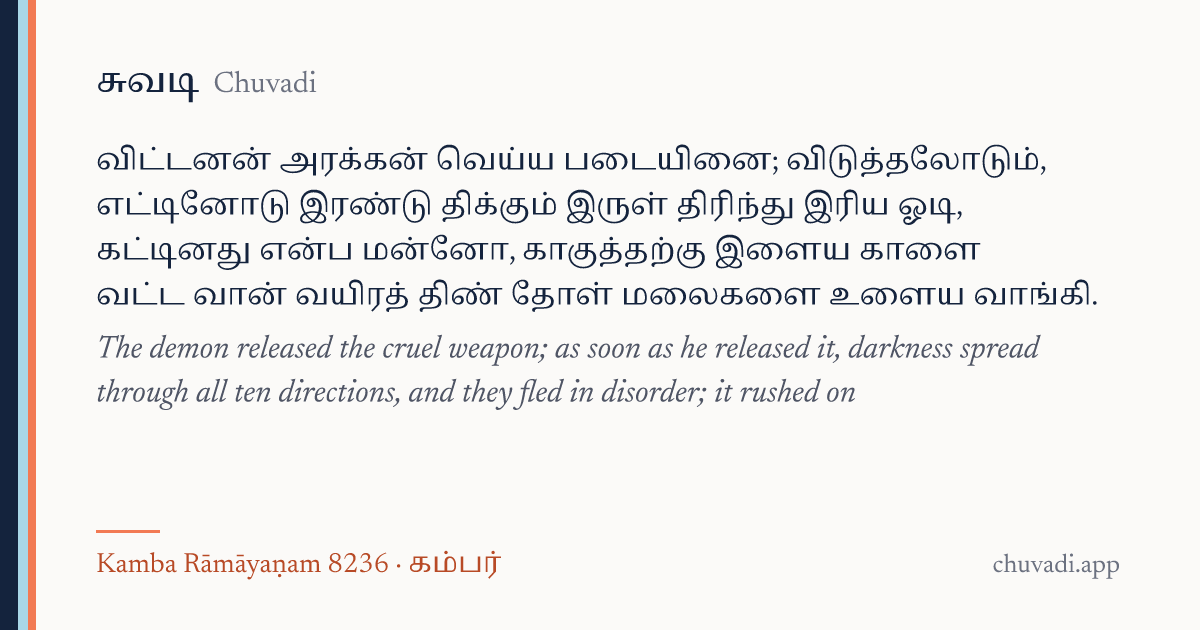
அரக்கன் - அரக்கனாகிய இந்திரசித்தன்; வெய்ய படையினை விட்டனன் - கொடிய நாகப் படையைச் செலுத்தினான்; விடுத்தலோடும் - (அவ்வாறு அவன் அதைச்) செலுத்திய அளவில்; எட்டினோடு இரண்டு திக்கும் - பத்துத் திசைகளிலும்; இருள்திரிந்து - இருள் பரவவும்; இரிய - (பகைவர்) நிலை கெட்டு ஓடவும்; ஓடி - விரைவாகச் சென்று; காகுத்தற்கு இளைய காளை - இராமனுக்கு இளையவனாகிய காளை போன்ற இலக்குவனின்; வட்டவான் வயிரத்திண் தோள் மலைகளை - திரண்ட ஒளியுடைய உறுதியான தோள்களாகிய மலைகளை; உளைய வாங்கி - வருந்தும் படி வளைத்துக்; கட்டினது என்ப - கட்டியது என்று சொல்லுவார்கள்.
காகுத்தன் - காகுத்தன் என்ற அரச மரபில் பிறந்தவன். புரஞ்சயன் என்ற அரசன் தன் வேண்டுகோளின்படி எருது வடிவம் கொண்டு வந்த இந்திரனின் மீது ஏறிப் பகைவரை வென்று அழித்து ககுஸ்தன் என்று பெயர் பெற்றதை வை. மு.கோ. விளக்கி உள்ளார். இலக்குவனை நாகபாசம் கட்டியது என்று கூறாமல் "கட்டினது என்ப" என்று கூறியுள்ள கம்பரின் இராம பக்தி நுட்பத்தை அறிந்து உணர்க. மன்னோ - இடைச்சொல் கழிவிரக்கப் பொருளில் வந்தது.
ஆங்கிலம் · English translationAI
Translation
- The demon released the cruel weapon; as soon as he released it,
- darkness spread through all ten directions, and they fled in disorder; it rushed on
- and bound, they say, alas, the young bull, the younger brother of Kākuttaṉ,
- bending in pain his round, bright, diamond-hard mountainous shoulders.
What the poem says
Intiracittu releases the serpent-noose. Darkness fills all ten directions and the monkeys scatter; the weapon coils round Ilakkuvaṉ's mighty shoulders and binds him tight.
The commentary notes Kampaṉ's reverence: instead of saying flatly that the noose bound Ilakkuvaṉ, he writes "they say it bound", with the particle maṉṉō voicing grief. Kākuttaṉ (Irāmaṉ) is named after the ancestor Purañjayaṉ, called Kakutstha, "seated on the hump", because he rode into battle on Intiraṉ, who had taken the form of a bull.