



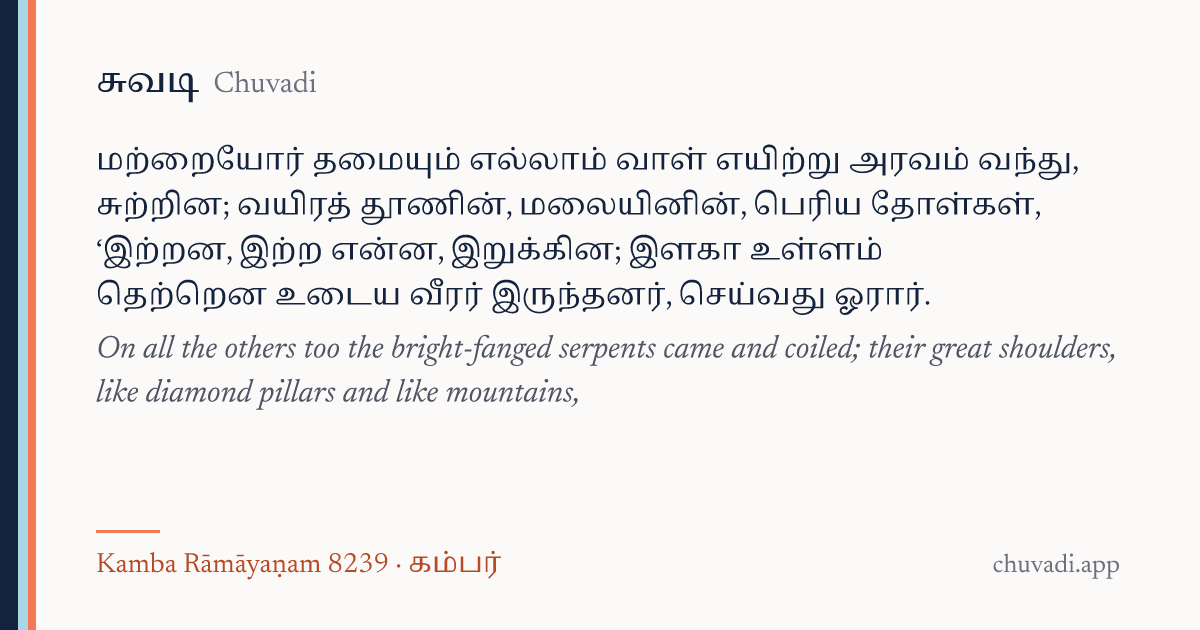
கம்பராமாயணம் 8239 · யுத்த 18.192
பாடல் · The poem
Tap a word to see its gloss in the commentary and where else it occurs.
பொருள் · Meaning in Tamil
வாள் எயிற்று அரவம் - (அந்த நாகக் கணையில் இருந்து வெளிப்பட்ட) ஒளி பொருந்திய பற்களை உடைய பாம்புகள்; மற்றையோர் தமையும் எல்லாம் - மற்றைய வானர வீரர்கள் எல்லோர் தம்மையும்; வந்து சுற்றின - வந்து சுற்றிச் சூழ்ந்து; வயிரத்தூணின் - வலிய தூண் போலவும்; மலையினின் - மலைகளைப் போலவும்; பெரிய தோள்கள் - (உள்ள) (அவர்களது வலிய) பெரிய தோள்கள்; இற்றன இற்ற என்ன - நொறுங்கிப் போயின; என்று அவர்கள் வாய் விட்டுக் கதறும்படியாக, இறுக்கின - அழுத்தி நொறுக்கின; இளகா உள்ளம் தெற்றென உடைய வீரர் - (வலி) குறையாத மனத்தைத் தெளிவுடன் பெற்றுடைய (அந்த) வீரர்கள் எல்லோரும்; செய்வது ஓரார் இருந்தனர் - செயத்தக்கது இதுவே என அறியாதவர்களாய் இருந்தனர்.
ஆங்கிலம் · English translationAI
Translation
- On all the others too the bright-fanged serpents came
- and coiled; their great shoulders, like diamond pillars and like mountains,
- they squeezed so hard that the warriors cried, "They are breaking, breaking!"; the heroes,
- whose hearts were firm and clear and never softened, stayed there, not knowing what to do.
What the poem says
The serpents from the noose wrap round all the other monkey warriors too and crush their pillar-like shoulders until they cry out that their bones are breaking.
These heroes do not lose heart, but they do not know what to do.