



கம்பராமாயணம் 8240 · யுத்த 18.193
பாடல் · The poem
Tap a word to see its gloss in the commentary and where else it occurs.
பொருள் · Meaning in Tamil
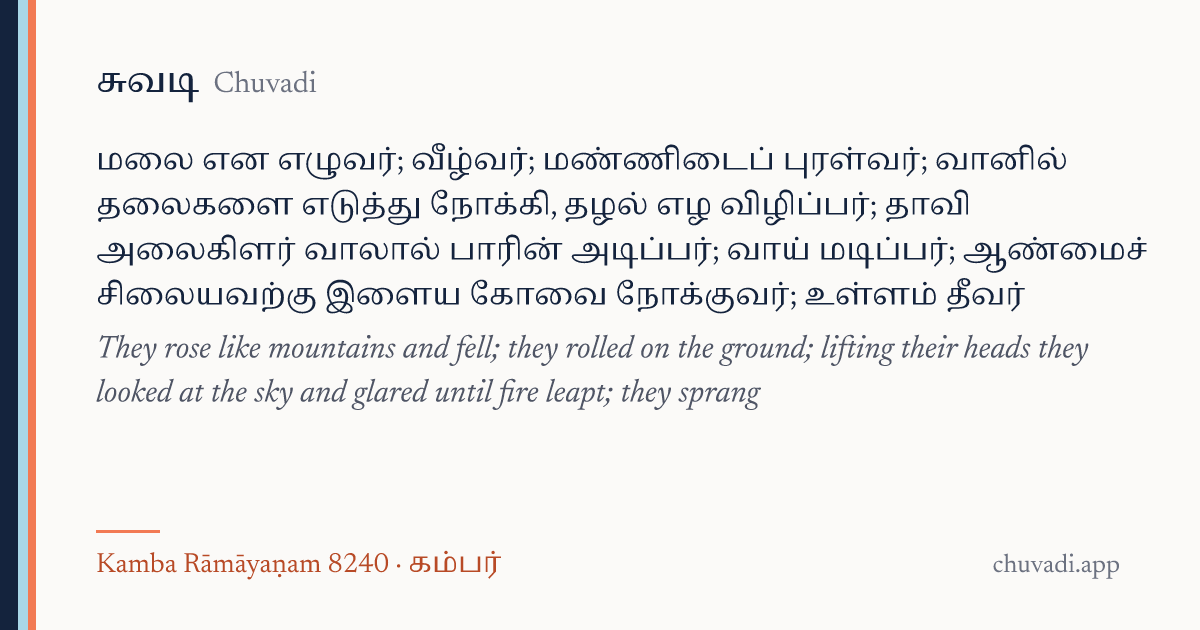
மலை என எழுவர் வீழ்வர் - (நாகக் கணையால் கட்டப்பட்ட வானரவீரர்கள்) மலைகள் மேல் எழுந்தது போல் எழுந்து கீழே விழுவர்; மண்ணிடைப் புரள்வர் - நிலத்திடைப் புரளுவார்கள்; வானில் தலைகளை எடுத்து நோக்கி தழல் எழ விழிப்பர் - வானத்தை நோக்கித் தலை எடுத்துப் பார்த்து நெருப்புப் பொறி வெளிப்பட விழிப்பார்கள்; தாவி அலைகிளர் வாலால் பாரின் அடிப்பர் - பாய்ந்து அலையும் தன்மை உள்ள எழுச்சியை உடைய வாலினால் தரையில் அடிப்பார்கள்; வாய் மடிப்பர் - வாயை மடித்து உதடுகளைக் கடிப்பார்கள்; ஆண்மைச் சிலையவற்கு இளைய கோவை நோக்குவர் - ஆண்மைத் தன்மை உள்ள வில்லேந்திய இராமனுக்குத் தம்பியாகிய இலக்குவனைப் பார்த்து; உள்ளம் தீவர் - மனம் கொதிப்பு அடைவார்கள்.
இப்பாடலில் மூன்று உணர்ச்சிகள் கூறப்பட்டுள்ளதாக வை.மு. கோ. கருதுகிறார், எழுதல், வீழ்தல், புரள்தல் - நாகக்கணை இறுக்குதலால் தோன்றும் துன்பம். தழல் எழ விழித்தல், வால் அடித்தல், வாய் மடித்தல் - வெகுளி, உள்ளம் தீதல் - அச்சத்தாலும் நிகழ்ந்தன என்க. சோகம் என்பர் வை. மு.கோ.
ஆங்கிலம் · English translationAI
Translation
- They rose like mountains and fell; they rolled on the ground; lifting their heads
- they looked at the sky and glared until fire leapt; they sprang
- and beat the earth with their lashing tails; they bit their lips; they looked
- at the younger brother of him with the manly bow, and their hearts burned.
What the poem says
The bound monkeys struggle. They heave themselves up and fall back, roll on the ground, glare at the sky where the enemy hides, thrash their tails and bite their lips. When they look at Ilakkuvaṉ in bonds, their hearts burn.
The commentary, following another scholar, sorts these into three feelings: rising, falling and rolling show pain; glaring, lashing and lip-biting show anger; burning hearts show fear, or grief.