



கம்பராமாயணம் 8241 · யுத்த 18.194
பாடல் · The poem
Tap a word to see its gloss in the commentary and where else it occurs.
பாட வேறுபாடு · Project Madurai reads
பொருள் · Meaning in Tamil
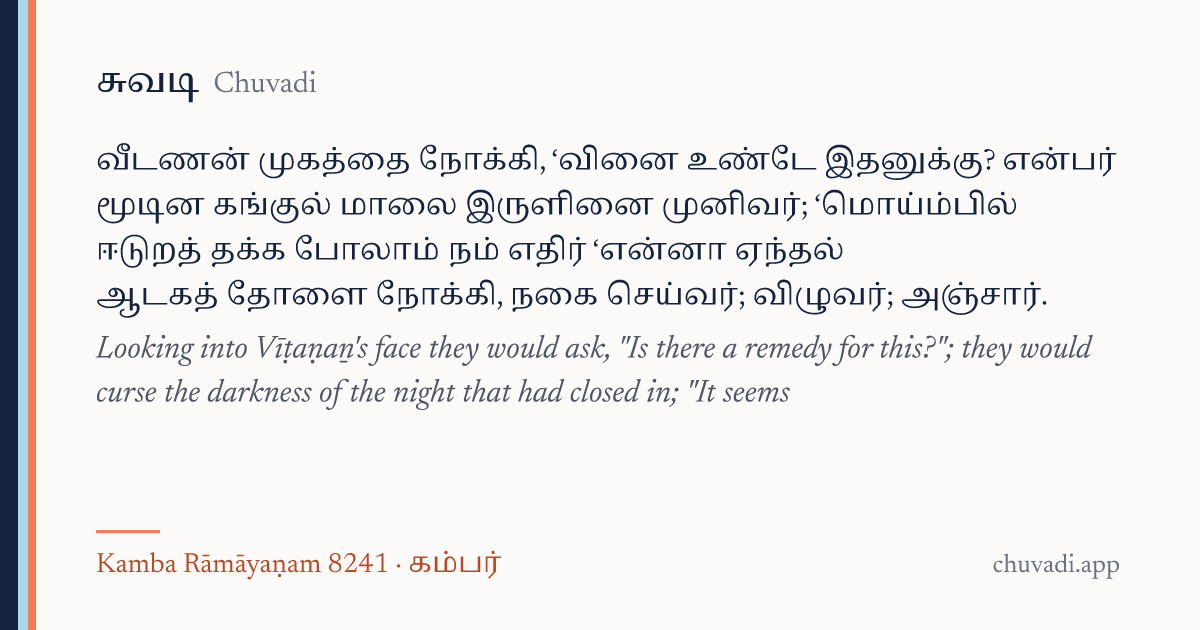
வீடணன் முகத்தை நோக்கி - (மேலும் அந்த வீரர்கள்) வீடணனுடைய முகத்தைப் பார்த்து; இதனுக்கு - இதற்கு; வினை உண்டோ என்பர் - ஏதாவது பரிகாரச் செயல் உள்ளதோ? என்று கேட்பார்கள்; மூடின கங்குல் மாலை இருளினை முனிவர் - (தாங்கள் நாகக் கணையால் கட்டப்பட்டு வருந்தக் காரணமாக இருந்த) நெருங்கிய திரட்சியான தன்மை உடைய இருளைச் சினப்பார்கள்; ஏந்தல் ஆடகத் தோளை நோக்கி - இலக்குவனது பொன் போன்ற தோளைப் பார்த்து; நம் எதிர் - நம் கண் எதிரில்; ஈடுறத் தக்க போலாம் - (இத்தோள்கள்) வலிய பெருமை குறையத் தக்கனவாயினவே; என்னா - என்று வருந்திக் கூறி; நகைசெய்வர் - சிரிப்பார்கள்; விழுவர் - (நிலத்தில்) விழுவார்கள்; அஞ்சார் - (அந்த நேரத்திலும்) அச்சம் கொள்ளாதிருப்பார்கள்.
தங்கள் கண்ணெதிரில் இலக்குவன் கட்டப்பட்டுக் கிடப்பதற்குக் காரணமான விதியை இகழ்ந்து சிரித்தனர் என்க. எள்ளலடிப்படையாக வந்த நகை.
ஆங்கிலம் · English translationAI
Translation
- Looking into Vīṭaṇaṉ's face they would ask, "Is there a remedy for this?";
- they would curse the darkness of the night that had closed in; "It seems
- they can be brought low before our eyes," they would say, looking at the lord's
- golden shoulders, and they would laugh; they would fall; they were not afraid.
What the poem says
The bound monkeys turn to Vīṭaṇaṉ, who knows demon magic, and ask whether there is any cure. They curse the darkness that let the sorcerer hide.
Seeing Ilakkuvaṉ's golden shoulders, which they thought invincible, bound before their eyes, they laugh. The commentary explains this as bitter, mocking laughter at fate. Even so, they do not give way to fear.