



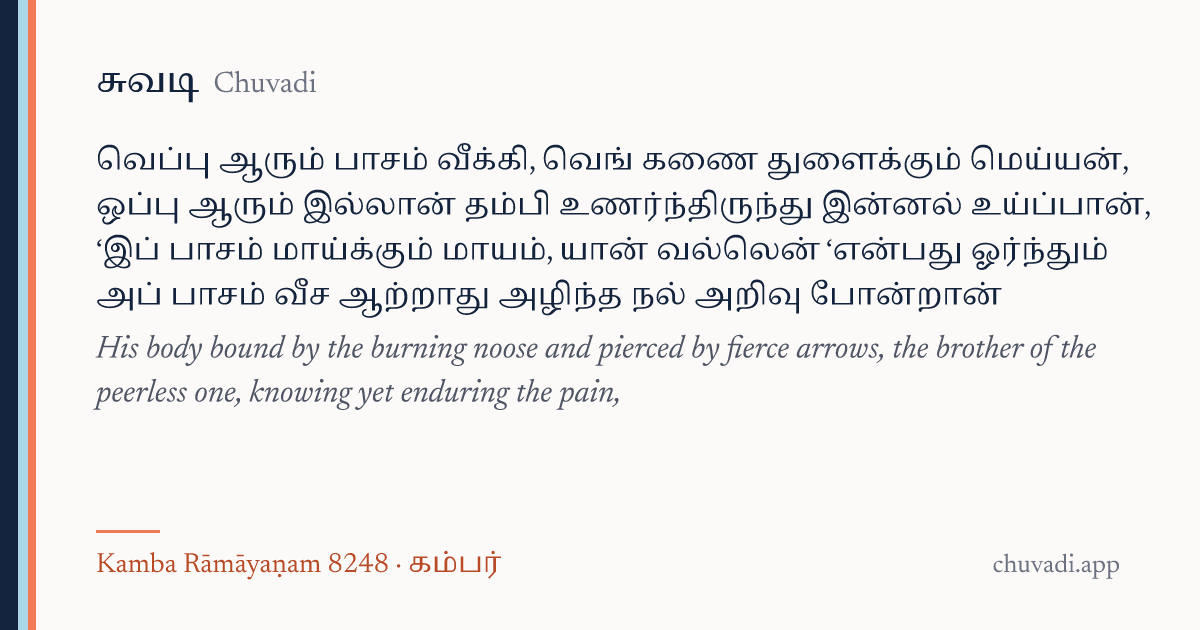
கம்பராமாயணம் 8248 · யுத்த 18.201
பாடல் · The poem
Tap a word to see its gloss in the commentary and where else it occurs.
பொருள் · Meaning in Tamil
ஒப்பு ஆரும் இல்லான் தம்பி - தனக்கு உவமையில்லாத இராமனுடைய தம்பியாகிய இலக்குவன்; வெப்பு ஆரும் நாக பாசம் வீக்கி - கொடுமை பொருந்திய நாகக்கணையால் கட்டுப்பட்டு; வெங்கணை துளைக்கும் மெய்யன் - கொடிய அம்புகள் துளைக்கிற உடம்பை உடையவனாய்; உணர்ந்திருந்து இன்னல் உய்ப்பான் - (அதனை நீக்கும் வழியை) உணர்ந்து (அதற்கு உரிய வல்லமை பெற்று இருந்தும்) துன்பத்தில் (தன்னைச்) செலுத்திக் கொள்ளுபவனாய்; இப்பாசம் மாய்க்கும் மாயம் - இந்த உலக பாசத்தை அழிக்கும் மாய சக்தியில்; யான் வல்லென் என்பது ஓர்ந்தும் - யான் வல்லவன் என்பதை எண்ணி உணர்ந்திருந்தும்; அப்பாசம் வீச - அந்த உலக பாசம் (தன்னைத் தாக்க); ஆற்றாது - (அதற்கு) ஈடாக முடியாது; அழிந்த நல் அறிவு போன்றான் - அழிந்து போன நல்ல ஞானத்தை ஒத்திருந்தான்.
ஒருவனுக்குப் பாசத்தை நீக்கும் வல்லமை இருந்தாலும் விதியின் வலிமையால் அதைச் செய்ய முடியாதவாறு போல நாகக் கணையை நீக்கும் வல்லமை பெற்றிருந்தும் மானுட பாவனையால் அவ்வாறு செய்யாது இலக்குவன் கட்டுண்டு வருந்தினன் என்க. அறிவு - ஆன்மா எனக் கொள்வர் வை.மு. கோ.
ஆங்கிலம் · English translationAI
Translation
- His body bound by the burning noose and pierced by fierce arrows,
- the brother of the peerless one, knowing yet enduring the pain,
- was like true wisdom that, though it knows, "I have the power to undo this bondage,"
- is overcome and cannot withstand that bond when it is cast upon it.
What the poem says
Ilakkuvaṉ lies bound and pierced. The poet suggests he could free himself but chooses to suffer, and compares him to wisdom that knows it can dissolve worldly bondage (pācam) yet is still overcome when that bondage strikes. The word pācam means both the serpent-noose and the soul's attachment to the world.
The commentary explains that Ilakkuvaṉ, though divine, plays the part of a man and so submits to the noose, as a soul able to break its bonds may still be held by fate. One scholar reads "wisdom" as the soul itself.