



கம்பராமாயணம் 8252 · யுத்த 18.205
பாடல் · The poem
Tap a word to see its gloss in the commentary and where else it occurs.
பாட வேறுபாடு · Project Madurai reads
பொருள் · Meaning in Tamil
ஈர்க்கு அடையப் பகழிமாரி - இறகுகளை உடைய அம்பாகிய மழையினால்; இலக்குவன் என்ன நின்ற - இலக்குவன் என்று பெயர் கொண்டு நின்ற; நீர்க்கடை மேகம் தன்னை நீக்கியும் - நற்குணங்களை உடைய மேகம் போன்றவனாகிய இலக்குவன் தன்னை அழித்தும்; செருவின் நீங்கான் - போர் செய்தலில் இருந்து நீங்காதவனாய் (திரும்பி வந்த இந்திரசித்தன்); வார்க் கடை மதுகைக் கொங்கை - கச்சையைக் கடந்து நிற்றலை உடைய வலிமையைக் கொண்ட கொங்கைகளையும்; மணிக்குறு முறுவல் மாதர் - அழகிய புன்சிரிப்பையும் உடைய பெண்களின்; போர்க் கடைக்கருங்கண் - போர்த் தொழிலைச் செய்கிற கடைக் கருங்கண்களாகிய; வாளி - அம்புகள்; புயத்தொடும் பொழியப் புக்கான் - (தன்) தோள்களில் பொழிந்து கொண்டிருக்கப் புக்கான்.
ஆங்கிலம் · English translationAI
Translation
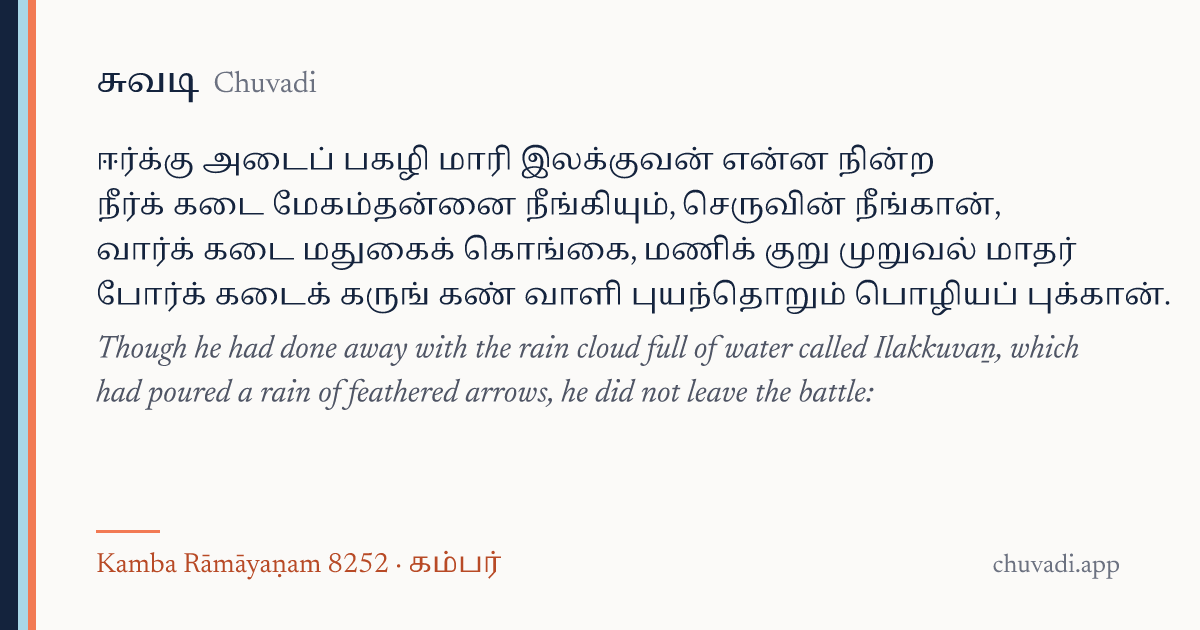
- Though he had done away with the rain cloud full of water called Ilakkuvaṉ,
- which had poured a rain of feathered arrows, he did not leave the battle:
- he went in, while women with full breasts straining their bodices and jewel-bright small smiles
- rained on his shoulders the arrows of their dark eyes, fierce in the corners.
What the poem says
A playful turn as Intiracittu returns. He has destroyed Ilakkuvaṉ, the "rain cloud" that poured arrows, yet his battle is not over, because as he enters, the palace women shoot glances from the corners of their dark eyes at his shoulders.
The image of eyes as arrows is a stock convention of Tamil love poetry, set here against the real arrows of the field.