



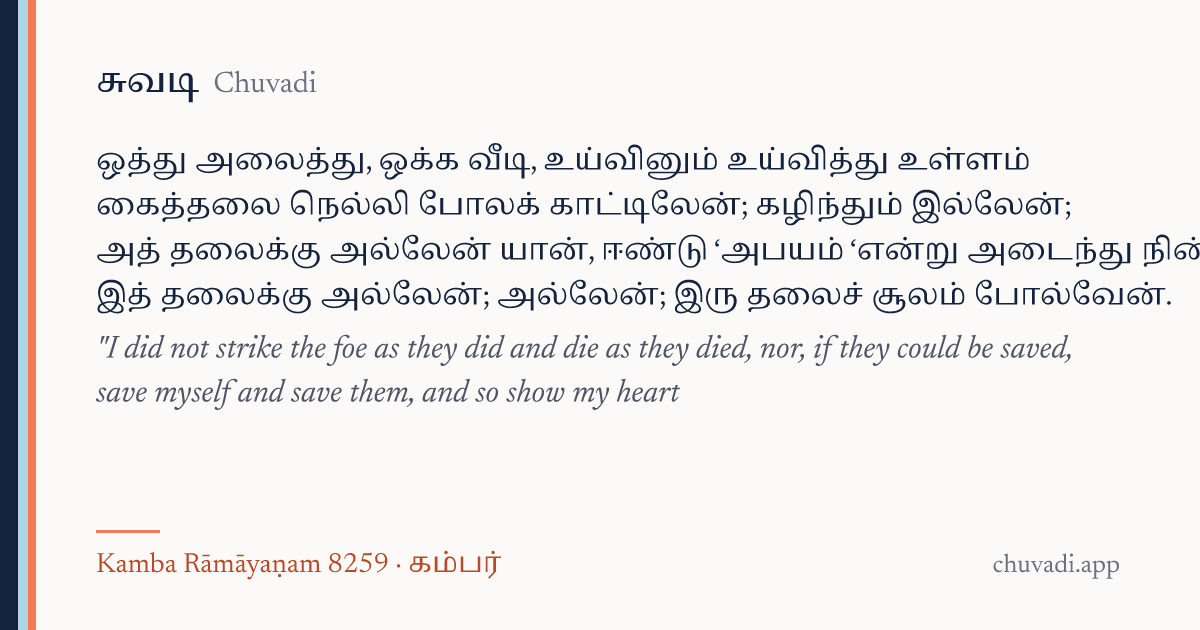
கம்பராமாயணம் 8259 · யுத்த 18.212
பாடல் · The poem
Tap a word to see its gloss in the commentary and where else it occurs.
பாட வேறுபாடு · Project Madurai reads
பொருள் · Meaning in Tamil
ஒத்து அலைத்து - (வானர வீரர்களுடன்) ஒப்பாகப் (பகைவர்களை) வருத்தி; ஒக்க வீடி - (அவர்கள் இறக்கும் நிலை வரின் நானும் அவர்களுக்கு) ஒப்பாக இறந்து, உய்வினும் உய்வித்து - (வாழ்ந்து) உய்யும் நெறிகள் (இருப்பின்) யானும் பிழைத்து (அவர்களையும்) பிழைப்பித்து; உள்ளம் - (என் பக்தியுள்ள) மனத்தின் (தன்மையை); கைத்தலை நெல்லி போலக் காட்டிலேன் - உள்ளங்கையிடத்தில் உள்ள நெல்லிக்கனி போல விளக்கிக் காட்டினேன் அல்லன்; கழிந்தும் இல்லேன் - (யான்) இறந்து போகவுமில்லை; யான் அத்தலைக்கு அல்லேன் - நான் அவ்விடத்துக்கு (இராவணன் பக்கத்துக்கு) வேண்டாதவனானேன்; ஈண்டு அபயம் என்று அடைந்து நின்று - இங்கு (வந்து) சரண் என்று சேர்ந்து நின்ற; இத்தலைக்கு அல்லேன் அல்லேன் - இந்தப் பக்கத்துக்கும் (இராமன் பக்கத்துக்கும்) வேண்டாதவனானேன்; இருதலைச் சூலம் போல்வேன் - இரண்டு பிரிவாக உள்ள சூலத்தைப் போன்றவனானேன்.
சூலத்தின் முனைகள் ஒன்றிணையாது வேறு வேறாக நிற்றல் போலச் சூலத்தின் கைப்பிடி போன்ற தான் எப்பக்கத்திலும் இணைய முடியாதபடி தனித்து நின்று விட்டேனே என வருந்தியபடி.
ஆங்கிலம் · English translationAI
Translation
- "I did not strike the foe as they did and die as they died, nor, if they could be saved,
- save myself and save them, and so show my heart
- plain as a gooseberry in the palm of the hand; nor have I perished;
- I belong not to that side, nor to this side where I came and stood crying 'Refuge'; I am like a two-pronged trident."
What the poem says
Vīṭaṇaṉ grieves that he neither fought and died alongside the monkeys nor found a way to rescue them and himself, which would have made his loyalty as obvious as a gooseberry held in the open hand, a proverbial image of something plain to see.
He feels he now belongs to neither Irāvaṇaṉ's side nor Irāmaṉ's, where he came seeking refuge. The commentary explains the trident image: the two prongs point in different directions, and the handle, like Vīṭaṇaṉ, is joined to neither.