



கம்பராமாயணம் 826 · பால 13.22
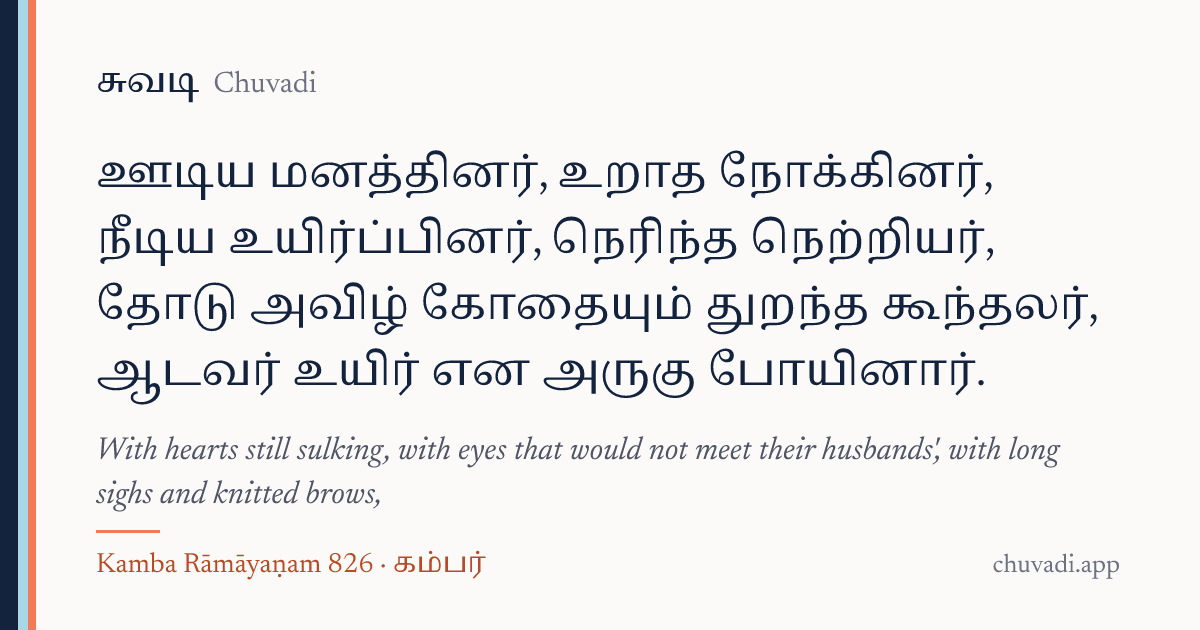
பாடல் · The poem
Tap a word to see its gloss in the commentary and where else it occurs.
பாட வேறுபாடு · Project Madurai reads
பொருள் · Meaning in Tamil
ஊடிய மனத்தினர் - (தம் கணவர்மீது) பிணக்கு கொண்ட மகளிரும்; உறாத நோக்கினர் - (தம் கணவர்மீது) கண்பார்வையைச் செலுத்தாதவர்களும்; நீடிய உயிர்ப்பினர் - பெருமூச்சு விடுபவர்களும்; நெரிந்த நெற்றியர் - (கோபத்தால்) புருவம் நெரிந்த நெற்றியையுடையவர்களும்; தோடு அவிழ் கோதையும் - இதழ் விரிந்த மலர் மாலையையும்; துறந்த கூந்தலர் - துறந்த கூந்தலும் உடையவர்களாகிய மகளிர்; ஆடவர் உயிரென - ஆண்களது உயிர் பெண்ணுருக் கொண்டதுபோல என்று சொல்லுமாறு; அருகு - (அந்த ஆடவரின்) பக்கத்திலே; போயினார் - சென்றார்கள்.
முன்பு ஊடின பெண்கள் இராமனது திருமணச் செய்தி கேட்டவுடன், அவ் ஊடல் நீங்கித் தத்தம் கணவரோடு அவர்களின் உயிர்போலச் சென்றனர் என்பது. தன்மை நவிற்சியணி.
ஆங்கிலம் · English translationAI
Translation
- With hearts still sulking, with eyes that would not meet their husbands',
- with long sighs and knitted brows,
- with hair stripped even of its garlands of opening petals,
- the women walked beside the men as though they were the men's own lives.
What the poem says
Some wives in the procession are in the middle of a lovers' quarrel: they sigh, frown, refuse to look at their husbands, and have pulled the flowers out of their hair.
Yet the joy of the royal wedding draws them along, and they walk close beside their husbands, so inseparable that they seem to be the men's very lives in a woman's form. The verse describes a familiar scene plainly, as it is.