



கம்பராமாயணம் 827 · பால 13.23
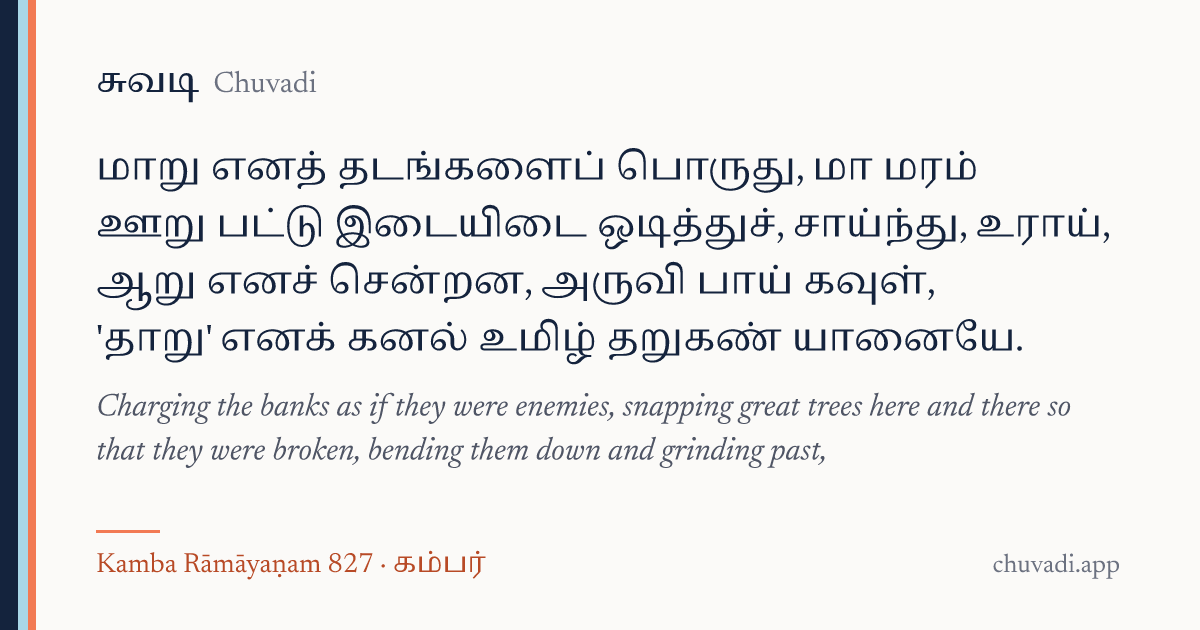
பாடல் · The poem
Tap a word to see its gloss in the commentary and where else it occurs.
பாட வேறுபாடு · Project Madurai reads
பொருள் · Meaning in Tamil
அருவி பாய் கவுள் - அருவிபோல மதநீர் பாயும் கன்னத்தையும்; தாறு எனக் கனல் உமிழ் - அங்குசம் என்ற சொல்லைக் கேட்டதும் தீயைக் கக்குகின்ற; தறுகண் யானை - அஞ்சாமையுடைய யானைகள்; மாறு என - தமக்குப் பகையென்று கருதி; தடங்களைப் பொருது - இரு கரைகளை மோதி இடித்து; மாமரம் - பெரிய மரங்களை; ஊறு பட்டு இடைஇடை - முடியும்படி நடுநடுவே; ஒடித்து - ஒடித்தும்; சாய்த்து - கீழே முறித்துச் சாய்த்தும்; உராய் - (அம்மரங்களின் மேல்) உரசியும்; ஆறு என - ஓர் ஆறு செல்வது போல; சென்றன - போயின.
கரைகளோடு மோதுதல், மரங்களை ஒடித்தல், சாய்த்துத் தள்ளுதல், உராய்தல் - இவை யானைக்கும், ஆற்றுக்கும் ஒத்துள்ளன. அதனால் யானை செல்வது ஆறு செல்வது போன்றது என்றார்.
பொருது, ஒடித்து, சாய்த்து, உராய் என்னும் வினையெச்சங்கள் யானைக்கும் ஆற்றுக்கும் பொருள்படுமாறு பொதுவாக அமைந்தன. தாறு - குத்துக் கோல், அங்குசம்.
ஆங்கிலம் · English translationAI
Translation
- Charging the banks as if they were enemies, snapping great trees
- here and there so that they were broken, bending them down and grinding past,
- they went like rivers, their cheeks pouring cascades of must:
- the fearless elephants that spit fire at the very word 'goad'.
What the poem says
The fiercest elephants, so proud that the mere mention of the goad enrages them, push through the countryside like flooding rivers: they batter the banks, snap and flatten trees and scrape past whatever stands in their way.
Every verb in the verse applies equally to an elephant and to a river in spate, so the comparison holds point by point.