



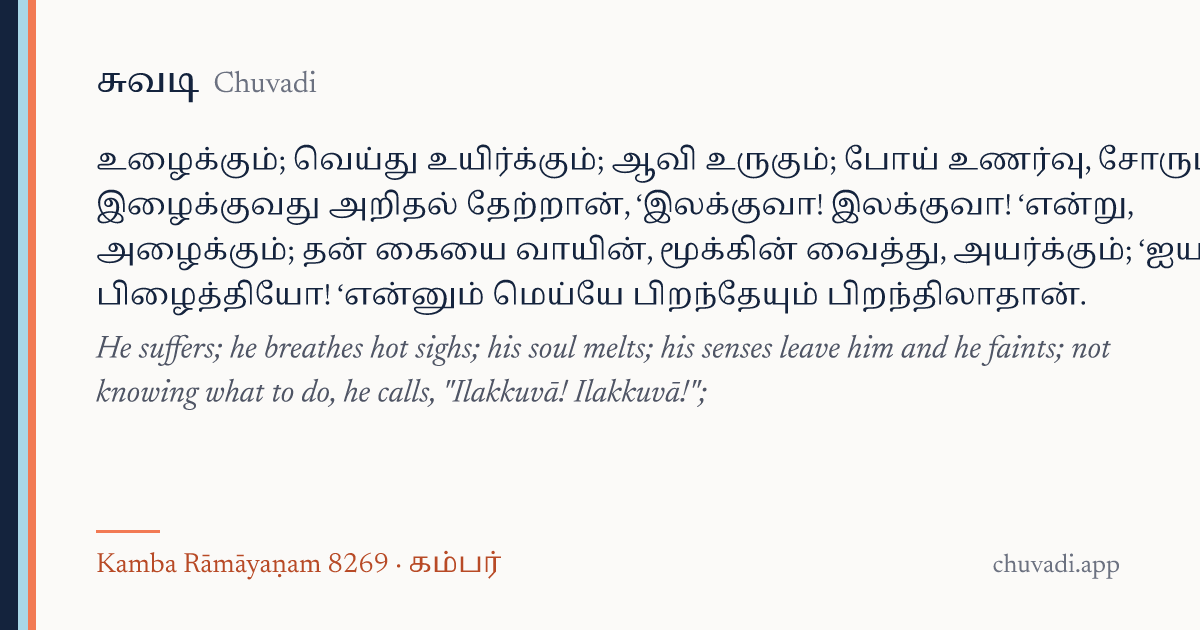
கம்பராமாயணம் 8269 · யுத்த 18.222
பாடல் · The poem
Tap a word to see its gloss in the commentary and where else it occurs.
பொருள் · Meaning in Tamil
மெய்யே - உண்மையாக; பிறந்தேயும் பிறந்திலாதான் - பிறந்திருந்தும் வினை வசத்தால் பிறவாதவனாகிய இராமன்; உழைக்கும் - வருத்தப்படுவான்; வெய்து உயிர்க்கும் - பெரு மூச்சு விடுவான்; ஆவி உருகும் - உயிர் உருகுவான்; உணர்வு போய் சோரும் - அறிவு நீங்கிச் சோர்வான்; இழைக்குவது அறிதல் தேற்றான் - செய்வது இன்னது என்று அறிந்து தெளியாதவனாய்; இலக்குவா, இலக்குவா என்று அழைக்கும் - இலக்குவனே, இலக்குவனே என்று பலமுறை அழைப்பான்; தன் கையை மூக்கின் வைத்து - (தனது) கையை (இலக்குவனது) மூக்கின் மேல் வைத்து (மூச்சு உளதற) (என்று பார்த்து); அயர்க்கும் - வருந்துவான்; ஐயா - ஐயா; பிழைத்தியோ என்னும் - (நீ) பிழைப்பாயோ என்று கூறுவான்.
அவலச்சுவையை அழகுறக் காட்டிய கவி நயம் தேர்க.
ஆங்கிலம் · English translationAI
Translation
- He suffers; he breathes hot sighs; his soul melts; his senses leave him and he faints;
- not knowing what to do, he calls, "Ilakkuvā! Ilakkuvā!";
- he puts his hand to his brother's mouth and nose and sinks in despair; "My lord,
- will you live?" he says, he who in truth, though born, was never born.
What the poem says
Irāmaṉ's grief is shown as a rapid run of actions: suffering, sighing, fainting, calling his brother's name again and again, holding a hand to his nose to feel for breath, and asking whether he will live.
The last phrase reminds the reader that Irāmaṉ, though born as a man, is the unborn Lord, never subject to birth through karma. The commentary praises the verse as a fine expression of the mood of pathos (avalam).