



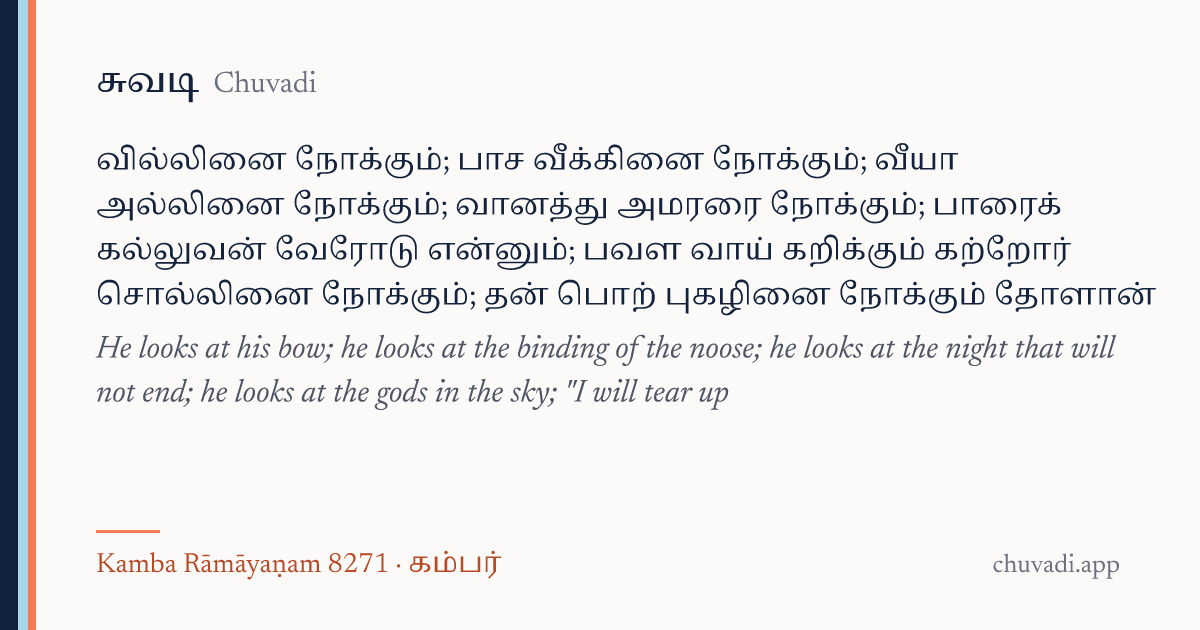
கம்பராமாயணம் 8271 · யுத்த 18.224
பாடல் · The poem
Tap a word to see its gloss in the commentary and where else it occurs.
பாட வேறுபாடு · Project Madurai reads
பொருள் · Meaning in Tamil
தன் போல் புகழினை நோக்கும் தோளான் - தனக்குத் தானே ஒத்துப் (பிறிதொன்றும் ஒவ்வாது) புகழை விரும்பும் தோள்களை உடையவன் ஆகிய (இராமன்); வில்லினை நோக்கும் - (தன் கோதண்டம் என்ற பெயருடைய) வில்லினைப் பார்ப்பான்; பாச வீக்கினை நோக்கும் - நாகக் கணையின் கட்டுகளைக் காண்பான்; வீயா அல்லினை நோக்கும் - விடியாத இரவினைப் பார்ப்பான்; வானத்து அமரரை நோக்கும் - ஆகாயத்தில் உள்ள தேவர்களைப் பார்ப்பான்; பாரை வேரோடு கல்லுவென் என்னும் - நிலவுலகத்தை வேருடன் பெயர்த்து விடுவேன் என்று சொல்லுவான்; பவள வாய் கறிக்கும் - பவளம் போன்ற வாய் உதடுகளைக் கடிப்பான்; கற்றோர் சொல்லினை நோக்கும் - கற்று அறிந்த பெரியோர்கள் கூறியுள்ள (அறம் வெல்லும் பாவம் தோற்கும்) சொற்களை எண்ணிப் பார்ப்பான்.
ஆங்கிலம் · English translationAI
Translation
- He looks at his bow; he looks at the binding of the noose; he looks at
- the night that will not end; he looks at the gods in the sky; "I will tear up
- the earth by its roots," he says; he bites his coral lips; he considers
- the words of the learned, he whose shoulders long for a fame like his own.
What the poem says
Irāmaṉ's eyes and thoughts move from one thing to the next: his bow, the serpent coils binding his brother, the endless night, the gods in the sky who have failed to help.
In rage he threatens to uproot the earth and bites his lips, but then turns to the sayings of the wise, which the commentary takes as the maxim that righteousness wins and sin loses. The commentary reads the epithet as shoulders that seek a fame matched only by itself.