



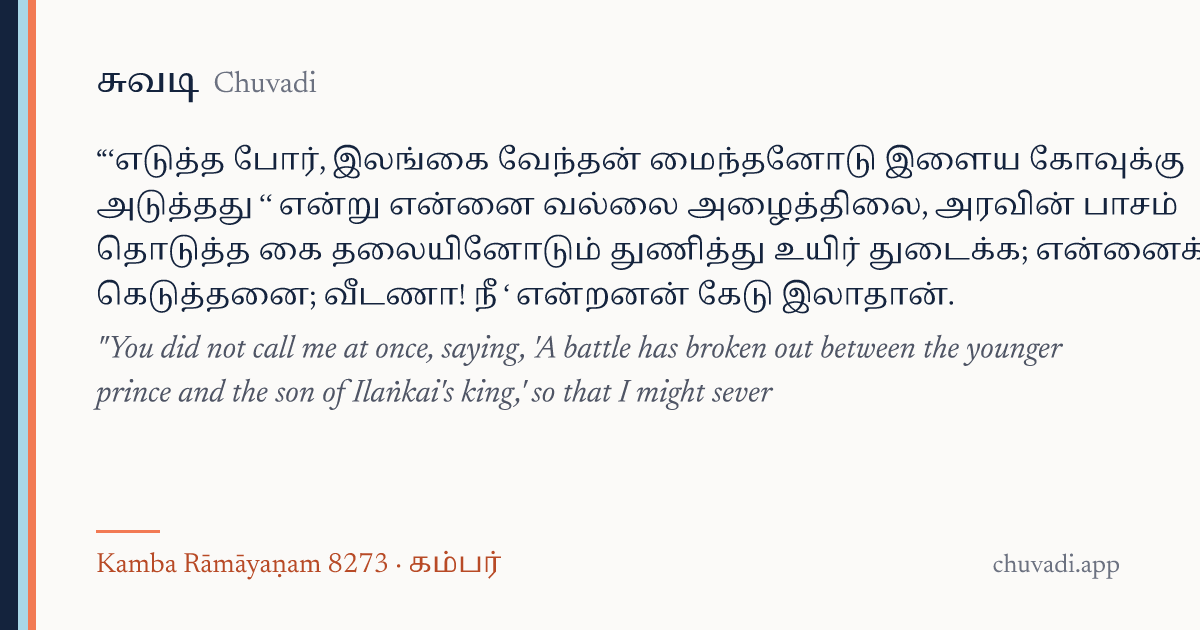
கம்பராமாயணம் 8273 · யுத்த 18.226
பாடல் · The poem
Tap a word to see its gloss in the commentary and where else it occurs.
பொருள் · Meaning in Tamil
கேடு இலாதான் - எக்காலத்திலும் அழியாதவனாகிய (அவதார) இராமன்; இலங்கை வேந்தன் மைந்தனோடு - இலங்கை வேந்தனாகிய இராவணனின் மகனாகிய இந்திரசித்தனுடன்; இளைய கோவுக்கு - இளைய தலைவனாகிய இலக்குவனுக்கு; எடுத்த போர் அடுத்தது என்று - பெரும் போர் ஏற்பட்டது என்று கூறி; வீடணா நீ - வீடணனே நீ; என்னை வல்லை அழைத்திலை - என்னை விரைவாக அழைக்காமல் போனாய் (அதனால்); அரவின் பாசம் தொடுத்த கை - நாகக் கணை தொடுத்த (இந்திரசித்தனது) கைகளையும்; தலையினோடும் துணித்து - (அவனது) தலையையும் கொய்து களைந்து, உயிர் குடிக்க - உயிரைக் குடிப்பதற்கு (இல்லாமல்); என்னைக் கெடுத்தனை என்றனன் - என்னைக் கெடுத்து விட்டாய் என்றான்.
ஆங்கிலம் · English translationAI
Translation
- "You did not call me at once, saying, 'A battle has broken out
- between the younger prince and the son of Ilaṅkai's king,' so that I might sever
- the hand that loosed the serpent-noose together with the head and wipe out his life;
- you have ruined me, Vīṭaṇā!" said he who knows no ruin.
What the poem says
Irāmaṉ, the imperishable Lord, rebukes Vīṭaṇaṉ. If Vīṭaṇaṉ had sent word as soon as Ilakkuvaṉ began fighting Intiracittu, Irāmaṉ would have come and cut off the hand that shot the serpent-noose, along with the head, and ended the demon prince's life.
By not calling him, Vīṭaṇaṉ has ruined him. There is irony in calling Irāmaṉ "the one without ruin" as he speaks of being ruined.