



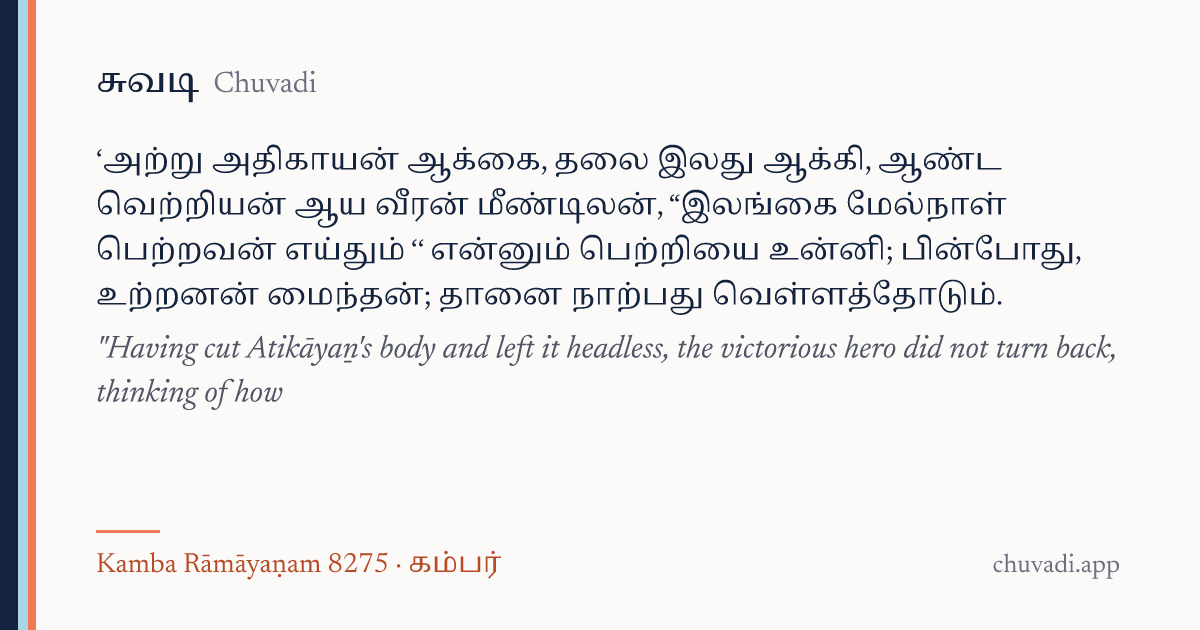
கம்பராமாயணம் 8275 · யுத்த 18.228
பாடல் · The poem
Tap a word to see its gloss in the commentary and where else it occurs.
பொருள் · Meaning in Tamil
அதிகாயன் ஆக்கை அற்று - அதிகாயனது உடம்பு அறுபட்டு; தலை இலது ஆக்கி - தலை இல்லாததாகச் செய்து; ஆண்ட வெற்றியன் - பெற்ற வெற்றியை உடையவன்; ஆய வீரன் - ஆகிய வீரனாகிய இலக்குவன்; மேல் நாள் இலங்கை - முற்காலத்தில் இலங்கையை; பெற்றவன் எய்தும் - (குபேரனிடத்தில் இருந்து) பெற்றவன் ஆகிய இந்திரசித்தன்; எய்தும் என்னும் பெற்றியை உன்னி - போருக்கு வருவான் என்னும் தன்மையை எண்ணி; மீண்டிலன் - (போர்க்களத்தை விட்டு) நீங்காது நின்றான்; பிற்போது - பின்பு; மைந்தன் - இராவணன் மகனாகிய இந்திர சித்தன்; தானை நாற்பது வெள்ளத்தோடும் - சேனை நாற்பது வெள்ளத்தோடு; உற்றனன் - போர்க்களம் வந்தான்.
ஆங்கிலம் · English translationAI
Translation
- "Having cut Atikāyaṉ's body and left it headless,
- the victorious hero did not turn back, thinking of how
- he who long ago won Ilaṅkai would come; and later
- the son arrived, with an army of forty floods."
What the poem says
Vīṭaṇaṉ begins his account to Irāmaṉ. After killing Atikāyaṉ, another of Irāvaṇaṉ's sons, by beheading him, Ilakkuvaṉ stayed on the battlefield because he expected the warrior "who won Ilaṅkai" to come. The commentary explains this as the conqueror who took Ilaṅkai from Kupēraṉ in the old days, here meaning Intiracittu.
Soon Intiracittu did arrive with forty veḷḷam of troops.