



கம்பராமாயணம் 8280 · யுத்த 18.233
பாடல் · The poem
Tap a word to see its gloss in the commentary and where else it occurs.
பாட வேறுபாடு · Project Madurai reads
பொருள் · Meaning in Tamil
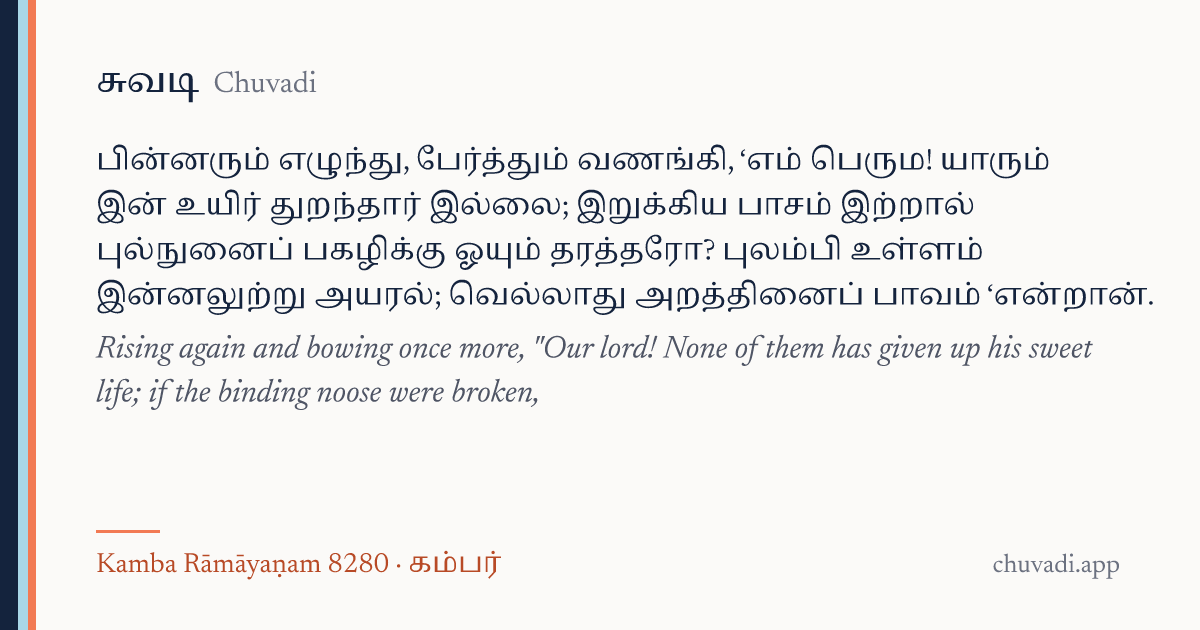
பின்னரும் எழுந்து - மீண்டும் எழுந்து நின்று; பேர்த்தும் வணங்கி - மறுமுறையும் வணங்கி; எம்பெரும - எங்கள் தலைவனே! யாரும் இன் உயிர் துறந்தார் இல்லை - இவர்களில் எவரும் தங்கள் இனிய உயிரை விட்டுவிடவில்லை; இறுக்கிய பாசம் இற்றால் - (இவர்களை) இறுகப் பிணைத்துள்ள நாகபாசம் நீங்கினால் (உயிருடன் எழுவர்), புல்நுனைப் பகழிக்கு ஓயும் தரத்தரோ? - இவர்கள் புன்மையான முனையினையுடைய அம்புகளுக்கு வலிகெடும் தன்மையுடையவர்களா? (எனவே) புலம்பி உள்ளம் இன்னலுற்று அயரல் - புலம்பி மனத்துன்பம் கொண்டு வருந்தாதே; அறத்தினை பாவம் வெல்லாது என்றான் - அறத்தினைப் பாவம் (எக்காலத்திலும்) வெற்றி கொள்ளாது என்றான் (வீடணன்).
ஆங்கிலம் · English translationAI
Translation
- Rising again and bowing once more, "Our lord! None of them
- has given up his sweet life; if the binding noose were broken,
- are these men the sort to be worn down by paltry-tipped arrows? Do not lament
- and sink, your heart in pain; sin does not defeat righteousness," he said.
What the poem says
Vīṭaṇaṉ comforts Irāmaṉ. None of the bound warriors is dead. Once the noose is undone they will rise, since they are not the kind to be killed by the enemy's petty arrows.
He urges Irāmaṉ not to give way to grief, ending with the maxim that sin can never conquer dharma, which echoes the "words of the learned" Irāmaṉ was turning over a few verses earlier.