



கம்பராமாயணம் 8284 · யுத்த 18.237
பாடல் · The poem
Tap a word to see its gloss in the commentary and where else it occurs.
பாட வேறுபாடு · Project Madurai reads
பொருள் · Meaning in Tamil
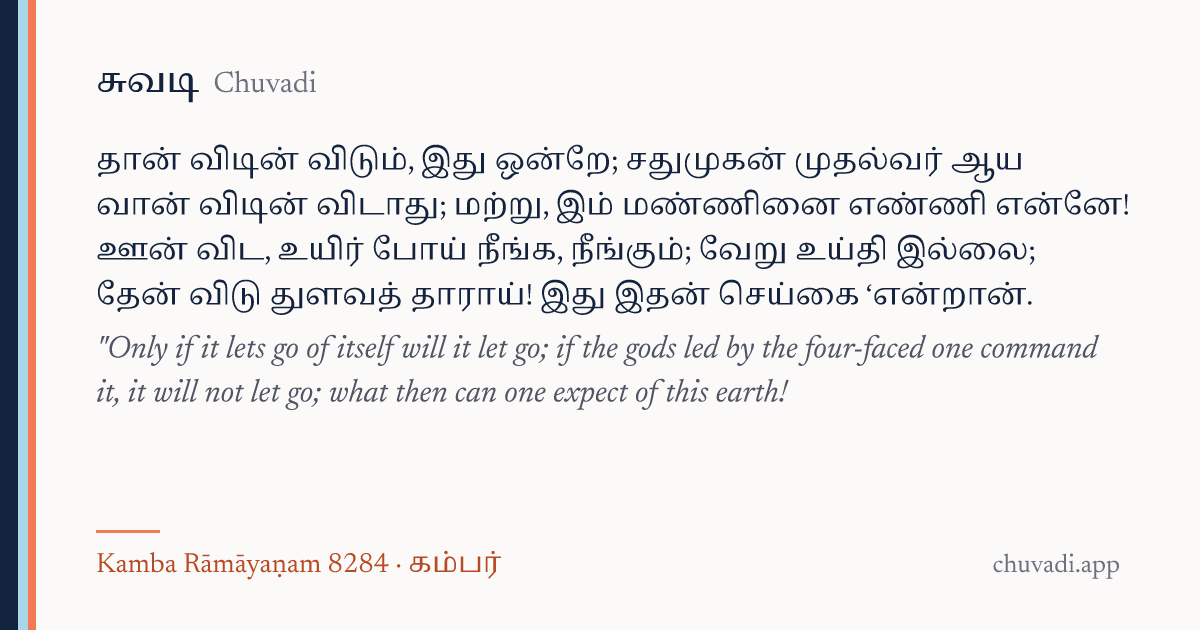
தேன் விடு துளவத் தாராய் - தேன் பிலிற்றுகிற துளசி மாலையை அணிந்தவனே; ஒன்றே இது - ஒப்பற்ற நாகக் கணையாகிய இது; தான் விடின் விடும் - தானே விட்டால் தான் விடும்; சதுமுகன் முதல்வர் ஆய வான்விடின் விடாது - பிரமனை முதல்வனாகக் கொண்ட தேவர்கள் விடுவித்தால் கூட விடாது; மற்று இம்மண்ணினை எண்ணி என்னே - அதனால் இந்நில உலகத்தவர் (விடுவிப்பர் என்று) எண்ண என்ன உள்ளது; ஊன்விட உயிர் போய் நீங்க நீங்கும் - உடல் அழிந்து உயிர் போன உடன் தான் (விட்டு) நீங்கும்; வேறு உய்தி இல்லை - வேறு பிழைக்கும் வழி இல்லை. இது இதன் செய்கை என்றான் - இது இந்நாகக் கணையின் செயல் என்று (வீடணன் இராமனிடம்) கூறினான்.
ஆங்கிலம் · English translationAI
Translation
- "Only if it lets go of itself will it let go; if the gods led by the four-faced one
- command it, it will not let go; what then can one expect of this earth!
- Only when the body gives out and the life departs will it depart; there is no other escape;
- lord with the honey-dripping tuḷasi garland! This is what it does," he said.
What the poem says
Vīṭaṇaṉ ends grimly. The noose releases its victim only when it chooses, or when the victim dies. Not even Brahmā and the gods can make it let go, so no earthly power can.
He addresses Irāmaṉ by his tuḷasi garland, the emblem of Viṣṇu, which hints at the one power the noose cannot withstand.