



கம்பராமாயணம் 8285 · யுத்த 18.238
பாடல் · The poem
Tap a word to see its gloss in the commentary and where else it occurs.
பொருள் · Meaning in Tamil
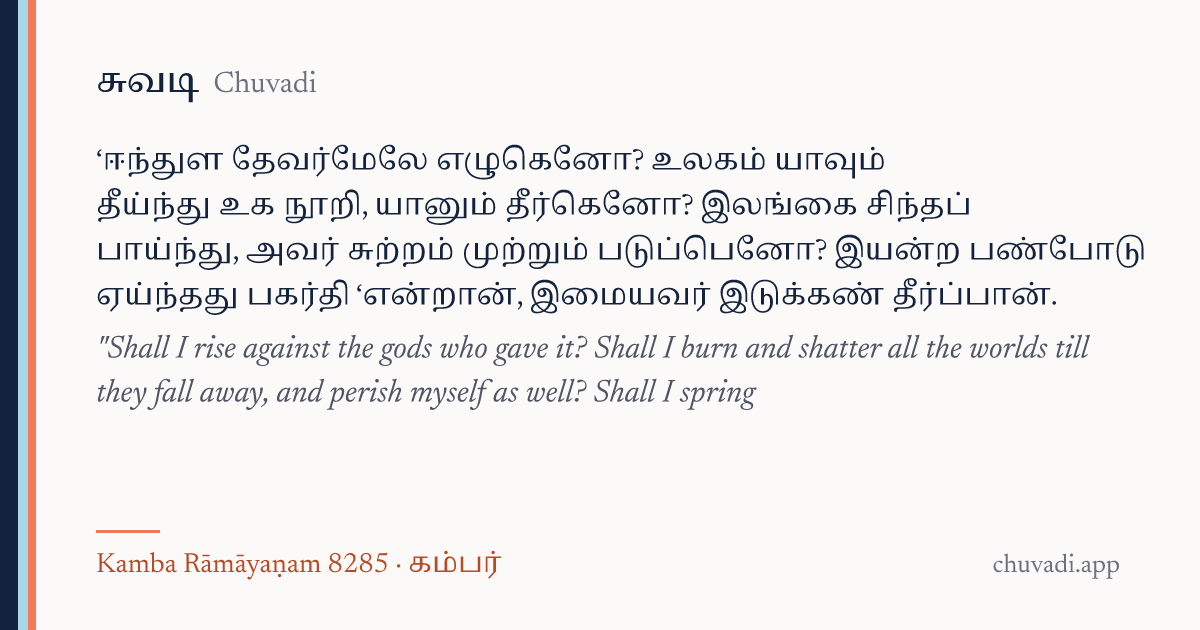
இமையவர் இடுக்கண் தீர்ப்பான் - (ஐ இருதலையினோன் அனுசர் ஆதிய மெய்வலி அரக்கரால்) தேவர்களுக்கு ஏற்பட்ட துன்பத்தைத் தீர்ப்பதற்காக அவதாரம் செய்த இராமன் (வீடணனைப் பார்த்து) ஈந்துள தேவர்மேலே எழுகெனோ - (இந்நாக பாசத்தை இந்திரசித்தனுக்குக்) கொடுத்த தேவர்களின் மீது போருக்கு எழுவேனோ? உலகம் யாவும் தீந்து உக நூறி யானும் தீர்கெனோ - உலகம் முழுவதும் சாம்பலாய்ப் போகும்படி அழித்து விட்டு நானும் அழிவேனோ? இலங்கை சிந்தப் பாய்ந்து - இலங்கை நகரம் அழிந்து கெட (அதன் மீது) பாய்ந்து; அவர் சுற்றம் முற்றும் படுப்பெனோ - அந்த அரக்கர்களுடைய சுற்றத்தோர் அனைவரையும் கொல்வேனோ? பண்போடு இயன்ற ஏய்ந்தது பகர்தி என்றான் - பண்போடு ஏற்றுப் பொருத்தமானதைக் கூறுவாயாக என்றான் இராமன்.
ஆங்கிலம் · English translationAI
Translation
- "Shall I rise against the gods who gave it? Shall I burn and shatter
- all the worlds till they fall away, and perish myself as well? Shall I spring
- on Ilaṅkai till it is scattered and slay all their kin? Tell me
- what is fitting, with proper judgment," said he who ends the gods' distress.
What the poem says
Irāmaṉ, who came into the world to free the gods from the demons, now in his grief thinks of turning on the gods who gave the weapon, destroying all the worlds and himself with them, or storming Ilaṅkai and killing every demon.
Even so, he asks Vīṭaṇaṉ to tell him what course is right. The irony of the epithet "he who ends the gods' distress" is deliberate.