



கம்பராமாயணம் 8288 · யுத்த 18.241
பாடல் · The poem
Tap a word to see its gloss in the commentary and where else it occurs.
பாட வேறுபாடு · Project Madurai reads
பொருள் · Meaning in Tamil
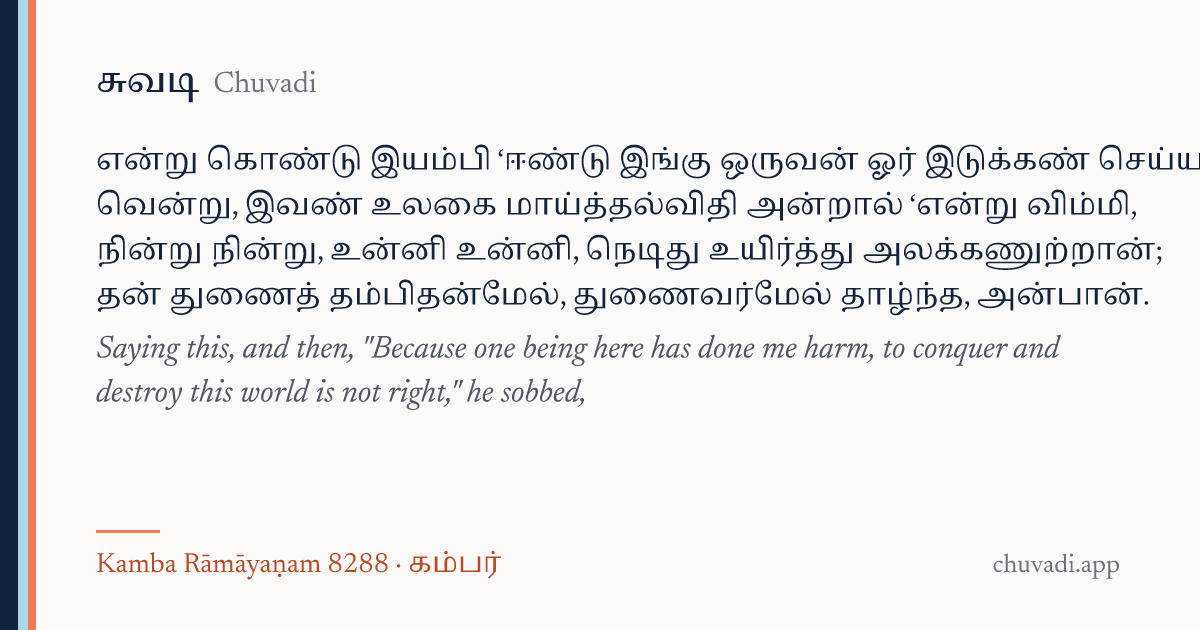
தன் துணைத் தம்பி தன் மேல் - தனக்குத் துணைத் தம்பியாகிய இலக்குவன் தன் மேலும்; துணைவர் மேல் தாழ்ந்த அன்பான் - நண்பர்களின் மீதும் மிக்க அன்பு உடையவனாகிய இராமன்; ஈண்டு இங்கு ஒருவன் ஓர் இடுக்கண் செய்ய - இப்பொழுது இங்கு ஒருவன் ஒப்பற்ற துன்பத்தை (எனக்குச்) செய்ய (அதனைக் காரணமாகக் கொண்டு); வென்று இவண் உலகை மாய்த்தல் விதி அன்றால் - வென்று இந்த உலகத்தை அழித்தல் முறை அன்று; என்று கொண்டு இயம்பி - என்று (மனத்தில்) கொண்டு (வாயால்) சொல்லி; என்று விம்மி - (இது எவ்வாறு ஆகும்) என்று விம்மி; நின்று நின்று உன்னி உன்னி - நின்று நின்று நினைத்து நினைத்து; நெடிது உயிர்த்து அலக்கணுற்றான் - நீண்ட பெருமூச்சு விட்டுத் துன்பம் கொண்டான்.
ஆங்கிலம் · English translationAI
Translation
- Saying this, and then, "Because one being here has done me harm,
- to conquer and destroy this world is not right," he sobbed,
- and stopping, again and again, thinking and thinking, he sighed long and was in anguish,
- he whose love bowed down to his companion brother and his companions.
What the poem says
Even as he speaks, Irāmaṉ checks himself. It would not be right to destroy the whole world because one enemy has wronged him.
Caught between rage and conscience, he stops again and again to think, sighs deeply and suffers. The verse closes by naming the source of his pain: his deep love for his brother and his friends.