



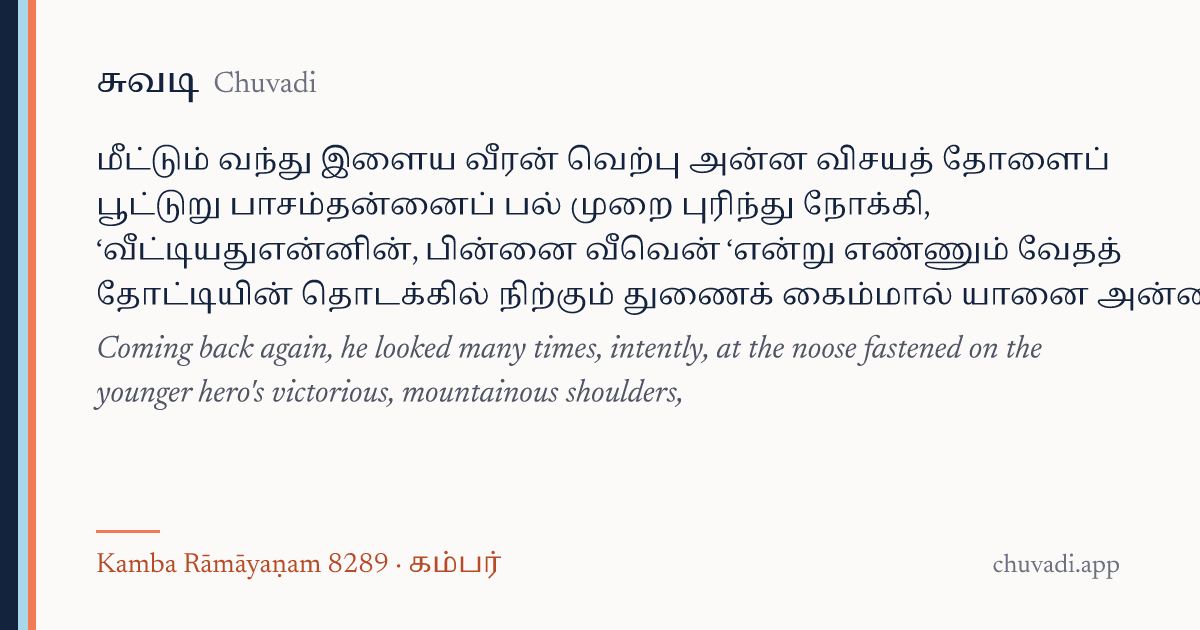
கம்பராமாயணம் 8289 · யுத்த 18.242
பாடல் · The poem
Tap a word to see its gloss in the commentary and where else it occurs.
பொருள் · Meaning in Tamil
வேதத் தோட்டியின் தொடக்கில் நிற்கும் - வேதமாகிய அங்குசத்தின் கட்டுப்பாட்டில் நிற்கிற; துணைக் கைம்மால் யானை அன்னான் - இரண்டு கைகளை உடைய மயக்கம் கொண்ட யானையை ஒத்தவன் ஆகிய இராமன்; மீட்டும் வந்து - மறுபடியும் வந்து; இளைய வீரன் வெற்பு அன்ன விசயத் தோளைப் - இளைய வீரனாகிய இலக்குவனது மலைபோன்ற வெற்றி பொருந்திய தோள்களைப்; பூட்டுறு பாசம் தன்னை - கட்டியுள்ள நாக பாசம் தன்னை; பல்முறை புரிந்து நோக்கி - பலமுறை உற்றுப் பார்த்து; வீட்டியது என்னின் - (இப்பாசம் இலக்குவனது உயிரை) அழித்தது என்றால்; பின்னை வீவேன் - பின்பு (உடனே) நானும் இறப்பேன்; என்று எண்ணும் - என்று எண்ணுவான் ஆயினன்.
வேதத் தோட்டி - வேதமாகிய அங்குசம், வேதத் தோட்டியின் தொடக்கில் நிற்றல் - வேதங்களுக்கு வசப்படல், வேத மந்திரங்களை விரும்புதல், வேதங்களால் அறியப்படுதல் என்று விளக்குவர் வை.மு. கோ.
ஆங்கிலம் · English translationAI
Translation
- Coming back again, he looked many times, intently,
- at the noose fastened on the younger hero's victorious, mountainous shoulders,
- and thought, "If it has killed him, then I too will die,"
- he who was like a great two-handed elephant held in check by the goad of the Vedas.
What the poem says
Irāmaṉ returns to Ilakkuvaṉ's side and studies the coils binding his brother's shoulders. He resolves that if the noose has killed Ilakkuvaṉ, he will die too.
He is compared to a great elephant, maddened by grief, but still held in check by the goad of the Vedas, so his rage stays within the bounds of dharma. The commentary, citing another scholar, reads this as Irāmaṉ being subject to the Vedas, loving their chants and being known through them.