



கம்பராமாயணம் 8297 · யுத்த 18.250
பாடல் · The poem
Tap a word to see its gloss in the commentary and where else it occurs.
பாட வேறுபாடு · Project Madurai reads
பொருள் · Meaning in Tamil
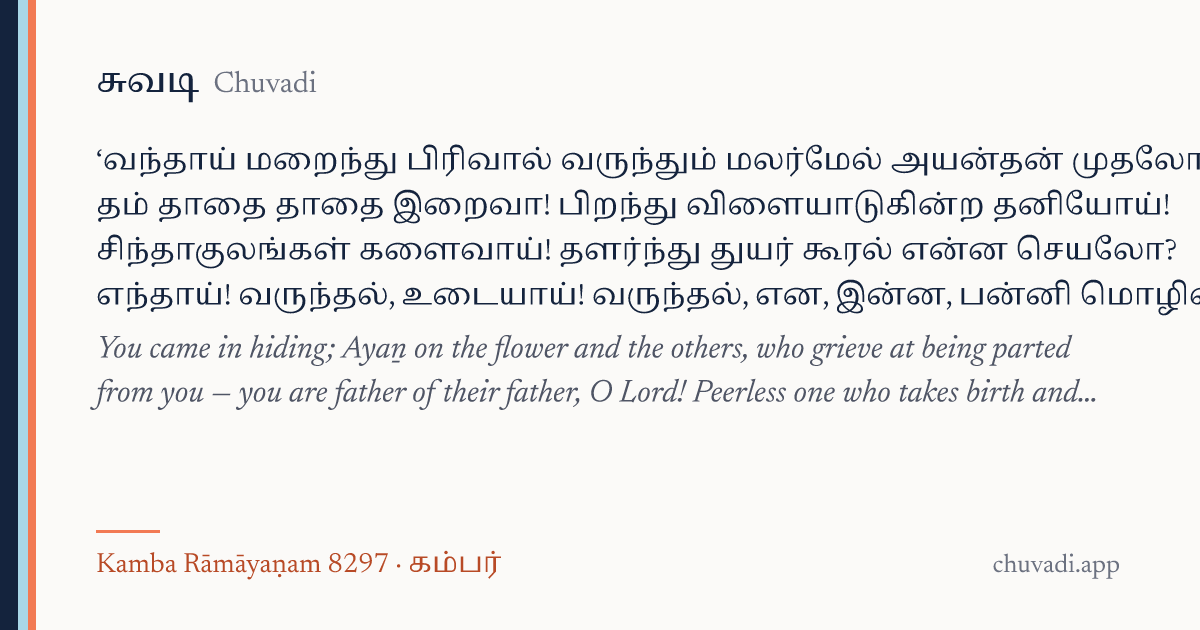
மறைந்து வந்தாய் - (நீ நின் திவ்யமங்கள சொரூபத்தை) மறைத்துக்கொண்டு; (சங்கற்ப மாத்திரையாய் மானிடச் சட்டை தாங்கி) வந்தாய்; பிரிவால் வருந்து - உன் பிரிவினால் வருந்துகிற; மலர் மேல் அயன் தன் முதலோர் தம் - மலரின் மேல் தாங்கி உள்ள அயன் முதலியோருக்குக் காரணன் ஆன; தாதை தாதை - பிதா மகனே; இறைவா - எல்லாப் பொருள்களிலும் அந்தர்யாமியாய்த் தங்கி உள்ளவனே; பிறந்து விளையாடுகின்ற தனியோய் - (வினை வயத்தால் அன்றிச் சங்கல்பத்தால்) பிறந்து (மனித உருவத்துக்கு ஏற்ப நடித்து விளையாடுகின்ற ஒப்பற்ற தலைவனே! சிந்தா குலங்கள் களைவாய் - சரணாகதி அடைந்தவர்களின் மனத் துன்பங்களைப் போக்குபவனே; தளர்ந்து துயர் கூரல் என்ன செயலோ - நீயே மனம் தளர்ந்து துன்பம் மிகப்படுதல் என்ன செயலோ? எந்தாய் வருந்தல் - எனது தலைவனே வருந்தாதே; உடையாய் வருந்தல் - எப்பொருளையும் சரீரமாக உடையவனே வருந்தாதே; என இன்ன - என்று இத்தன்மையான சொற்கள் பலவற்றை; பன்னி மொழிவான் - திரும்பத் திரும்பக் கூறுபவனாயினான்.
கருடன் உண்மையை இராமனுக்குத் தெரிவித்துத் தேற்றுவது போல் பாடல்கள் அமைந்துள்ள தன்மையை உணர்ந்து கொள்க. இறைவன் மானிட உருத்தாங்கி வந்து மானுட இன்பதுன்பங்களை அனுபவித்து மானிட வெற்றியின் கொடுமுடியாய் உயர்வதை விளக்க வந்த கம்பர் இவ்வாறு தானே பாடமுடியும்.
ஆங்கிலம் · English translationAI
Translation
- You came in hiding; Ayaṉ on the flower and the others, who grieve at being parted from you —
- you are father of their father, O Lord! Peerless one who takes birth and plays!
- You who clear away the troubles of the mind! What is this, that you droop and sink in sorrow?
- My father, do not grieve; Master, do not grieve — such words he spoke, again and again.
What the poem says
In the Nāgapāśa episode Irāvaṇaṉ's son has bound Ilakkuvaṉ and the army with a serpent-weapon, and Irāmaṉ is lost in grief. Karuṭaṉ, the divine eagle and mount of Tirumāl, has arrived, and the serpents flee at his coming. In this run of verses he praises Irāmaṉ as the hidden supreme god.
He calls Irāmaṉ the father of Brahmā's own father, the one who was born by his own will and plays a human part, and asks how the remover of all sorrow can himself be sorrowing. The commentary notes that the poet lets Karuṭaṉ reveal the truth to Irāmaṉ in order to show God taking on human joy and grief.