



கம்பராமாயணம் 8298 · யுத்த 18.251
பாடல் · The poem
Tap a word to see its gloss in the commentary and where else it occurs.
பாட வேறுபாடு · Project Madurai reads
பொருள் · Meaning in Tamil
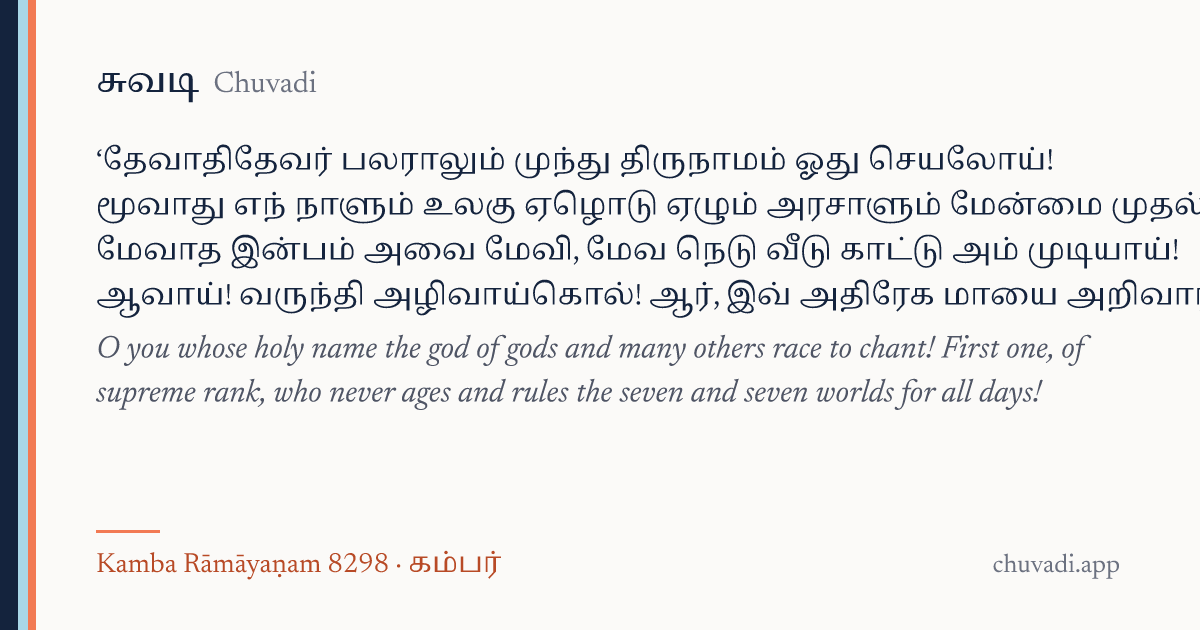
தேவாதி தேவர் - தேவர் பிரமன், உருத்திரன் முதலிய தலைமைத் தேவர்கள் போன்ற பலரும்; முந்து - ஒருவரை ஒருவர் முந்திக்கொண்டு; திருநாமம் ஓது செயலோய் - நின் திருநாமத்தைச் சொல்லித் துதிக்கும் படியாக உள்ளவனே! மூவாது - மூப்படையாது; (இளமையுடன் இருந்து) எந்நாளும் - எப்பொழுதும்; உலகு ஏழொடு ஏழும் - பதினான்கு உலகங்களையும்; அரசாளும் மேன்மை முதல்வா - (பாதுகாத்து) அரசு செலுத்துகிற மேன்மை பொருந்திய தலைவனே; மேவாத இன்பம் அவை மேவி - (உன்னைச் சரண் புக்கவர்கள் பிறரால் அடையமுடியாத பேரின்பங்களை அடைந்து; மேவ நெடு வீடு காட்டு அம் முடியாய் - (இறுதியில் (உன்னை அடைய முக்தி உலகத்தைக் காட்டும் (அழகிய முதல் தலைவனாய்); ஆவாய் - ஆனவனே; வருந்தி அழிவாய் கொல் - (இத்தகைய நீ வருத்தம் கொண்டு அழிவாய் போலும் இவ் அதிரேக மாயை - இந்த (உன்னுடைய) மிகுதியான மாயச்செயலை; அறிவார் யார் - அறியத்தக்கவர் யார்?
ஆங்கிலம் · English translationAI
Translation
- O you whose holy name the god of gods and many others race to chant!
- First one, of supreme rank, who never ages and rules the seven and seven worlds for all days!
- Lord who grants the joys no others gain, and then shows the long road to release!
- You who are all this — will you now waste away in grief? Who can know this surpassing illusion?
What the poem says
Karuṭaṉ continues his praise. The gods, Brahmā and Rudra among them, compete to recite Irāmaṉ's name; he rules all fourteen worlds without growing old; he gives his devotees bliss others cannot reach and finally shows them the way to liberation.
Each verse of this sequence ends with the same refrain: who can understand this overwhelming māyā, the divine play by which the all-powerful lord appears to suffer like a man?