



கம்பராமாயணம் 8299 · யுத்த 18.252
பாடல் · The poem
Tap a word to see its gloss in the commentary and where else it occurs.
பாட வேறுபாடு · Project Madurai reads
பொருள் · Meaning in Tamil
எவர்க்கும் - எல்லா உலகங்களுக்கும்; முதல் ஆகி - படைக்கும் முதல் காரணனாகியும்; ஈறொடு - அழிக்கும் காரணன் ஆகியும்; இடை ஆகி - காக்கும் காரணன் ஆகியும்; எழுவாய் - (சங்கர்ஷண பிரத்தியும்ன, அநிருத்தர்களாய்) திருப்பாற்கடலில் தோன்றுவாய்; எங்கும் உளையாய் - எல்லாப் பொருள்களிலும் அந்தர்யாமியாய் வியாபித்து நின்று; வழுவாது - தவறாமல்; எவர்க்கும் - உபாசிக்கும் எல்லோருக்கும்; வரம் ஈயவல்லை - (வேண்டிய) வரங்களைக் கொடுக்கும் வல்லமை உடையவனே; உணர்ச்சி தொடராத தன்மை உருவாய் மறைந்து - இத்தகு (ஆற்றலை உடைய நீ முற்றுணர்வு உண்டாகாத தன்மை உடைய மனித உருவில் மறைந்து நின்று; தொழுவாய் - (உன்னைத் தொழும் தேவர்களைத்) தொழுது நிற்பாய்; அவரால் வரங்கள் பெறுவாய் - அத்தேவர்களால் (வேண்டிய) வரங்களைப் பெற்று நிற்பாய்; துயரால் அழுவாய் - துன்பத்தால் (வருந்தி) அழுவாய்; ஒருத்தன் உளை போலும் - (இத்தகைய வியத்தகு நிலை உடைய) நீ ஒருவன் இருக்கின்றாய் போலும்; இவ் அதிரேக மாயை - இந்த (உன்னுடைய) மிகுதியான மாயச் செய்கையை; அறிவார் யார் - அறிபவர் யாவர்.
திருமாலின் வியூகமூர்த்திகளில் சங்கர்ஷணன் என்பவர் ஆமோதம் என்னும் இடத்தில் ஞானம், பலம் என்ற இரண்டு குணங்களைத் தம்மிடத்தில் கொண்டு அழித்தல் தொழிலையும் பிரத்யும்னன் என்பவர் பிரமோதம் என்னும் இடத்தில் ஐசுவரியம், வீரியம் என்ற இரண்டு குணங்களைத் தம்மிடத்தில் கொண்டு படைத்தல் தொழிலையும், அநிருத்தர் என்பவர் சம்மோதம் என்னும் இடத்தில் சக்தி, தேஜஸ் என்ற குணங்களைத் தம்மிடத்தில் கொண்டு காத்தல் தொழிலையும் மோட்சம் அளித்தலையும் செய்கின்றனர் எனக் கம்பர் முதல் வரியில் குறிப்பிடுகிறார்.
திருமால் படைத்தல், காத்தல், அழித்தல் என்னும் முத்தொழிலைச் செய்ய சங்கர்சண, பிரத்யும்ன, அநிருத்த மூர்த்திகளாகி, வழிபடுவோர்க்கு அருள் செய்து நிற்கும் வியூக நிலையை “எழுவாய் எவர்க்கும்... வரமீயவல்லை' என்றதனாலும் கடந்தோறும் மறைந்து பரந்து நிற்கும் அந்தர்யாமி நிலையை எங்கும் உளையாய்' என்றதனாலும் பாவத்தை அழித்து அறத்தை நிலை நாட்டும் தன்மையை யாதன விபவாதார நிலையை அவரால் வரங்கள் பெறுவாய் - அழுவாய்' என்றதனாலும் குறித்தனர் எனலாம்.
ஆங்கிலம் · English translationAI
Translation
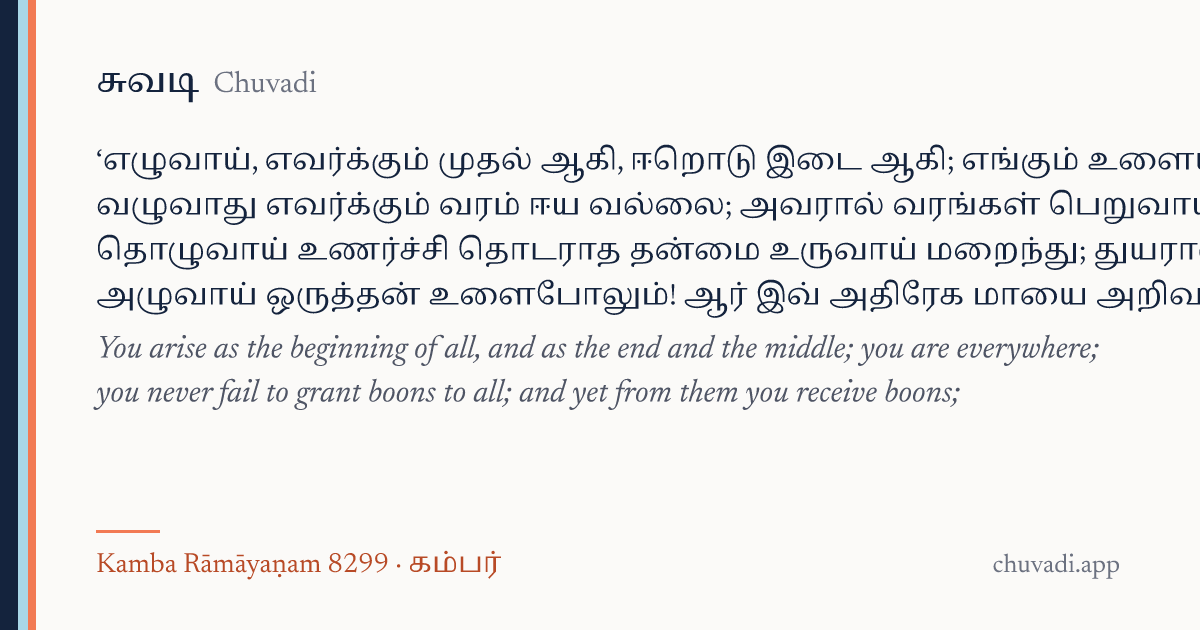
- You arise as the beginning of all, and as the end and the middle; you are everywhere;
- you never fail to grant boons to all; and yet from them you receive boons;
- hidden in a form that full knowing cannot follow, you worship them; and in sorrow
- you weep, as if you were some single man! Who can know this surpassing illusion?
What the poem says
Karuṭaṉ marvels at the contradictions of the incarnation. The one who creates, preserves and destroys the worlds, who pervades everything and grants every boon, has hidden himself in a human body: he bows to the gods, receives boons from them and weeps like an ordinary man.
The commentary reads the first line through Vaiṣṇava theology: Tirumāl's three vyūha forms, Saṅkarṣaṇa, Pradyumna and Aniruddha, carry out destruction, creation and protection. The verse thus touches the vyūha form, the inner-controller form present in all things, and the avatāra form that comes down to restore dharma.