



கம்பராமாயணம் 8300 · யுத்த 18.253
பாடல் · The poem
Tap a word to see its gloss in the commentary and where else it occurs.
பொருள் · Meaning in Tamil
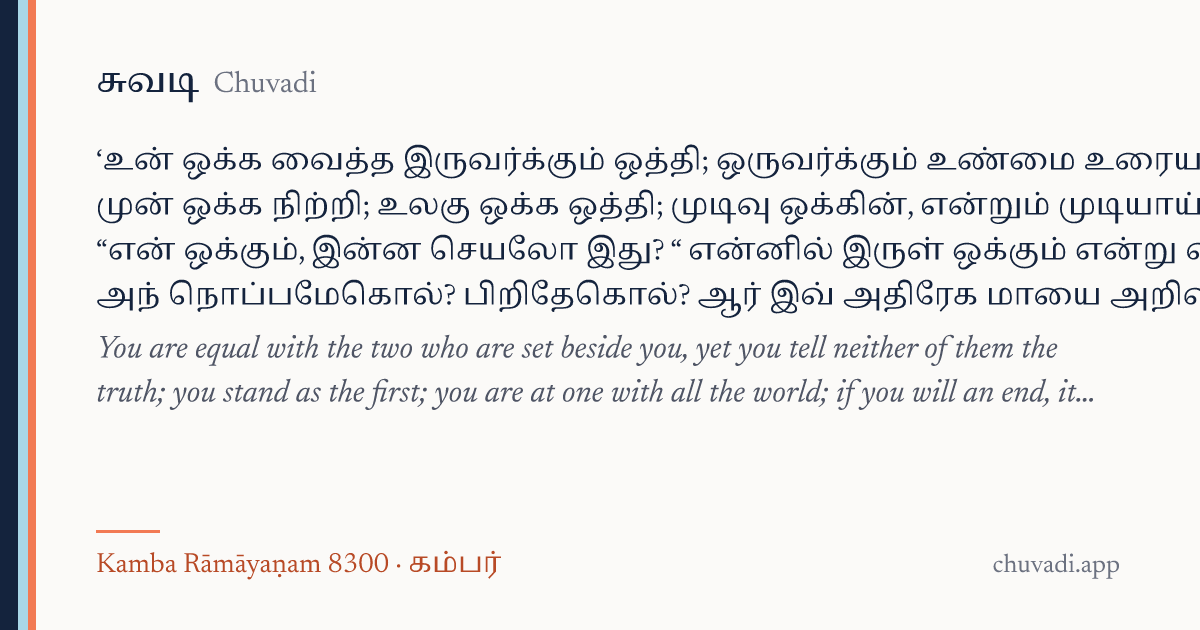
உன் ஒக்க வைத்த இருவர்க்கும் ஒத்தி - (காத்தல் தொழிலைச் செய்யும்) உன்னுடன் ஒருங்கு வைத்துப் பேசப்படுகிற (அழித்தல் படைத்தல் என்ற தொழில்களைச் செய்கிற உருத்திரன் பிரமன் ஆகிய இருமூர்த்திகளுடன் ஒத்து (அரி அரன் அயன் என மூவராய்ப்) பொருந்தி உள்ளாய்; ஒருவர்க்கும் உண்மை உரையாய் - (ஆனால் அவர்கள் ஒருவருக்கும்) உன் உண்மைத் தன்மையை உரைக்கின்றாயல்லை; முன் ஒக்க நிற்றி - (அவர்களில் நீயே) முதல் மூர்த்தியாய் நிற்கிறாய்; உலகு ஒக்க ஒத்தி - உலகில் உள்ள அனைத்துப் பொருள்களிலும் அந்தர்யாமியாய் ஒத்து நிற்கின்றாய்; முடிவு ஒக்கின் - (இப்பிரபஞ்சத்தை அழிக்க நீ திருவுள்ளம் கொண்டால் அவற்றிற்கு) அவ்வழிவு சங்கற்ப மாத்திரையானே பொருந்தும்; என்றும் முடியாய் - (நீ எப்பொழுதும் அழியாமல் இருப்பாய்; இன்ன செயலோ இது என் ஒக்கும் என்னின் - (உனது) இத்தன்மையான இச்செயலாகிய இது எத்தன்மைத்து என்று ஒருவர் எண்ணிப் பார்த்தால்; இருள் ஒக்கும் என்று விடியாய் - (அவ்வாறு எண்ணுபவர் மனம்) இருள் உடையது என்று (அவர்களுக்கு) விளக்கம் தராமல் நிற்பாய்; அந்நொப்பமே கொல் - (இவ்வாறு உன் செய்கை அறியப்படாமல் இருப்பதற்குக் காரணம்) அந்தப் புத்தியின் சிறுமையோ? பிறிதே கொல் - (அல்லது) வேறு ஏதாகிலும் உளதோ? இவ் அதிரேக மாயை - இந்த மிக்க மாயச் செயலை; அறிவார் ஆர் - அறிபவர் யாவர்?
திருமால் பிரத்யும்னனாய் இருந்து பிரமனைக் கொண்டு படைத்தல் தொழிலையும் சங்கர்ஷணனாயிருந்து உருத்திரனைக் கொண்டு அழித்தல் தொழிலையும் நடத்துகிறான் என்பதால் உன் ஒக்க வைத்த இருவர் என்றார். நொப்பம் - நொய்ப்பம் - புத்தியின் சிறுமை.
ஆங்கிலம் · English translationAI
Translation
- You are equal with the two who are set beside you, yet you tell neither of them the truth;
- you stand as the first; you are at one with all the world; if you will an end, it comes, yet you never end;
- if one asks, What is this deed of yours like?, you leave him in darkness and give no dawn;
- is it the smallness of our minds, or something else? Who can know this surpassing illusion?
What the poem says
Karuṭaṉ addresses Irāmaṉ as Tirumāl. The two set beside him are Brahmā the creator and Rudra the destroyer: together the three form the trinity, yet Tirumāl is the first among them and reveals his true nature to neither.
He dwells in all things, can end the universe by a mere wish, and himself never ends. Anyone who tries to understand his ways is left in the dark. Karuṭaṉ wonders whether this is due to the weakness of the human mind (noppam, 'smallness of understanding') or to some other cause.