



கம்பராமாயணம் 8303 · யுத்த 18.256
பாடல் · The poem
Tap a word to see its gloss in the commentary and where else it occurs.
பாட வேறுபாடு · Project Madurai reads
பொருள் · Meaning in Tamil
மீளாத வேதம் - (மெய்யில் இருந்து விலக) மீளுதல் இல்லாத வேதங்களின்; முடிவின் கண் - முடிபொருளாய் உள்ள (வேத சிகையாய் விளங்கும்) உபநிடதங்கள்; நின்னை - உன்னை (பற்றிக் கூறும் இடத்து); மெய்யாக - உண்மைப் பொருளாகக் கொண்டு (உள் பொருள் என்று); மெய்யின் நினையும் - உண்மை மெய்யுணர்வாகிய பதிஞானத்தால் ஆய்ந்து கூறும்; கேளாத என்று - (அவ்வாறு இருக்கும் போது) (நான் கடவுளைக் கண்ணால் கண்டுள்ளேன் என்று ஒருவர் கூறும்கூற்றுகி கேள்விப் படாத (கூற்று) என்றும்; பிற என்று சொன்ன - எனவே இக்கூற்று வேறு காரணத்தால் கூறப்பட்டது (கடவுள் உண்மையில் இல்லை) என்றும் கூறுகிற கூற்று; கெடுவார்கள் சொன்ன - அறிவில்லாத நாத்திகர்கள் சொன்னதாகும்; கடவார்- தாங்கள் கூறிய கூற்றினைக் கடவாது அவர்கள்; மாளாத நீதி இகழாமை நின்கண் அபிமானம் இல்லை - (ஒரு பொழுதும் பழுதுபடாத (சாத்திர நீதி முறை பிறழாமலும், உன்னிடம் பக்தி செலுத்தாமலும் கெட்டு அழிவார்கள்; வறியோர் ஆளாயும் வாழ்தி - (ஆனால் நீயேற பத்துடை அடியவர்க்கு எளிய ஏவல் ஆளாகவும் வாழ்கிறாய்; அரசாள்தி - அனைத்து உலகங்களையும்) அரசாளலும் செய்கிறாய்; இவ் அதிரேக மாயை - இந்த மிகுதியான மாயச் செயலை; ஆர் அறிவார் - யார் அறிவார்கள்.
இப்பாடலில் கடவுள் என்று ஒரு பொருள் இல்லை என்று கூறும் நாத்திகர்களை மறுத்துத் திருமாலின் சௌலப்யம், பரத்துவம் ஆகிய தன்மைகளைக் கவிஞர் விளக்கி உள்ளார். பத்துடை அடியவர்க்கு எளியனாய்ப் பிறர்க்கு அரிய வித்தகனாய் விளங்கும் தன்மையின் விளக்கம் இங்குக் கூறப்படுகிறது.
ஆங்கிலம் · English translationAI
Translation
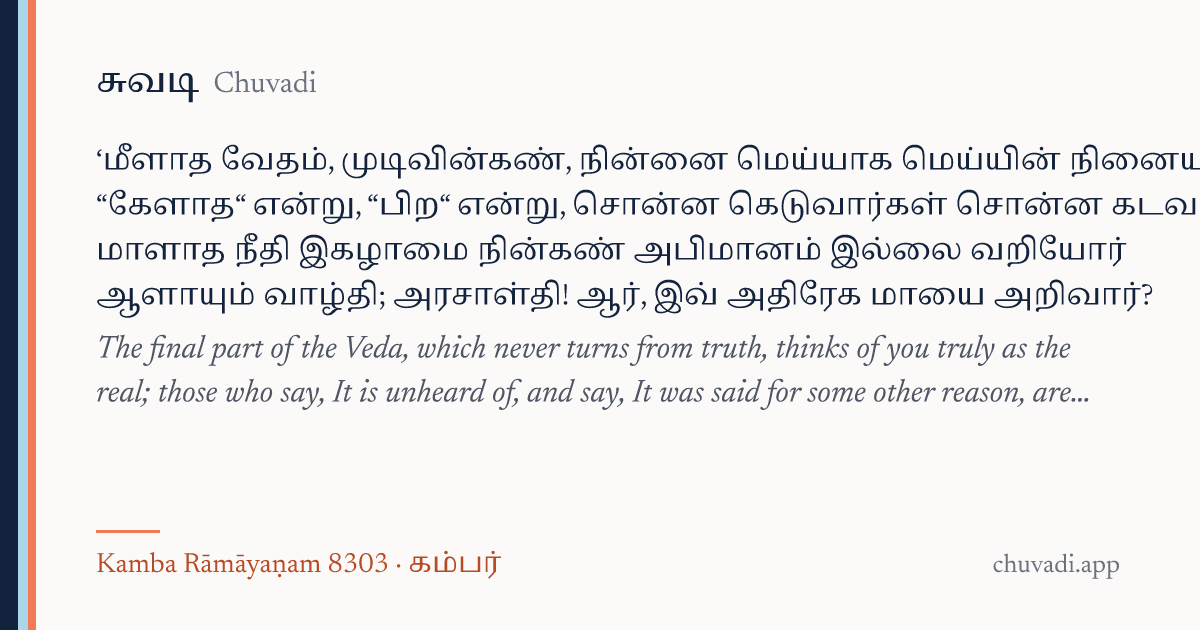
- The final part of the Veda, which never turns from truth, thinks of you truly as the real;
- those who say, It is unheard of, and say, It was said for some other reason, are ruined men and cannot rise above their words;
- they do not keep the undying law, nor cherish you; yet you live as the servant of the lowly
- and also rule as king! Who can know this surpassing illusion?
What the poem says
The Upaniṣads, the end of the Vedas, take Tirumāl as the ultimate reality. Karuṭaṉ condemns the unbelievers who dismiss claims of having seen God as unheard of or as said for other motives: they neither follow the moral law nor show devotion, and so they come to ruin.
The verse contrasts two sides of God: his accessibility, living as the humble servant of devotees, and his supremacy as ruler of all the worlds.