



கம்பராமாயணம் 831 · பால 13.27
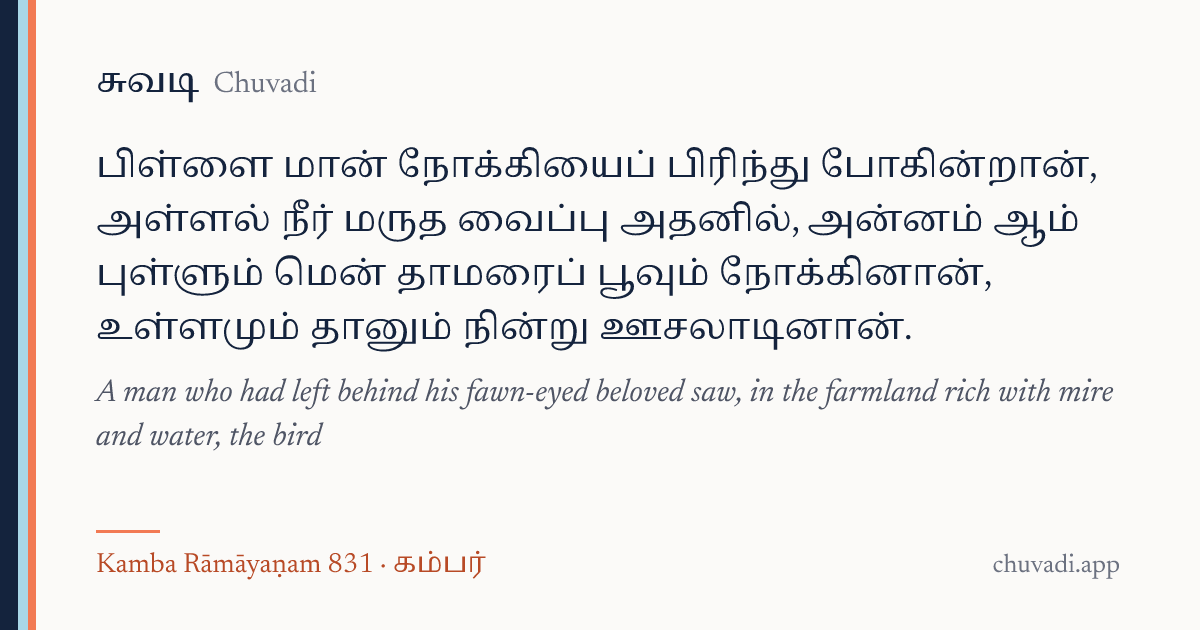
பாடல் · The poem
Tap a word to see its gloss in the commentary and where else it occurs.
பாட வேறுபாடு · Project Madurai reads
பொருள் · Meaning in Tamil
பிள்ளை மான் நோக்கியை - இளைய மான் போன்ற கண்களைக் கொண்ட காதலியைப்; பிரிந்து போகின்றான் - பிரிந்து செல்லுகின்ற ஓர் ஆடவன்; அள்ளல்நீர் - சேறும் நீரும் நிறைந்த; மருத வைப்பு அதனில் - மருத நிலத்தில் (வயல்); அன்னமாம் புள்ளும் - அன்னப் பறவையையும்; மென்தாமரைப் பூவும் - மெல்லிய தாமரைமலர்களையும்; நோக்கினான் - பார்த்து (தன் மனைவியின் நடையும், அடிகளும் நினைவுக்குவர); உள்ளமும் தானும் - மனமும் தானுமாக; நின்று - தனியாக நின்று; ஊசல் ஆடினான் - ஊஞ்சல் போலத் தடுமாறினான்.
தாமரைப் பூவையும் அன்னத்தையும் ஓர் ஆடவன் வயலிலே கண்டதும் தன் மனைவியின் அடிகளும், நடையழகும் நினைவிற்கு வந்தன என்பது. அவளை அவன் பிரிந்தமையால் அவற்றைக் காணமுடியவில்லையே என்று வருந்தினான்.
ஆங்கிலம் · English translationAI
Translation
- A man who had left behind his fawn-eyed beloved
- saw, in the farmland rich with mire and water, the bird
- that is the swan, and the soft lotus flower;
- and he and his heart stood there swinging to and fro.
What the poem says
Another vignette. A soldier who has had to leave his wife behind marches through the wet rice fields and sees a swan and a lotus. The swan's graceful walk reminds him of her gait, the lotus of her feet.
Torn between going on and turning back, he stands there with his heart swinging like a swing.