



கம்பராமாயணம் 8312 · யுத்த 18.265
பாடல் · The poem
Tap a word to see its gloss in the commentary and where else it occurs.
பாட வேறுபாடு · Project Madurai reads
பொருள் · Meaning in Tamil
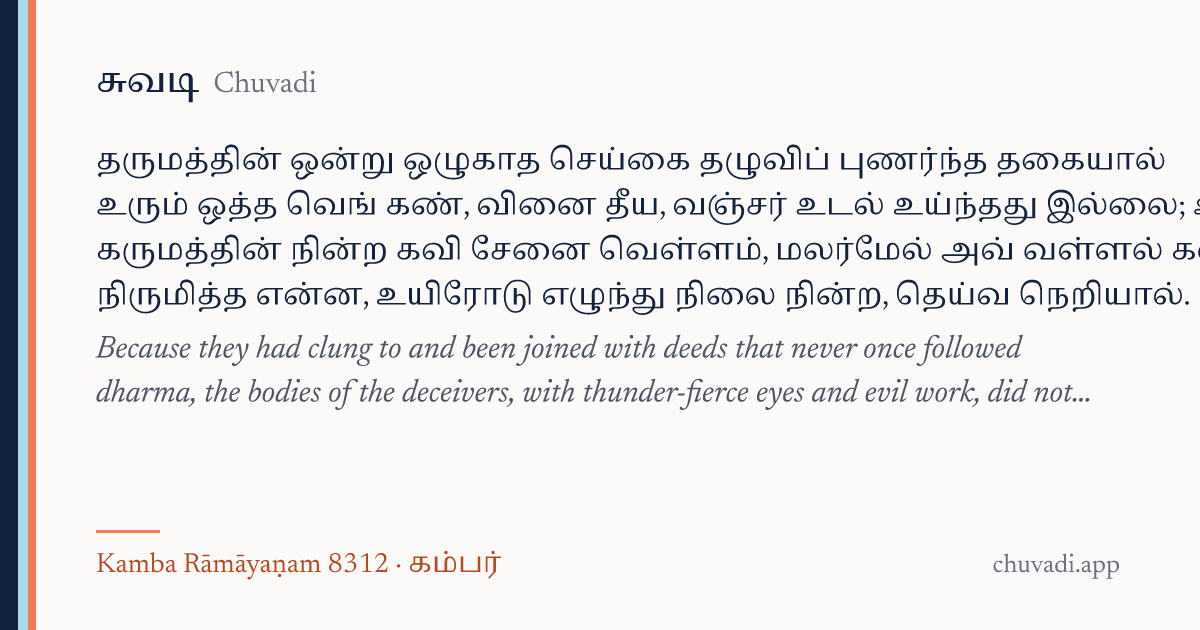
தருமத்தின் ஒன்றும் ஒழுகாத செய்கை - அறவழியில் எப்பொழுதும் சிறிதுகூட நடக்காத தன்மை; தழுவிப் புணர்ந்த தகையால் - பொருந்தி உள்ள காரணத்தினால்; உரும் ஒத்த வெங்கண் - இடியைப் போன்ற கொடிய கண்களையும்; வினை - வஞ்சனையையும்; தீய - தீய செயல்களையும் கொண்ட; வஞ்சர் உடல் உய்ந்தது இல்லை - வஞ்சகர்களாகிய (அரக்கர்களின் உடம்புகள் உயிர் பெற்று எழவில்லை; மலர் மேல் அவ்வள்ளல் - தாமரை மலரின் மேல் தங்கியுள்ள அந்தப் பிரமதேவன்; கடை நாள் நிருமித்த என்ன - ஊழி முடிவான பிற்காலத்தில் படைத்த (உயிர்களைப்) போல; உலகின் கருமத்தின் நின்ற - உலகத்தில் (பாவத்தைப் போக்கி அறத்தைத் தலை நிறுத்தும்) காரியத்தில் ஈடுபட்டு நின்ற, கவிசேனை வெள்ளம் - வானரப்படை வெள்ளங்கள்; தெய்வ நெறியால் - இறைவனின் சங்கற்பத்தால்; உயிரோடு எழுந்து நிலை நின்ற - உயிர் பெற்று எழுந்து ஊக்கத்தோடு களத்தில் நிலையாக நின்றன.
பாவம் மேற்கொண்ட அரக்கர் உயிர் பெறாமையும் அற வழியில் நின்ற இலக்குவன் முதலியோர் பிழைத்தமையும் இப்பாடலில் கூறினார். நாகபாசத்தால் கட்டுண்ட இலக்குவனும் வானர வீரர்களும், கருடன் வருகையால் உயிர் பெற்று எழுதலும், அவ்வாறு இன்றி இலக்குவன் அம்புகளால் உயிரிழந்த அரக்க வீரர் உயிர் பெறாமையும் கூறப்பட்டது. உலகின் கருமம் - அறவழி, கடைநாள் நிருமித்த - ஊழி முடிவான பிற்காலத்தில் படைத்து.
ஆங்கிலம் · English translationAI
Translation
- Because they had clung to and been joined with deeds that never once followed dharma,
- the bodies of the deceivers, with thunder-fierce eyes and evil work, did not revive; but the flood
- of the monkey army, standing in the world's true task, like beings that the bountiful one on the flower creates on the last day,
- rose up alive and stood firm, by the way of the divine.
What the poem says
The fallen rākṣasas, wicked and never following dharma, stay dead. Only those bound by the serpent-weapon revive: Ilakkuvaṉ and the monkey hosts, engaged in the world's righteous work, rise up alive by God's will and stand ready again on the field.
The poet compares their revival to the creatures Brahmā, the god on the lotus, creates anew after the deluge at the end of an age. The rākṣasas who were killed by Ilakkuvaṉ's arrows do not come back.