



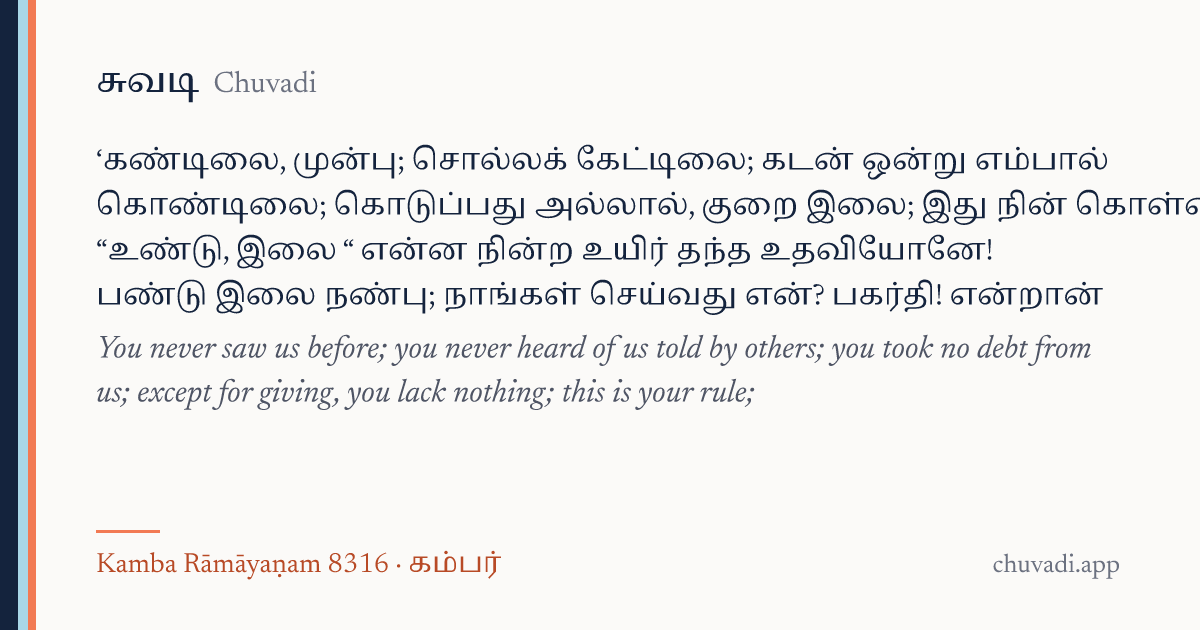
கம்பராமாயணம் 8316 · யுத்த 18.269
பாடல் · The poem
Tap a word to see its gloss in the commentary and where else it occurs.
பொருள் · Meaning in Tamil
உண்டு இலை என்ன நின்ற உயிர் தந்த உதவியோனே - உண்டோ இல்லையோ என்று ஐயங் கொள்ளும்படியாக நின்றிருந்த இலக்குவன் உயிரை (மீட்டும்) தந்த உதவியோனே! பண்டு நண்பு இலை - (உனக்கும் எங்களுக்கும்) முன்பு (எந்த விதமான) நட்பும் இல்லை; முன்பு கண்டிலை - முன்னால் (நீ எங்களைக்) கண்டதுமில்லை; சொல்லக் கேட்டிலை - (எங்களைப் பற்றி மற்றவர் சொல்லக் கேட்டதும் இல்லை; எம்பால் - எங்களிடம்; கடன் ஒன்று கொண்டிலை - கடனாக எந்த ஒன்றையும் பெற்றுக் கொண்டதும் இல்லை; கொடுப்பது அல்லால் - எங்களுக்குக் கொடுப்பது அல்லாமல்; குறை இலை - இதுவே உனது கோட்பாடாக இருக்கிறது; நாங்கள் செய்வது என் பகர்தி - நாங்கள் (உனக்குச் செய்யும் கைம்மாறு என்ன சொல்; என்றான் - என்று (இராமன் கேட்டான்.
எங்களுக்கும் உனக்கும் இதுவரை எத்தகைய தொடர்பும் இல்லை எனினும் நீ எங்களுக்குக் கைம்மாறு கருதாது உயிர் தந்து பேருதவி புரிந்து உள்ளாய். அப்படிப்பட்ட உனக்கு நாங்கள் எவ்வகையில் உதவுவது என்று இராமன் கருடனைப் பாராட்டிக் கூறியவாறு. கண்டிலை - கேட்டிலை என்பவற்றுக்கு எங்களால் முன்பு காணப்பட்டாயில்லை. கேட்கப்பட்டாயில்லை என்று இராமன் கூற்றாக வைத்தலே பொருந்தும்; கருடன் இவர்களைக் கண்டானா? கேட்டுள்ளானா? என்பதை இவன் விசாரித்தல் பொருந்தாது என்பது மகாவித்துவான் மயிலம். வே. சிவசுப்பிரமணியன் அவர்கள் கருத்து.
ஆங்கிலம் · English translationAI
Translation
- You never saw us before; you never heard of us told by others; you took no debt
- from us; except for giving, you lack nothing; this is your rule;
- O helper who gave back life when it hung between is and is not,
- there was no friendship before; what shall we do for you? Tell us, he said.
What the poem says
Irāmaṉ marvels that Karuṭaṉ has helped them without any past tie. He had never met them, never heard of them, owed them nothing. Giving seems to be his nature. He brought back Ilakkuvaṉ's life when it was uncertain whether he lived at all, and Irāmaṉ asks how they can ever repay him.
The commentary notes one scholar's view that 'you never saw, you never heard' is better read as 'you were never seen or heard of by us', since it would be odd for Irāmaṉ to question what Karuṭaṉ had seen.