



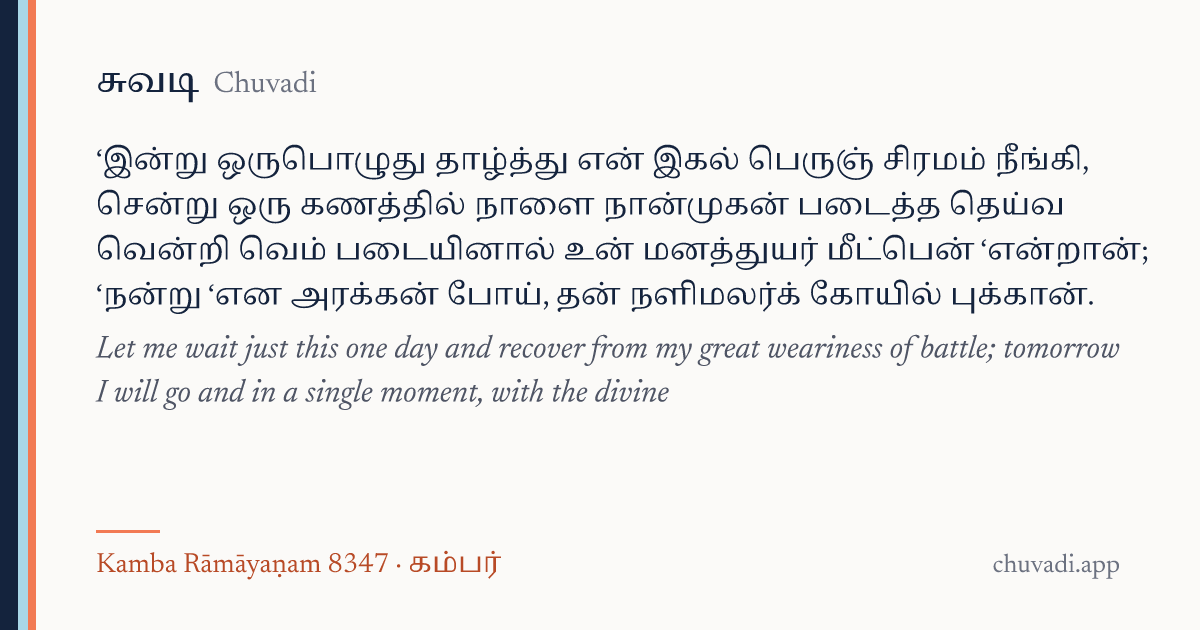
கம்பராமாயணம் 8347 · யுத்த 18.300
பாடல் · The poem
Tap a word to see its gloss in the commentary and where else it occurs.
பாட வேறுபாடு · Project Madurai reads
பொருள் · Meaning in Tamil
(இந்திரசித்தன் இராவணனைப் பார்த்து) இன்று ஒரு பொழுது தாழ்த்து - இன்று ஒரு நாள் காலம் தாழ்த்தி; என் இகல் பெரும் சிரமம் நீங்கி- எனக்குப் போரினால் ஏற்பட்ட பெரு வருத்தத்தை நீக்கிக்கொண்டு; நாளை - நாளைக்கு; ஒரு கணத்தில் சென்று - ஒரு கண நேரத்தில் (போர்க்களம்) சென்று; நான்முகன் படைத்த - பிரமன் உருவாக்கிப் படைத்த; தெய்வ - தெய்வத்தன்மை பொருந்திய; வென்றி வெம் படையினால் - வெற்றிக்கு உரிய கொடிய கணையால்; உன் மனத்துயர் மீட்பென் என்றான் - (பகைவர்களைக் கொன்று) உன் மனத்தில் ஏற்பட்டுள்ள துன்பத்தைப் போக்குவேன் என்று கூறினான்; நன்று என அரக்கன் போய் - நல்லது என்று கூறிவிட்டு அரக்கனாகிய (இராவணன்) போய்த்; தன் நளிமலர்க் கோயில் புக்கான் - தன்னுடைய சிறந்த மலர் மாலைகளால் அழகு படுத்தப்பட்டிருந்த அரண்மனைக்குச் சென்று சேர்ந்தான்.
ஆங்கிலம் · English translationAI
Translation
- Let me wait just this one day and recover from my great weariness of battle;
- tomorrow I will go and in a single moment, with the divine
- conquering, cruel weapon that the four-faced one made, I will lift the grief from your mind, he said;
- Good, said the rākṣasa, and went and entered his palace of cool flowers.
What the poem says
Intiracittu asks his father for a single day to rest from his wounds and exhaustion. The next morning, he promises, he will take the field and in an instant kill the enemy with the divine weapon of Brahmā, the four-faced god, and so end his father's distress.
Irāvaṇaṉ agrees and goes back to his flower-decked palace. This closes the Nāgapāśa episode.