



கம்பராமாயணம் 8350 · யுத்த 19.3
பாடல் · The poem
Tap a word to see its gloss in the commentary and where else it occurs.
பொருள் · Meaning in Tamil
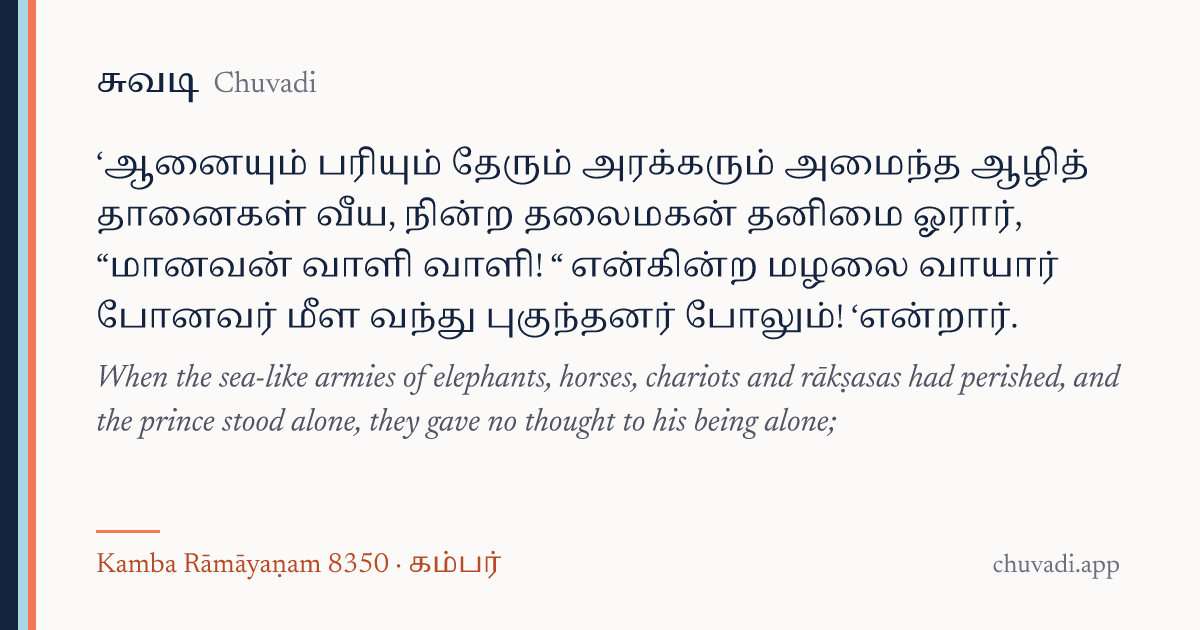
ஆனையும் - யானைகளும்; பரியும் - குதிரைகளும்; தேரும் - தேர்ப்படைகளும்; அரக்கரும் - காலாட் படை வீரர்களாகிய அரக்கர்களும்; அமைந்த - (ஒன்றாகச் சேர்ந்து) (நால்வகைப் படையாக) அமைந்த; ஆழித்தானைகள் வீய - கடல் போன்ற படைகள் அழிவுற்றதனால்; தனிமை நின்ற தலைமகன் - தன்னந் தனியனாய்ப் (போர்க்களத்தில்) நின்ற தலைவனாகிய இந்திரசித்தனது; தனிமை ஓரார் - தனிமையைப் பற்றிச் சிறிதும் எண்ணிப் பாராமல்; மானவன் வாளி வாளி என்ற - மனிதனாகிய இலக்குவனுடைய அம்புகள் அம்புகள் என்கின்ற, மழலை வாயார் - குழறிச் சொல்லும் சொற்களைக் கொண்ட வாயினை உடையவர்களாய்; போனவர் - போர்க்களத்தை விட்டு ஓடிப் போனவர்கள்; மீளவந்து - மீண்டும் வந்து; புகுந்தனர் போலும் என்றார் - (தங்கள் வீரத்தை வெளிக்காட்ட) புகுந்துள்ளார் போலும் என்றனர். (தூதுவர்)
ஆங்கிலம் · English translationAI
Translation
- When the sea-like armies of elephants, horses, chariots and rākṣasas
- had perished, and the prince stood alone, they gave no thought to his being alone;
- babbling, The man's arrows! his arrows!,
- they ran off; and now it seems they have come back in! they said.
What the poem says
The messengers expose the two commanders. When the whole fourfold army of elephants, horses, chariots and foot-soldiers was wiped out and Intiracittu was left alone on the field, these two did not stop to think of him.
Stammering with fright about the man Ilakkuvaṉ's arrows, they ran away. Now, the messengers say with scorn, they have come back to show off their courage.