



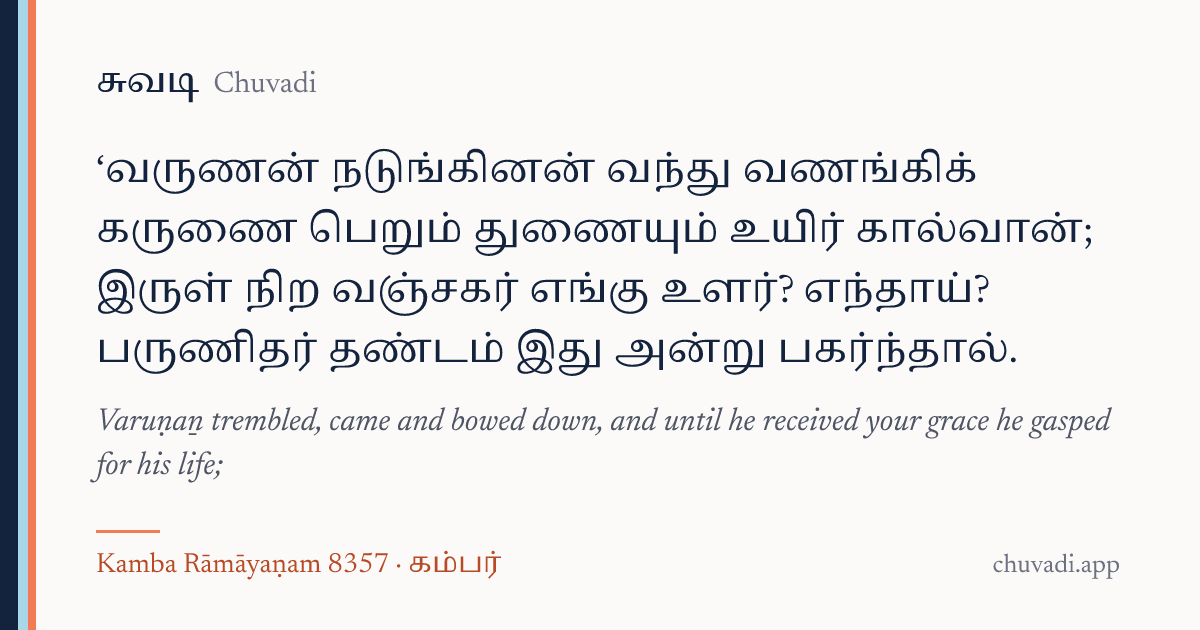
கம்பராமாயணம் 8357 · யுத்த 19.10
பாடல் · The poem
Tap a word to see its gloss in the commentary and where else it occurs.
பொருள் · Meaning in Tamil
எந்தாய் - எமது தந்தையே; வருணன் வந்து வணங்கி - (உன்னுடைய ஆற்றலுக்கு அஞ்சித் தோற்ற) வருணன் (வந்து உன்னை) வணங்கி நின்று; கருணை பெறும் துணையும் - (உன்) அருள் பெறும் கால அளவும், உயிர் கால்வான் நடுங்கினான் - பெரு மூச்சு விட்டுக்கொண்டு நடுங்கி நின்றான் (என்றால்); இருள் நிற வஞ்சகர் எங்கு உளர்? - இருட்டின் நிறம் உள்ள வஞ்சனைப் பண்பு நிறைந்த இவர்கள் எங்கே இருப்பர் (வருணனே அஞ்சி நிற்கையில் இவர்கள் உயிருக்கு அஞ்சி ஓடிவந்தது பெரும் பிழையிலை); பகர்ந்தால் - எடுத்துச் சொன்னால்; இது - (நீ கொடுத்த) இந்தத் தண்டனை; பருணிதர் தண்டம் அன்று - அறிவு உடையோர் கொடுக்கும் தண்டனை அன்று.
வருணனே உன்னிடத்தில் திக்கு விசயத்தில் நிற்கும்போது இவர்கள் எம்மாத்திரம் என்று மாலி கூறுகிறான். இராமனிடம் வருணன் அஞ்சி நடுங்கியது குறித்ததாகவும் கொள்ளலாம்.
ஆங்கிலம் · English translationAI
Translation
- Varuṇaṉ trembled, came and bowed down,
- and until he received your grace he gasped for his life;
- where do these dark-hued deceivers stand, my lord?
- If one speaks it out, this is not the punishment of the wise.
What the poem says
Māli reminds Irāvaṇaṉ that Varuṇaṉ, god of the sea, once came trembling to bow before him and gasped in fear until he was pardoned.
If a god could be so afraid, it is no great crime for these dark rākṣasas to have fled for their lives, and a wise ruler would not punish them like this. The commentary adds that the line may also allude to Varuṇaṉ trembling before Irāmaṉ at the ocean.