



கம்பராமாயணம் 8359 · யுத்த 19.12
பாடல் · The poem
Tap a word to see its gloss in the commentary and where else it occurs.
பொருள் · Meaning in Tamil
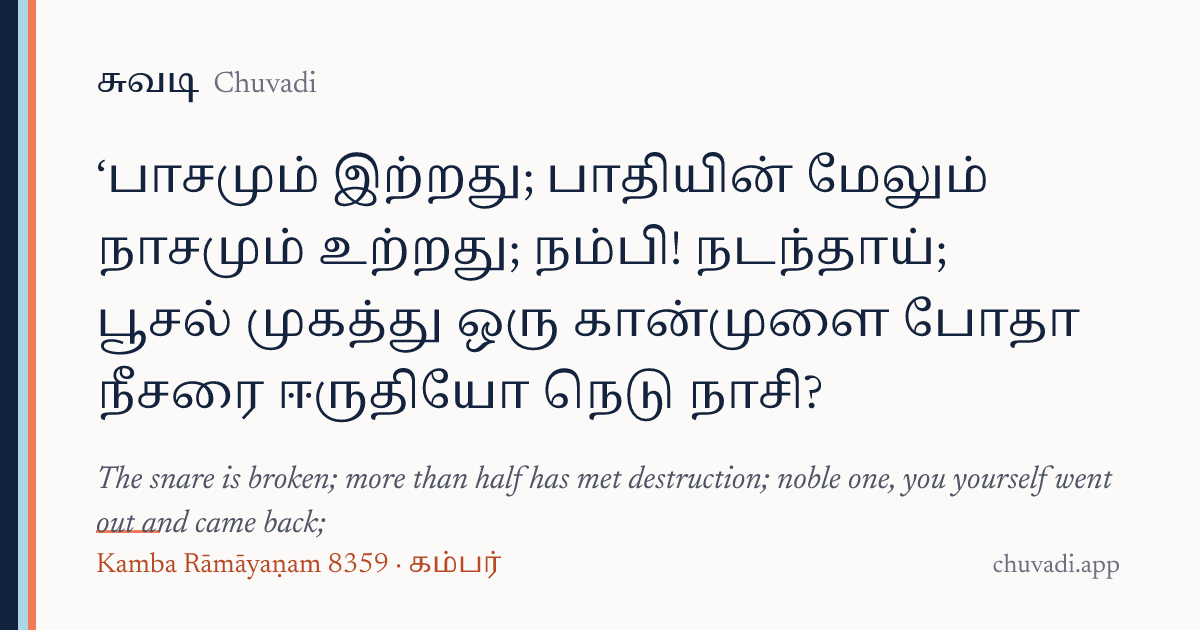
நம்பி - ஆடவரில் சிறந்தவனே; பாசமும் இற்றது - (இந்திர சித்தனது) நாகக் கணையும் வலி இழந்து இற்றுப் போய் விட்டது; பாதியின் மேலும் நாசமும் உற்றது - (அரக்கப் படை) பாதிக்கு மேல் (போரில்) அழிந்து போய் விட்டது; நடந்தாய் - (நீயும்) முதல் நாள் போருக்குச் சென்று விட்டுத் திரும்பி வந்துவிட்டாய்; பூசல் முகத்து - போர் முகத்தில்; ஒருகான்முளை போதா - ஒப்பற்ற (உன்) மகனுடன் (இறுதி வரை உடன்நின்று) போகாத; நீசரை- (எளிமைத் தன்மை உடைய) நீசர்களாகிய இந்தப் பணியாளருடைய; நெடுநாசி - நீண்ட மூக்கினை; ஈருதியோ - அறுக்கக்கடவாயோ?
ஆங்கிலம் · English translationAI
Translation
- The snare is broken; more than half
- has met destruction; noble one, you yourself went out and came back;
- will you cut off the long noses of these lowly ones
- who did not go on with your peerless son in the face of battle?
What the poem says
Māli presses his case. Intiracittu's serpent-weapon has failed, more than half the army is gone, and Irāvaṇaṉ himself went out to fight on the first day and came back.
In such a state, will he really cut off the noses of these lowly servants simply because they did not stay at his son's side in the fight?