



கம்பராமாயணம் 839 · பால 13.35
பாடல் · The poem
Tap a word to see its gloss in the commentary and where else it occurs.
பாட வேறுபாடு · Project Madurai reads
பொருள் · Meaning in Tamil
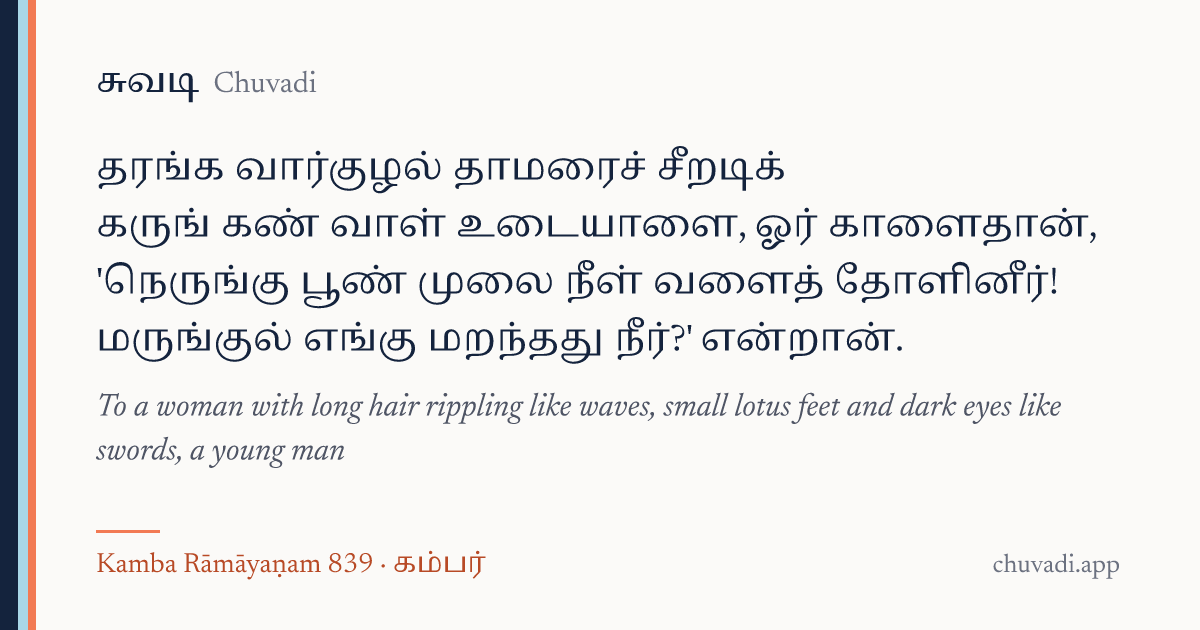
தரங்க வார்குழல் - அலைபோன்று நீண்ட கூந்தலையும்; தாமரைச் சீறடி - தாமரை போன்ற சிறிய அடிகளையும்; வாள் கருங்கண் - வாள் போன்ற கரிய கண்களையும்; உடையாளை - உடைய ஒரு பெண்ணை; ஓர் காளை - ஒரு வீரன்; நெருங்கு பூண் முலை - அணிகள் பூண்ட நெருங்கிய முலைகளையும்; நீள்வளைத் தோளினீர் - வளையல்களையணிந்த நீண்ட தோள்களையும் உடையவரே; மருங்குல் - (நீங்கள்) உமது இடையை; எங்கு - எந்த இடத்தில்; மறந்தது - மறந்து வைத்து விட்டீர்கள்; என்றான் - என்று கேட்டான்.
அந்த மங்கையின் இடை கண்ணுக்குப் புலனாகாதவாறு மிக நுண்ணியதாக இருந்தது. அப்பெண்ணோடு உரையாட விரும்பியே அந்த இளைஞன் இவ்வாறு வினாவினான்.
ஆங்கிலம் · English translationAI
Translation
- To a woman with long hair rippling like waves, small lotus feet
- and dark eyes like swords, a young man
- said, 'You with the close-set, jewelled breasts and long, bangled arms,
- where did you leave your waist behind?'
What the poem says
Another teasing exchange. A young man, looking for an excuse to talk to a beautiful woman, asks her where she has forgotten her waist.
The joke is a compliment: her waist is so slender that it seems to be missing altogether, a stock ideal of beauty in Tamil poetry.