



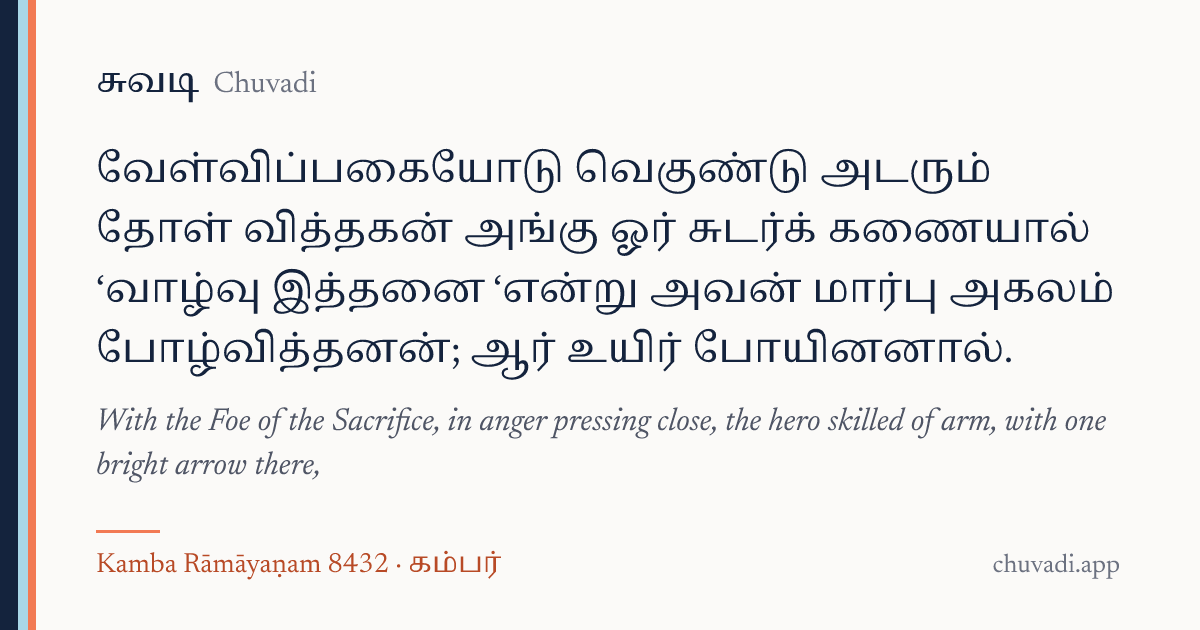
கம்பராமாயணம் 8432 · யுத்த 19.85
பாடல் · The poem
Tap a word to see its gloss in the commentary and where else it occurs.
பொருள் · Meaning in Tamil
வேள்விப் பகையோடு - வேள்வியின் பகைஞன் என்பவனுடன்; வெகுண்டு அடரும் - சினந்து போர் செய்கின்ற; தோள் வித்தகன்- தோள் வலிமை உடைய இலக்குவன்; வாழ்வு இத்தனை என்று - (உனக்கு) வாழ்வு இத்தனை (அளவு) தான் என்று சொல்லி; அங்கு ஓர் சுடர்க் கணையால் - அப்போது ஒரு ஒளி விடுகின்ற அம்பினால்; அவன் மார்பு அகலம் போழ்வித்தனன் - அவனது பரந்த மார்பைப் பிளந்தான்; ஆர் உயிர் போயினனால் - (அவனுடைய) அருமையான உயிர் நீங்கியது.
இப்பாடல் வேள்வியின் பகைஞன் இறந்து பட்டமை கூறுவது. அடுத்து வரும் “மல்லல் தட மார்பன்” என்ற பாடலில் வேள்வியின் பகைஞனுடைய வில்லும், தோளும், கழுத்தும், காலும் அறுபட்ட தன்மை கூறப்பட்டுள்ளது. முதல் பாடலில் உறுப்பிழந்தமை (6.19.86) கூறுவதாக அமைவது பொருத்தமாகத் தோன்றவில்லை. உறுப்புகளை இழந்து இறுதியில் மார்பு பிளந்து வேள்வியின் பகைஞன் இறந்தான் எனக் கொள்ளுவதே பொருத்தம் உடையதாக இருக்க வாய்ப்புண்டு. இக்கருத்தை “இச்செய்யுள் ஒரு பிரதியில் மல்லல் தடமார்பன் என்ற அடுத்த பாடலின் பின் உள்ளது” என்ற வை. மு.கோவின் குறிப்புரை தெளிவு படுத்துதல் காண்க. இனி, இதில் முரண்பாடு இல்லை. முதல் பாடல் இறந்தான் எனக்கூற எவ்வாறு இறந்தான் என்பதை வரும் பாடல் கூறுவது பொருத்தமானதே என்பது மகாவித்துவான் வே. சிவசுப்பிரமணியன் அவர்கள் கருத்து.
ஆங்கிலம் · English translationAI
Translation
- With the Foe of the Sacrifice, in anger pressing close,
- the hero skilled of arm, with one bright arrow there,
- saying, This much is your life, split open
- his broad chest; and his precious life departed.
What the poem says
Ilakkuvaṉ fights Foe of the Sacrifice. Telling him that his life has run its course, he splits open his chest with a single bright arrow and kills him.
The commentary discusses the order of this verse and the next, which describes how the same rākṣasa lost his bow, neck and legs. One manuscript places this verse after that one. Another scholar holds that there is no contradiction: this verse states the death, and the next describes how it happened.