



கம்பராமாயணம் 8447 · யுத்த 19.100
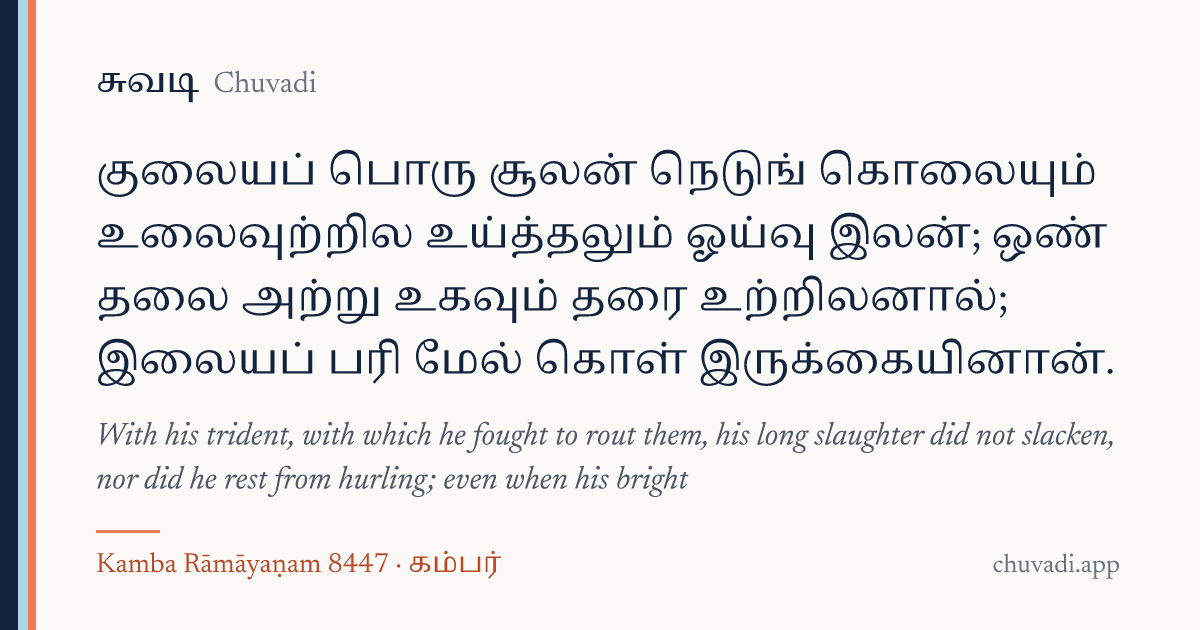
பாடல் · The poem
Tap a word to see its gloss in the commentary and where else it occurs.
பொருள் · Meaning in Tamil
இலையப்பரி - தாளத்திற்கு ஏற்ப அடியிட்டு நடக்கும் குதிரையின்; மேல் கொள் இருக்கையினான் - மேல் நிலையாக இருக்கை கொண்டவனாகிய (பிசாசன்); ஒண்தலை அற்று உகவும் - தன் ஒளியுள்ள தலை துண்டுபட்டு விழுந்த பின்பு கூட; குலையப் பொரு சூலன் - (வானர வீரர்கள்) குலைந்து ஓடும்படியாகப் போர் செய்கிற சூலத்தை உடையவனாம்; நெடுங் கொலையும் உலைவுற்றில - (தான்) (செய்து வந்த) பெரும் (போர்க்) கொலையையும் குறைவில்லாமல்; உய்த்தலும் ஓய்வு இலன் - செய்தலிலும் ஓய்வு கொண்டு ஒழியாதவனாகி; தரை உற்றிலனால் - தரையில் விழாமல் இருந்தனன்.
தலையை இழந்த பிசாசனுடைய முண்டம் நிகழ்த்திய போர் பற்றி இப்பாடல் கூறுகிறது. இது அட்டையாடல் என்க. இலயப்பரி - தாளத்திற்கேற்ப அடியிட்டு நடக்கும் குதிரை. இலையம் - இலயம். தாளத்தின் கால அளவு.
ஆங்கிலம் · English translationAI
Translation
- With his trident, with which he fought to rout them, his long slaughter
- did not slacken, nor did he rest from hurling; even when his bright
- head was cut off and fell, he did not touch the ground,
- the one who kept his seat on the horse that paced in rhythm.
What the poem says
Even after his head is cut off, Picācaṉ does not fall. He stays seated on his horse, which steps in time like a dancer, and his headless body goes on fighting with the trident and killing monkeys without pause.
The commentary calls this the dance of the headless trunk in battle, a stock motif of Tamil war poetry. It explains ilaiyam as layam, rhythm or tempo, used of the horse's measured gait.