



கம்பராமாயணம் 8453 · யுத்த 20.4
பாடல் · The poem
Tap a word to see its gloss in the commentary and where else it occurs.
பாட வேறுபாடு · Project Madurai reads
பொருள் · Meaning in Tamil
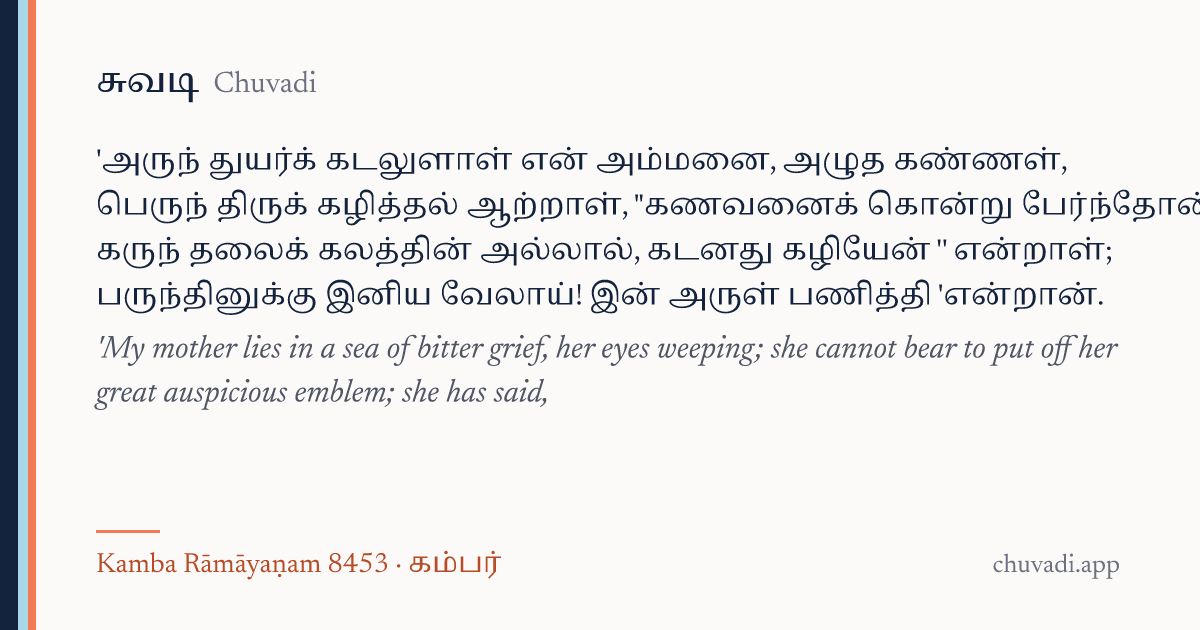
என் அம்மனை - என்னுடைய தாய்; அழுத கண்ணள் - அழுகின்ற கண்களை உடையவளாய்; அருந்துயர்க் கடலுளாள் - (கடத்தற்கு) அரிய துயர்க்கடலுள் ஆழ்ந்திருக்கின்றாள்; பெருந்திருக் கழித்தல் ஆற்றாள் - பெருமை பெற்ற மங்கல நாணை (இன்னும் கழித்திடப் பொறுக்க முடியாதவள்; கணவனைக் கொன்று போந்தோன் - தன்னுடைய கணவனைக் கொன்றவனின் (இராமனின்); கருந்தலைக் கலத்தின் அல்லால் - கரிய தலை ஓடாகிய பாத்திரத்தாலல்லாது; கடனது கழியேன் என்றாள் - (தன் (கணவனுக்குச் செய்ய வேண்டிய) கடனைச் செய்ய மாட்டேன் எனக் கூறிவிட்டாள்; பருந்தினுக்கு இனிய வேலாய் - (உணவளிப்பதால்) பருந்துகளுக்கு இனிமையைச் செய்கின்ற வேற்படையை உடையவனே! இன்னருள் - (தாயின் வஞ்சினத்தை உடைய நோன்பினை முடித்துக் கொடுக்கும் கடமையை உடைய மகனுக்கு உதவ வேண்டும் என்ற) இனிய அருளால்; பணித்தி என்றான் - (இன்று) போர் மேற்செல்லுதற்கு எனக்குக் கட்டளை இடுக என வேண்டிக்கொண்டான்.
கணவனைக் கொன்றவனைப் பழி வாங்கும் வரை மங்கல நாணைக் கழற்றாமலும் மரணச் சடங்குகளைச் செய்யாமலும் இருப்பதாய் வஞ்சினம் கூறுவது மறக்குல மகளிர் மரபு. அதனை நிறைவேற்றிக் கொடுப்பது அரச மைந்தன் முதலியோருடைய கடமை. எனவே அரச சேவையில் தன்னுடைய சொந்தக் கடமையும் சேர்ந்திருப்பதால் இனிய அருளால் பணித்தி என இரக்கின்றான். அம்மனை - தாய். ஒருபெண் பெறுகின்ற அனைத்துச் செல்வங்களுள்ளும் உயர்ந்த செல்வம் மங்கல நாணாகையால் “பெருந்திரு” எனப்பட்டது.
ஆங்கிலம் · English translationAI
Translation
- 'My mother lies in a sea of bitter grief, her eyes weeping;
- she cannot bear to put off her great auspicious emblem; she has said,
- "Except with the black skull of him who killed my husband and went away for a vessel, I will not perform the rites";
- O you whose spear delights the kites, grant me your sweet grace and command me!' he said.
What the poem says
Makarakkaṇṇaṉ now gives a personal reason for his plea. His widowed mother refuses to remove her marriage emblem, the tāli, or to perform her husband's funeral rites until she can do so using the skull of Irāmaṉ, her husband's killer, as the vessel.
Such a vow of vengeance was a custom among women of warrior clans, and fulfilling it fell to the son. So he asks the king for the kindness of sending him to battle. The tāli is called 'the great wealth', the most precious thing a married woman owns, and the kites delight in Irāvaṇaṉ's spear because it feeds them on the slain.