



கம்பராமாயணம் 8455 · யுத்த 20.6
பாடல் · The poem
Tap a word to see its gloss in the commentary and where else it occurs.
பாட வேறுபாடு · Project Madurai reads
பொருள் · Meaning in Tamil
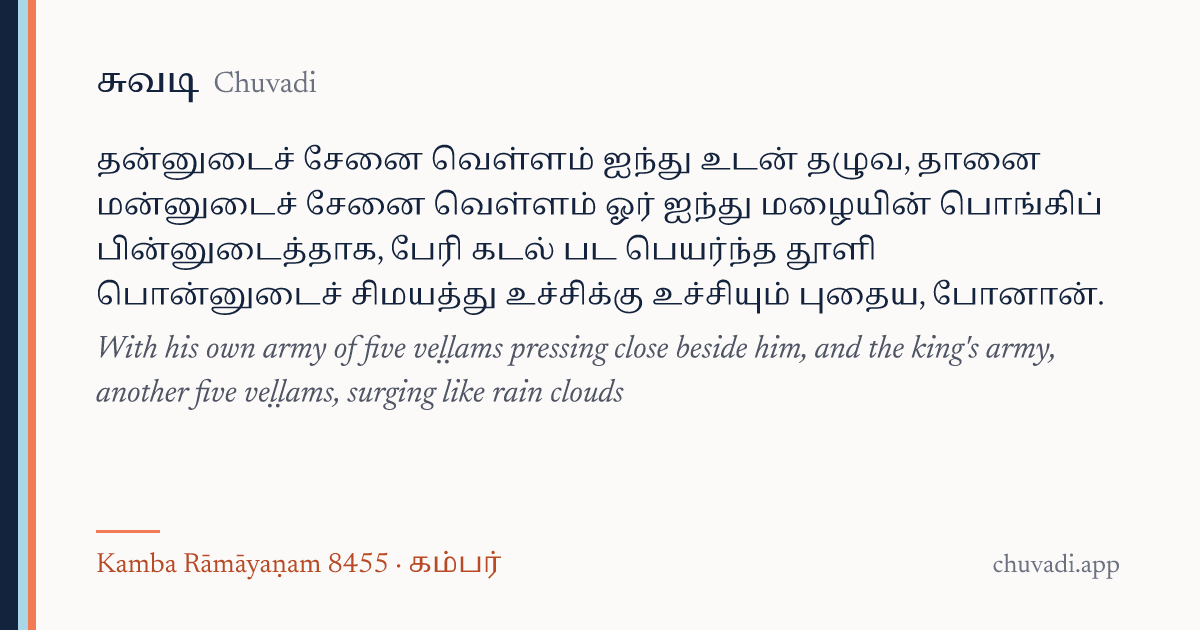
தன்னுடைச்சேனை - தன்னதாகிய சேனை வரிசை; வெள்ளம் ஐந்து உடன் தழுவ - ஐந்து வெள்ளம் உடன் தழுவி வரவும்; தானை மன்னுடைச் சேனை - தானை கொண்ட மன்னவனுடைய சேனை; வெள்ளம் ஓர் ஐந்து - ஐந்து வெள்ளம் சேனைகளும்; மழையின் பொங்கிப் பின்னுடைத்தாக - மேகத்தைப் போல ஆரவாரித்துக் கொண்டு தன் பின்னே வரவும்; பேரி கடல் பட - பேரிகை கடல் போல் ஒலிக்கவும்; பெயர்ந்த தூளி - (சேனைகள் செல்லுதலால்) எழுந்த புழுதியால்; பொன்னுடைச் சிமயத்து உச்சிக்கு உச்சியும் - பொன் மயமான மேருமலையின் உச்சியிலுள்ள சிகரமும்; புதைய, போனான் - மறையும் படியாக (அம்மகரக்கண்ணன் சென்றான்.
பின்வரும் 8440ஆம் பாடலில் “பராவ அரும் வெள்ளம் பத்தும்” என வருதற்கேற்ப, இங்கு “கோடி” என்பது “வெள்ளம்” எனவும் 'நால்' என்பது 'ஓர்' எனவும் பாடம் கொள்ளப்பெற்றது.
ஆங்கிலம் · English translationAI
Translation
- With his own army of five veḷḷams pressing close beside him,
- and the king's army, another five veḷḷams, surging like rain clouds
- behind him, the war drums roaring like the sea, and the dust they raised
- burying even the topmost peak of golden Mēru, he went.
What the poem says
Makarakkaṇṇaṉ marches out with ten veḷḷams of troops, five of his own and five lent by the king. A veḷḷam is a vast traditional unit of army size, used here simply to suggest overwhelming numbers.
The drums boom like the ocean, and the dust kicked up by the marching host rises so high that it buries even the summit of Mēru, the golden mountain at the centre of the world. The commentary notes that the numbers in this verse were read to agree with the later reference to 'ten veḷḷams'.