



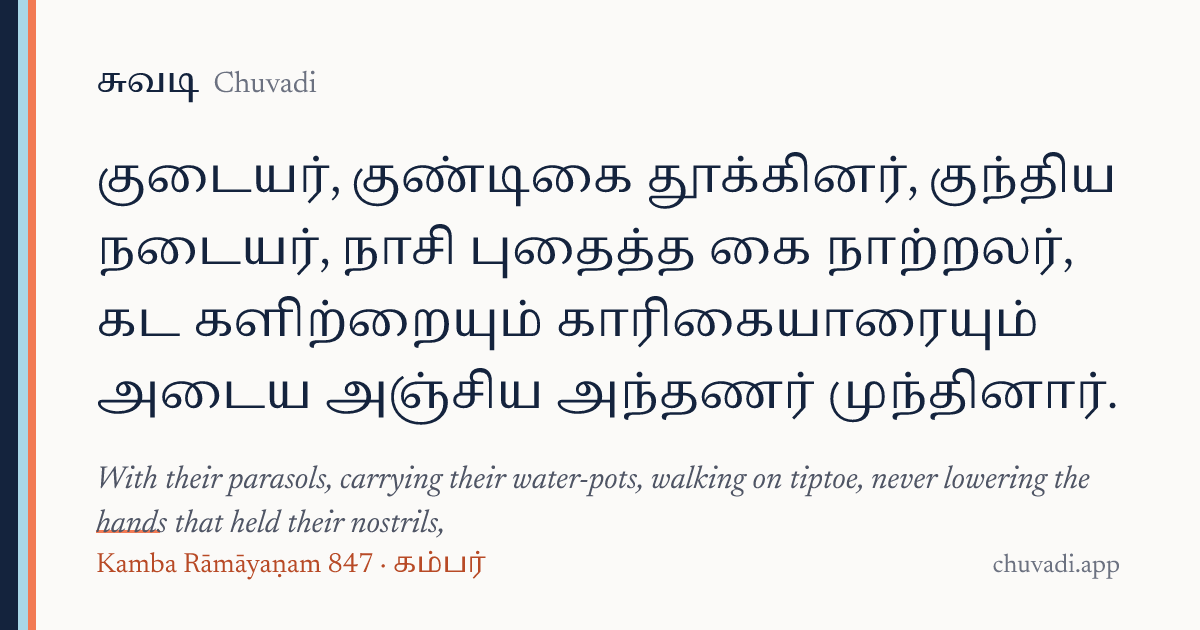
கம்பராமாயணம் 847 · பால 13.43
பாடல் · The poem
Tap a word to see its gloss in the commentary and where else it occurs.
பொருள் · Meaning in Tamil
கட களிற்றையும் - மத யானையையும்; காரிகையாரையும் - மகளிரையும்; அடைய - பக்கத்தில் செல்ல; அஞ்சிய அந்தணர் - அச்சம் கொண்டுள்ள அந்தணர்; குடையர் - குடை பிடித்தவர்களும்; குந்திய நடையர் - குதிகால் தரையில் படாமல் உந்திச் செல்பவர்களும்; குண்டிகை தூக்கினர் - கமண்டலத்தை ஏந்தியவர்களும்; நாசி புதைத்த கை - மூக்கை மூடிய கையை; நாற்றலார் - எடுக்காதவர்களு மாகிய; முந்தினார் - முற்பட்டுச் சென்றார்கள்.
குந்திய நடையினர்: தம் நடையால் எவ்வுயிர்க்கும் தீங்கு வராதபடி பாதத்தால் உந்தி நடக்கும் நடையை உடையவர். நாசி புதைத்த கை - பிராணாயாமம் செய்யும் வலக்கையைக் கீழே தொங்கவிடமாட்டார்கள். மாதரை நெருங்கினால் ஈட்டிய தவமும், புண்ணியப் பயனும், உயிரினும் மேலான ஒழுக்கமும் அழியும். அதனால் அவர்கள் நெருங்க அஞ்சினர்.
ஆங்கிலம் · English translationAI
Translation
- With their parasols, carrying their water-pots, walking
- on tiptoe, never lowering the hands that held their nostrils,
- afraid to come near the rutting elephants and the women,
- the Brahmins hurried on ahead.
What the poem says
The Brahmin priests keep well ahead of the crowd. They walk on tiptoe so as not to crush any living creature, carry their water-pots and parasols, and keep a hand at the nose as in breath-control practice.
They are afraid both of the rutting elephants and of the women, since contact with women was thought to endanger their hard-won austerity and purity.