



கம்பராமாயணம் 8500 · யுத்த 21.13
பாடல் · The poem
Tap a word to see its gloss in the commentary and where else it occurs.
பாட வேறுபாடு · Project Madurai reads
பொருள் · Meaning in Tamil
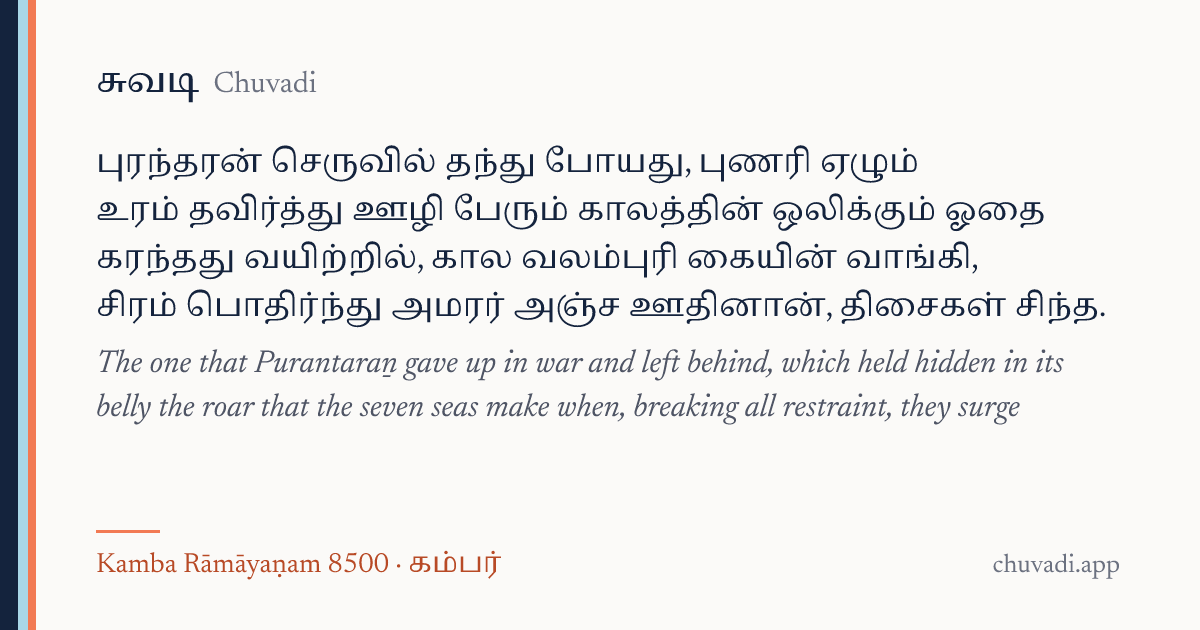
புரந்தரன் செருவில் தந்து போயது - இந்திரன் போரில் தோல்வியுற்று (திறையாகத்) தந்து சென்றதும்; புணரி ஏழும் உரம் தவிர்த்து ஊழி பேருங்காலத்தின் - கடல்கள் ஏழும் (உலகப் பொருள்களின்) திண்மையைச் சிதைத்துப் பெருகி மேலோங்கும் ஊழி இறுதி நாளிலே; ஒலிக்கும் ஓதை வயிற்றில் கரந்தது - ஆரவாரிக்கும் பேரோசையை, தன் வயிற்றினுள் அடக்கி மறைத்துள்ளதும்; கால வலம்புரி கையின் வாங்கி - காலனது தன்மையினை உடையதுமாகிய வலம்புரிச் சங்கினைக் கையிலெடுத்து; சிரம் பொதிர்ந்து அமரர் அஞ்ச, திசைகள் சிந்த ஊதினான் - தேவர்கள் தலை நடுக்குற்று அஞ்சவும், திசைகள் நிலை கெட்டுச் சிதையவும் ஊதினான்.
ஆங்கிலம் · English translationAI
Translation
- The one that Purantaraṉ gave up in war and left behind, which held hidden in its belly
- the roar that the seven seas make when, breaking all restraint, they surge
- at the time when the age ends: that deadly right-whorled conch he took in his hand
- and blew it, so that the gods shook their heads in fear and the quarters were scattered.
What the poem says
Intiracittu blows his war conch, a valampuri, a rare conch whose spiral turns to the right. He won it from Intiraṉ (here called Purantaraṉ) when he defeated the king of the gods, who surrendered it as tribute.
The conch seems to contain within it the roar of the seven oceans as they flood the world at the end of an age, and it is as deadly as Death himself. When he blows it the gods tremble and the directions themselves seem to fall apart.