



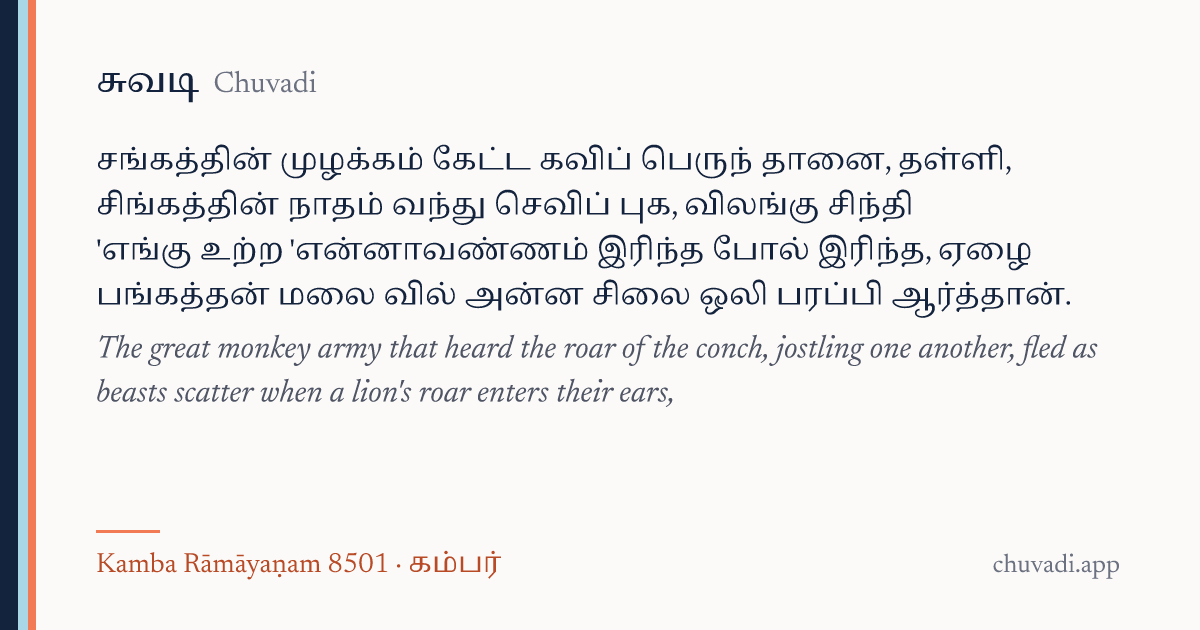
கம்பராமாயணம் 8501 · யுத்த 21.14
பாடல் · The poem
Tap a word to see its gloss in the commentary and where else it occurs.
பொருள் · Meaning in Tamil
சங்கத்தின் முழக்கம் கேட்ட கவிப்பெருந்தானை - வலம்புரிச் சங்கின் முழக்கத்தைக் கேட்ட வானரப் பெருஞ்சேனை; தள்ளி - (அச்சத்தால் ஒன்றையொன்று) தள்ளிக் கொண்டு; சிங்கத்தின் நாதம் வந்து செவிப்புக விலங்கு சிந்தி - சிங்கத்தின் முழக்கம் வந்து தம் செவிகளிற் புக்க அளவில் விலங்குகள் (தாம் இருந்த இடங்களை விட்டுச் சிதறி; “எங்கு உற்ற” என்னா வண்ணம் இரிந்த போல் இரிந்த - “எங்கே சென்றன” என அறிந்து கொள்ள முடியாதவாறு ஓடிப் போதல்போல ஓடிப்போயின; ஏழை பங்கத்தன் மலைவில் அன்ன சிலை ஒலி பரப்பி ஆர்த்தான் - (அந்நிலையில் இந்திரசித்து) பெண்ணொரு பாகனாகிய சிவபெருமானது மேரு மலையாகிய வில்லினை ஒத்த (தன்னுடைய) வில்லின் நாணொலியைப் பரவச் செய்து ஆரவாரித்தான்.
ஆங்கிலம் · English translationAI
Translation
- The great monkey army that heard the roar of the conch, jostling one another,
- fled as beasts scatter when a lion's roar enters their ears,
- so that none could say 'Where have they gone?'; and he spread the twang
- of his bow, like the mountain bow of the one who shares his body with a woman, and roared.
What the poem says
At the sound of the conch the monkeys panic, shoving each other aside and fleeing like animals scattering at a lion's roar, vanishing so fast no one can tell where they have gone.
Intiracittu then twangs his bow and roars. His bow is compared to the mountain Mēru, which Śiva used as a bow when he burned the three flying cities. Śiva is described as 'he whose body is shared with a woman', since his wife Umā forms its left half.