



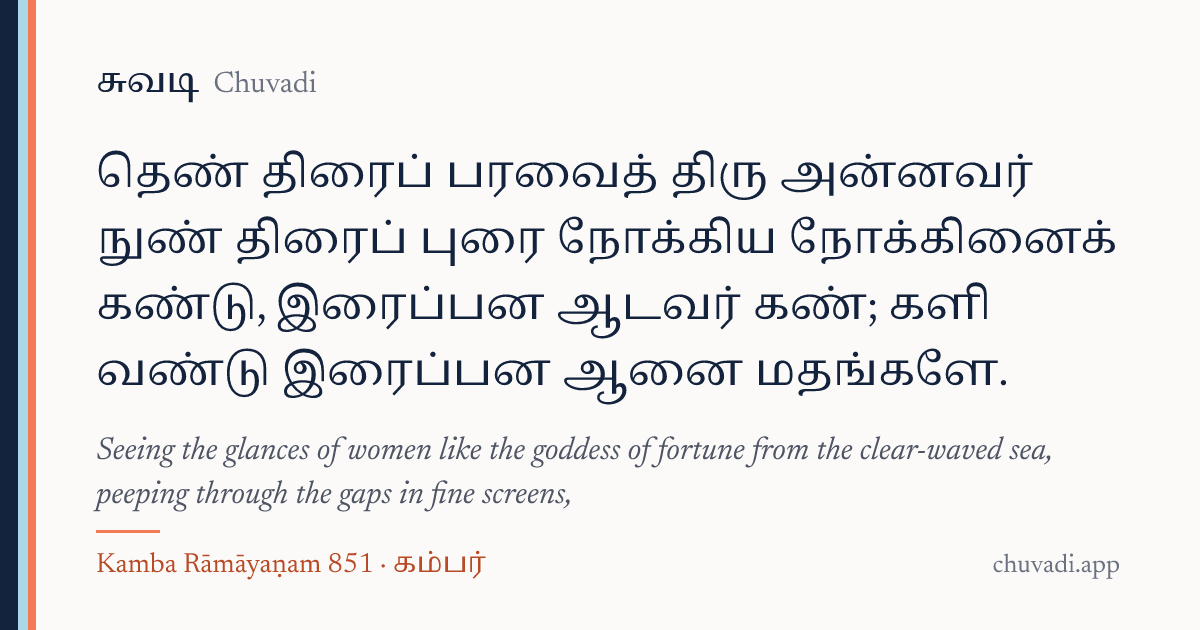
கம்பராமாயணம் 851 · பால 13.47
பாடல் · The poem
Tap a word to see its gloss in the commentary and where else it occurs.
பொருள் · Meaning in Tamil
தெண்திரைப் பரவை - தெளிந்த அலைகளோடு கூடிய பாற்கடலில்; திரு அன்னவர் - தோன்றிய திருமகளைப் போன்ற பெண்கள்; நுண் திரை - மெல்லிய திரைச் சீலையிலுள்ள; புரை நோக்கிய - துளையினால் பார்க்கின்ற; நோக்கினை - பார்வையை, கண்டு - கண்டு; ஆடவர் கண் இரைப்பன - காளையரின் கண்கள் மகிழ்ந்து ஆரவாரம் செய்தன; யானை மதங்கள் - யானைகளின் மதநீரைக் கண்டு; களிவண்டு - களிப்புள்ள வண்டுகள்; இரைப்பன - (மகிழ்ச்சியான) ஆரவாரம் செய்தன.
மகளிர் சிவிகையில் போகும் பொழுது திரையிட்டுச் செல்கின்றார்கள். திரையின் துளையால் வெளிப்படும் அப்பெண்களின் கண்களைக் கண்டு ஆடவரின் கண்கள் மகிழ்ந்தன என்பது. யானையின் மதநீரைக் கண்டு வண்டுகள் மகிழ்வதும், மகளிர் கண்களைக் கண்டு ஆடவரின் கண்கள் மகிழ்வதும் சேனையில் நிகழக் கூடியன. இவ்விரண்டையும் தனித்தனியே ஒன்றுபடக் கூறியது தொடர் முழுதும் உவமையணியாகும்.
ஆங்கிலம் · English translationAI
Translation
- Seeing the glances of women like the goddess of fortune from the clear-waved sea,
- peeping through the gaps in fine screens,
- the men's eyes clamoured with delight; and the drunken
- bees clamoured over the elephants' must.
What the poem says
The noblewomen ride behind curtains, but their eyes can be glimpsed through gaps in the fine cloth. The men catch these glances and their eyes "clamour" with delight.
Kampaṉ sets this beside another sight of the march, bees swarming joyfully on the elephants' must, so that the two scenes mirror each other line for line.