



கம்பராமாயணம் 8536 · யுத்த 21.49
பாடல் · The poem
Tap a word to see its gloss in the commentary and where else it occurs.
பாட வேறுபாடு · Project Madurai reads
பொருள் · Meaning in Tamil
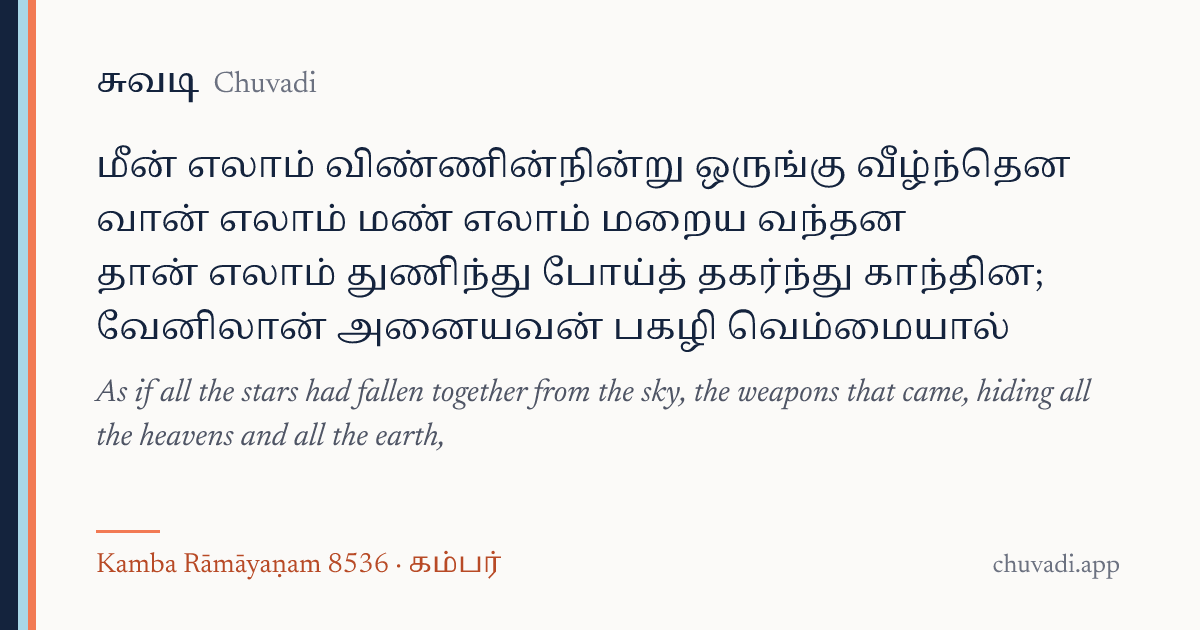
வான் எலாம் மண் எலாம் மறைய வந்தன - (மழைக்கு இரட்டிப்பாய் அரக்கரால் வீசப்பெற்று) வான் முழுதும் மண் முழுதும் மறையுமாறு வந்தனவான படைக்கலன்கள்; வேனிலான் அனையவன் பகழி வெம்மையால் - வேனிற் காலத்துக்கு உரியவனான மன்மதனை ஒத்த பேரழகினை உடைய இலக்குவனது அம்புகளின் கடுமையால், மீன் எலாம் விண்ணின் நின்று ஒருங்கு வீழ்ந்தென - விண்மீன்களெல்லாம் விசும்பினின்றும் ஒருசேர வீழ்ந்தன எனும்படி; தான் எலாம் துணிந்து போய்த் தகர்ந்து காந்தின - அனைத்தும் துண்டுபட்டுப் பொடியாகச் சிதறி ஒளிவிட்டுக் கிடந்தன.
ஆங்கிலம் · English translationAI
Translation
- As if all the stars had fallen together from the sky,
- the weapons that came, hiding all the heavens and all the earth,
- were cut to pieces one and all, shattered, and lay glowing,
- through the heat of the arrows of the one like the god of spring.
What the poem says
The weapons fill earth and sky, but Ilakkuvaṉ's arrows cut every one of them to pieces. The glowing fragments litter the ground as if all the stars had fallen at once.
Ilakkuvaṉ is compared to Kāmaṉ, the handsome god of love, whose season is spring; the comparison stresses his beauty even in the heat of battle.