



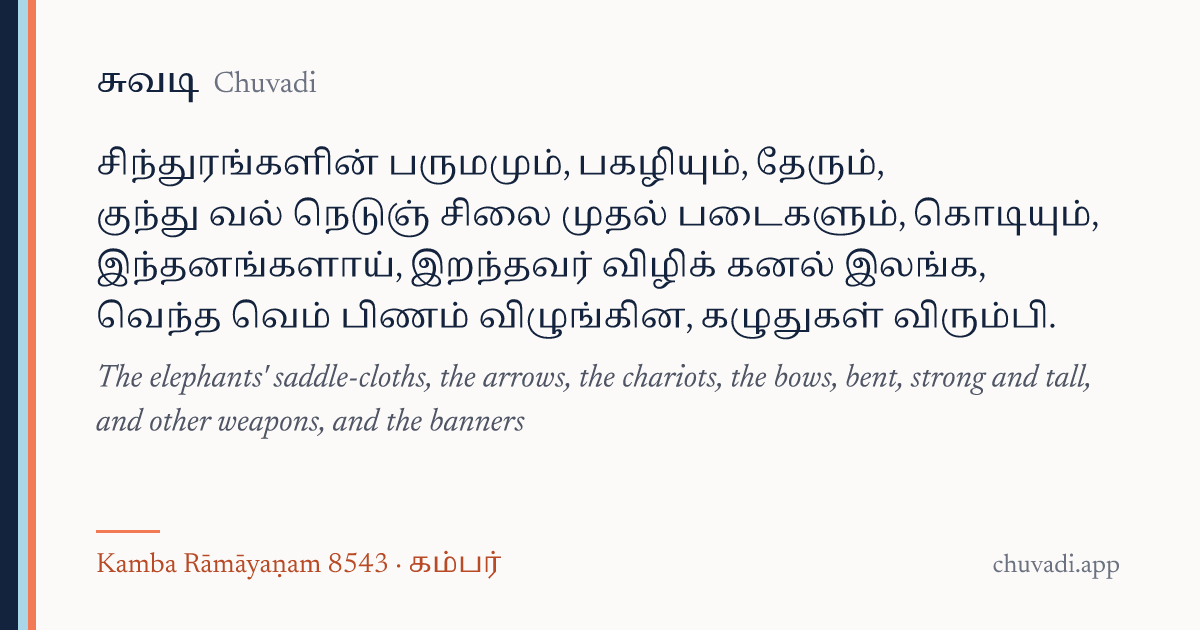
கம்பராமாயணம் 8543 · யுத்த 21.56
பாடல் · The poem
Tap a word to see its gloss in the commentary and where else it occurs.
பொருள் · Meaning in Tamil
சிந்துரங்களின் பருமமும் பகழியும் தேரும் - யானைகளின் மேல் இடும் தவிசும், அம்புகளும் தேரும்; குந்துவல் நெடுஞ்சிலை முதல் படைகளும் கொடியும் - வளைந்த வலிய நெடிய வில் முதலிய படைகளும், கொடியும்; இந்தனங்களாய் - விறகுகளாக (அமைய) இறந்தவர் விழிக்கனல் இலங்க - இறந்த வீரர்களுடைய (சினம் மிக்க) கண்களாகிய தீ (கொழுந்து விட்டு) விளங்க; வெந்த வெம்பிணம் கழுதுகள் விரும்பி விழுங்கின - வெந்தன போன்ற வெம்மையுடைய பிணங்களைப் பேய்கள் விரும்பி விழுங்கின.
போர்க்களத்தில் பகைவரைக் காணுந்தோறும் சினம் மிகுந்து வீரர்கள் விழியில் தீப்பொறி பறக்கும். எனவே பருமம், பகழி முதலானவற்றை விறகாக்கி, வீரர்கள் விழி நெருப்பினை அதனை எரிக்கும் அனலாக்கினார்; இஃது இயைபுருவகம் என்னும் அணியாம்.
ஆங்கிலம் · English translationAI
Translation
- The elephants' saddle-cloths, the arrows, the chariots,
- the bows, bent, strong and tall, and other weapons, and the banners
- became firewood; and with the fire of the dead men's eyes blazing,
- the ghouls eagerly swallowed the hot, roasted corpses.
What the poem says
The poet builds an extended metaphor of a cooking fire. The broken saddle-cloths, arrows, chariots, bows and banners are the firewood.
The fire is the blaze that still burns in the eyes of the dead warriors, who glared with rage until the end. On this fire the corpses are 'roasted', and the battlefield ghouls devour them greedily.