



கம்பராமாயணம் 8584 · யுத்த 21.97
பாடல் · The poem
Tap a word to see its gloss in the commentary and where else it occurs.
பொருள் · Meaning in Tamil
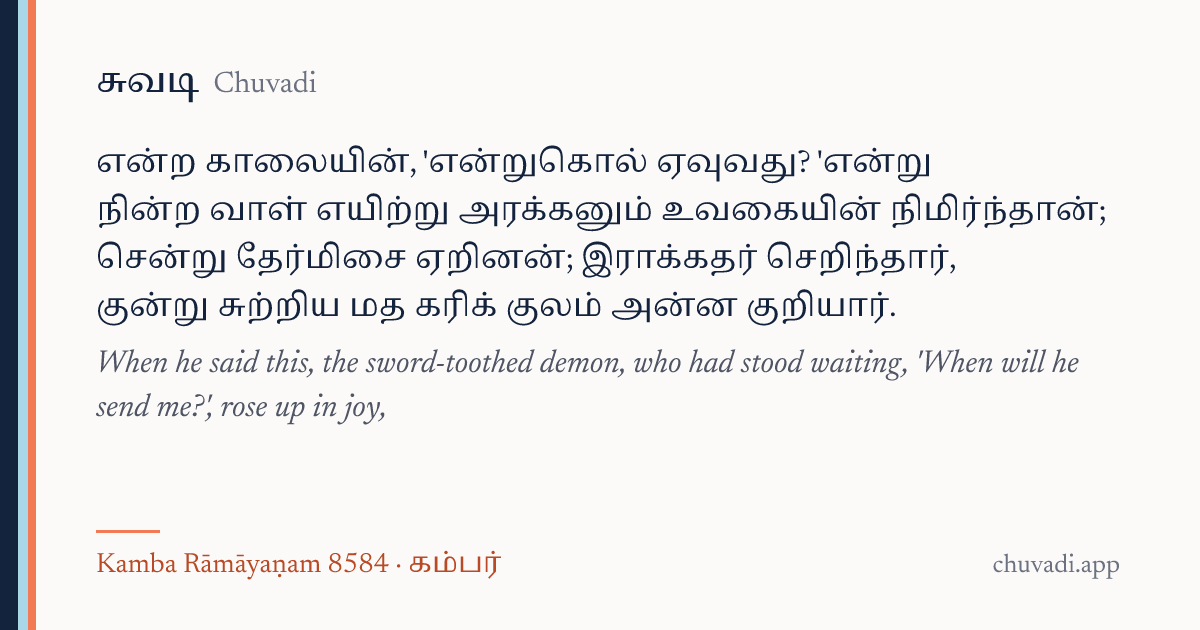
என்ற காலையின் - என்று இராவணன் கூறியபோது; என்று கொல் ஏவுவது என்று நின்ற வாள் எயிற்று அரக்கனும் - (மன்னன் என்னைப் போர் மேல் ஏவுவது எந்தநாளோ? என ஆவலுடன் எதிர்பார்த்து நின்ற வாள் போலும் (கோரப்) பற்களை உடைய அரக்கனான மகோதரனும்; உவகையின் நிமிர்ந்தான் - மகிழ்ச்சியினால் தலை நிமிர்ந்து; சென்று தேர்மிசை ஏறினன் - போய்த் தேர் மீது ஏறி அமர்ந்தான்; குன்று சுற்றிய மதகரிக் குலம் அன்ன குறியார் - மலையைச் சூழ்ந்து நின்ற மதம் செறிந்த யானைக் கூட்டத்தை ஒத்த தன்மை உடையவரான; இராக்கதர் செறிந்தார் - அரக்கர்கள் (அம்மகோதரனை புடை சூழ்ந்து நெருங்கினார்கள்.
பெரு வீரர்களான கும்பகர்ணன், அதிகாயன் முதலானோர் இறந்தும், இந்திரசித்து புறங்காட்டியும் நின்ற காலத்திலும், “மன்னன் தன்னைப் போருக்கு என்று ஏவுவான்” என மகோதரன் ஏங்கி நின்றது அவனுக்குள்ள அரச பக்தியையும், வீரப்பண்பினையும் எடுத்துக் காட்டுவதாக அமைகின்றது.
ஆங்கிலம் · English translationAI
Translation
- When he said this, the sword-toothed demon, who had stood waiting,
- 'When will he send me?', rose up in joy,
- went and mounted his chariot; and the demons crowded round him,
- like herds of rutting elephants surrounding a hill.
What the poem says
Makōtaraṉ, with teeth like swords, has long been waiting for the king to send him into battle. He is delighted and climbs straight into his chariot, and the demon army gathers around him like herds of elephants in rut surrounding a mountain.
The commentary observes that even after heroes such as Kumpakaruṇaṉ and Atikāyaṉ have died and Intiracittu has seemingly retreated, Makōtaraṉ is still eager to fight. It reads this as proof of his loyalty to his king and his warrior spirit.