



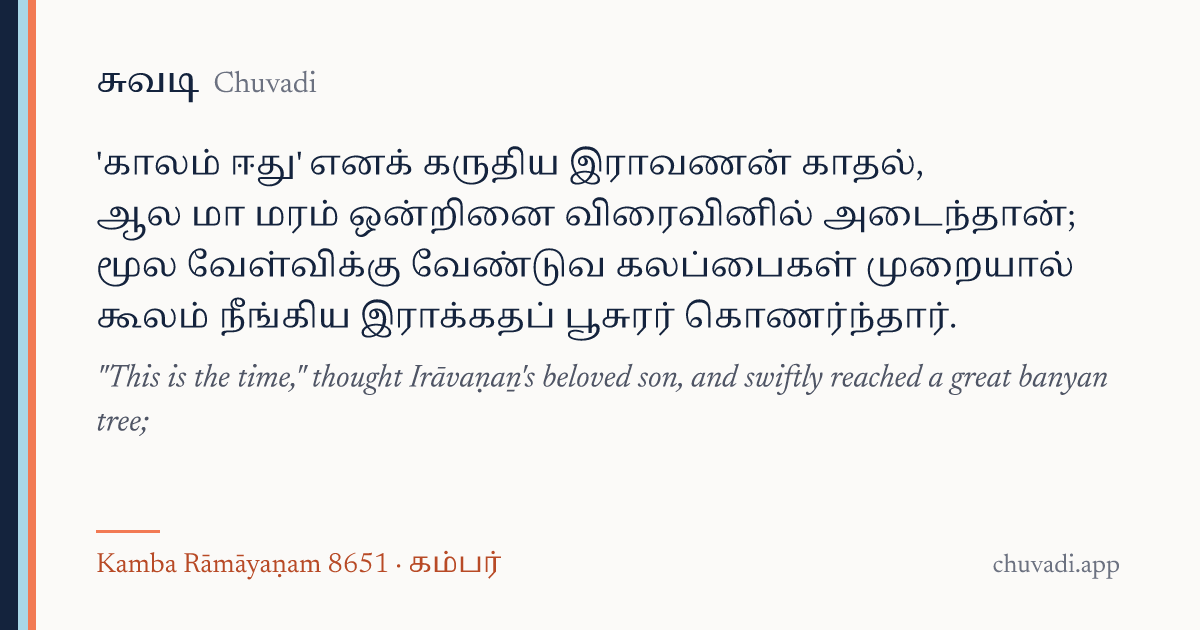
கம்பராமாயணம் 8651 · யுத்த 21.164
பாடல் · The poem
Tap a word to see its gloss in the commentary and where else it occurs.
பொருள் · Meaning in Tamil
“காலம் ஈது” எனக் கருதிய இராவணன் காதல் - (தான் பிரமாத்திரம் விடுவதற்குரிய) காலம் இதுவே என எண்ணிய இராவணன் மகனாகிய இந்திரசித்து; ஆலமா மரம் ஒன்றினை விரைவினில் அடைந்தான் - பெரியதோர் ஆலமரத்தின் அடியிடத்தை விரைவாகச் சென்றடைந்தான்; கூலம் நீங்கிய இராக்கதப் பூசுரர்- ஒழுக்க நெறியை விட்டு விலகிய அரக்கர் குல வேதியர்கள்; மூலவேள்விக்கு வேண்டுவ - முதன்மையுடைய வேள்விக்கு வேண்டியவையான; கலப்பைகள் முறையால் கொணர்ந்தார் - கருவிகளை முறைப்பட (அவ்விடத்திற்குக்) கொண்டு சேர்த்தார்கள்.
இராவணன் காதல் - இராவணனுடைய அன்பிற்குரிய மகன். இங்குக் காதல் என்னும் சொல் ஆகு பெயராய் அன்பு செய்தற்குரிய மகன் என்னும் பொருளை உணர்த்திற்று. அசுவத்தாமன் பாண்டவரைக் கொல்லவேண்டி ஆலமரத்தடியில் வேள்வி செய்தான் என்பதனை, “அந்நெடு மாமறை ஆல மரத்திடை அழி சேனை, இன்னுயிர் பெற்றிடும் வகைகொடு மீளவும் இகல்வேனென்று, உன்னி (வி.பார.18 ஆம் போர் 102) எனப் பாரதம் கூறும். கூலம் - கரை, எல்லை, இங்கு ஒழுக்கம் என்ற பொருளில் வந்தது. அருமறை ஓதி உலகிற்கு அறவழி காட்ட வேண்டிய வேதியர், இரக்கமென்பதொன்றில்லா அரக்கர்க்குத்துணை நின்று அறத்திற்குப் புறம்பாய் வேள்வி செய்தலின் கூலம் நீங்கிய இராக்கதப் பூசுரர் எனப்பட்டனர் “பார்ப்பான் பிறப்பொழுக்கம் குன்றக் கெடும்” என்பது வள்ளுவர் வாக்கு. கூலம் நீங்கிய பூசுரர் என்னாது இராக்கதப் பூசுரர் என்றதால் அசுர குருவாகிய வெள்ளியைப் போல இவர்கள் அரக்க சாதிப் புரோகிதர் என்பது கருத்து.
ஆங்கிலம் · English translationAI
Translation
- "This is the time," thought Irāvaṇaṉ's beloved son,
- and swiftly reached a great banyan tree;
- the things required for the chief sacrifice, the implements, in due order,
- the rākṣasa priests, who had cast off all bounds, brought there.
What the poem says
Seeing his chance, with Irāmaṉ and Vīṭaṇaṉ both away, Intiracittu goes to a great banyan tree to perform a sacrifice that will give power to the Brahmā weapon, the ultimate weapon he is about to use.
The commentary compares Aśvatthāman's sacrifice under a banyan tree in the Tamil Mahābhārata. The rākṣasa priests are called men who have 'left the shore', that is, abandoned right conduct, since they serve cruelty instead of dharma. It cites the Tirukkuṟaḷ: a brahmin is ruined when he falls from right conduct.