



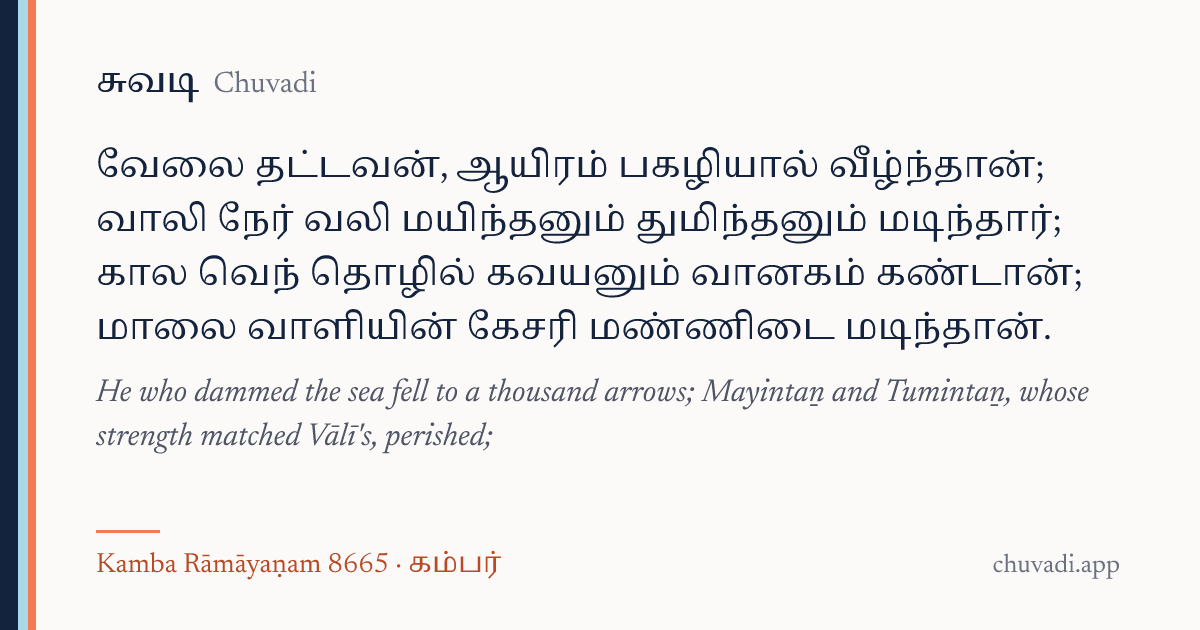
கம்பராமாயணம் 8665 · யுத்த 21.178
பாடல் · The poem
Tap a word to see its gloss in the commentary and where else it occurs.
பொருள் · Meaning in Tamil
வேலை தட்டவன், ஆயிரம் பகழியால், வீழ்ந்தான் - கடலை அணை கட்டித் தடுத்தவனாகிய நளன் ஆயிரம் அம்புகளால் வீழ்ந்து இறந்தான்; வாலி நேர் வலி மயிந்தனும் துமிந்தனும் மடிந்தார் - வாலியை ஒத்த வலிமை வாய்ந்த மயிந்தன் என்பானும் (அவன் தம்பி) துமிந்தனும் ஒருசேர மாண்டனர் காலவெந்தொழில் கவயனும் வானகம் கண்டான் - காலனையொத்த கொடுந்தொழிலை உடைய கவயன் என்பவனும் (உயிர்துறந்து) வானகம் சேர்ந்தான்; மாலை வாளியின் கேசரி மண்ணிடை மடிந்தான் - மாலை போன்று (தொடர்ச்சியாக) வந்த அம்புகளால் கேசரி என்பான் நிலத்தில் வீழ்ந்து இறந்தான்.
தட்டவன் - (கடலை மலைகளைக் கொண்டு அணைகட்டித்) தடுத்தவனாகிய நளன். “தட்டோரம்ம விவண் தட்டோரே” எனவரும் புறப்பாடல் (18) காணத்தக்கது. வாலி நேர்வலி - வாலியை யொத்தவலிமை; காலவெந்தொழில் - காலனைப் போலக் கொன்று குவிக்கும் தொழில். மாலைவாளி - மாலைபோன்று தொடர்ச்சியாக வந்த அம்புகள்.
ஆங்கிலம் · English translationAI
Translation
- He who dammed the sea fell to a thousand arrows;
- Mayintaṉ and Tumintaṉ, whose strength matched Vālī's, perished;
- Kavayaṉ too, of deeds as cruel as Death's, beheld the heavens;
- and Kēcari, by a garland of arrows, fell dead upon the earth.
What the poem says
More heroes fall. Nalaṉ, who built the causeway across the sea to Ilaṅkai, is killed by a thousand arrows. The brothers Mayintaṉ and Tumintaṉ, as strong as Vālī, die together, along with Kavayaṉ. Kēcari, Aṉumaṉ's father, falls under arrows that come in an unbroken line like a garland.
The commentary links the phrase 'he who dammed' to a Puṟanāṉūṟu poem that praises kings who dammed waters.