



கம்பராமாயணம் 867 · பால 13.63
பாடல் · The poem
Tap a word to see its gloss in the commentary and where else it occurs.
பாட வேறுபாடு · Project Madurai reads
பொருள் · Meaning in Tamil
நிறைமதி - கலைகள் நிரம்பிய சந்திரனின்; தோற்றம் கண்ட - எழுச்சியைக் கண்ட; நீல்நெடுங் கடலிற்று ஆகி - நீல நிறமான கடலின் தன்மையுடையதாக; அறைபறை துவைப்ப - அடிக்கப்படுகின்ற வாத்தியங்கள் முழங்க; ஆனையும் தேரும் - யானையும் தேர்களும்; ஆடல் மாவும் - வெற்றி வாய்ந்த குதிரைகளும்; கறை கெழு வேல் - குருதிக் கறை படிந்த வேல்போன்ற; கணாரும் - கண்களையுடைய மகளிரும்; மைந்தரும் - காளையரும்; கவினி - அழகாகக் கூடி; ஒல்லை - விரைவாக; நெறியிடைப் படர - வழியிலே செல்லவும்; வேந்தன் நேய மங்கையர் - தசரதனின் அன்புக் குரிய பெண்கள்; எழுந்தார் - புறப்பட்டார்கள்.
நிறைமதி தோன்றக் கடல் பொங்கியொலிக்கும். ஆதலால், ஆரவாரிக்கின்ற சேனைகளுக்கு ஒப்புக் கூறப் பெற்றது. நிறைமதியின் தோற்றம் கண்ட கடல்போல வாத்தியங்கள் முழங்க நால்வகைப் படையும், மகளிரும், மைந்தரும் முன்னே செல்லத் தசரதனின் உரிமை மனைவியர் பின்னே சென்றனர் என்பது.
ஆங்கிலம் · English translationAI
Translation
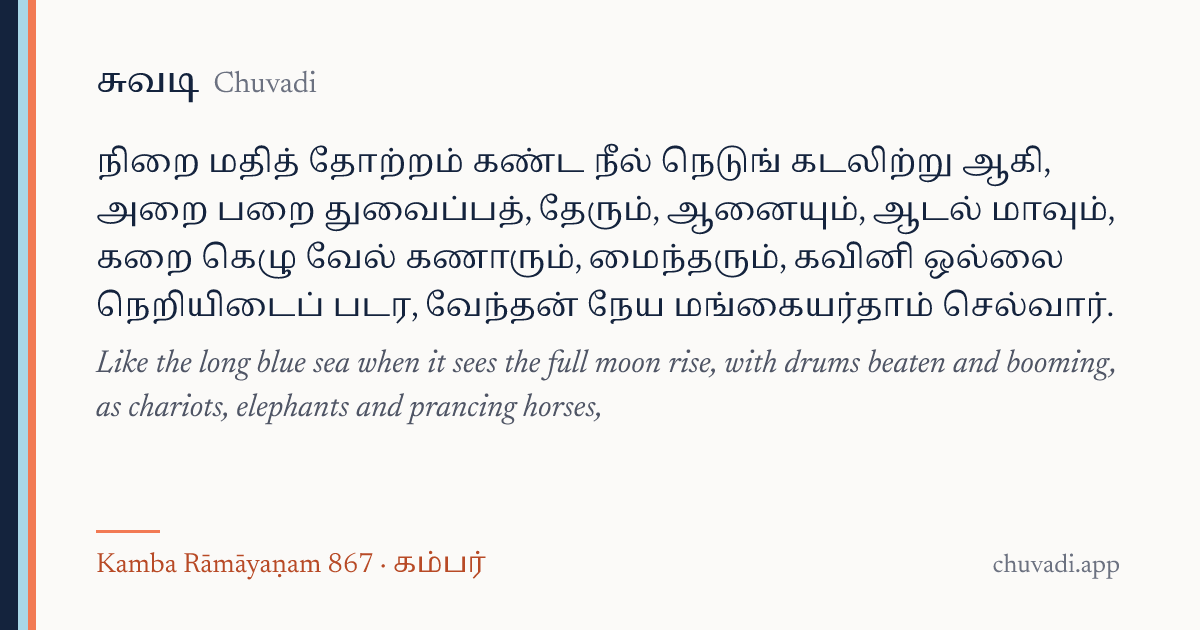
- Like the long blue sea when it sees the full moon rise,
- with drums beaten and booming, as chariots, elephants and prancing horses,
- women with eyes like blood-stained spears, and young men, gathered in splendour,
- hurried along the road, the king's beloved women set out.
What the poem says
With the whole army, the women and the young men surging ahead like the sea swelling at full moon, and drums booming, Tacarataṉ's own wives now set out at the rear of the procession.
The next verses describe each of the queens in turn.