



கம்பராமாயணம் 868 · பால 13.64
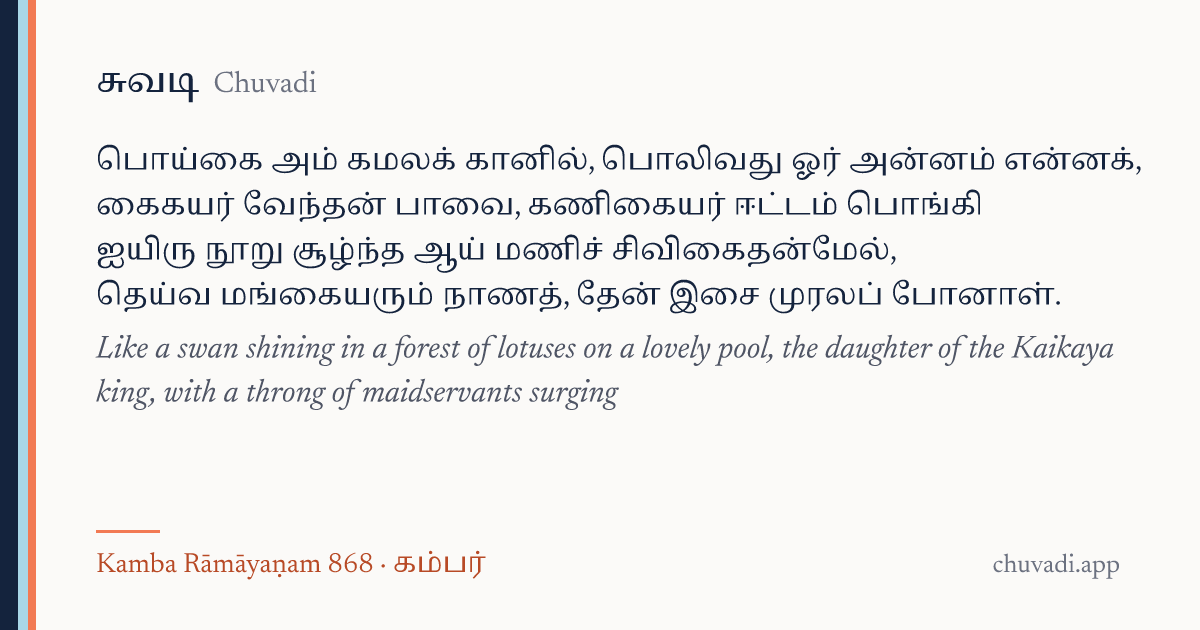
பாடல் · The poem
Tap a word to see its gloss in the commentary and where else it occurs.
பொருள் · Meaning in Tamil
பொய்கை - தடாகத்தின்; அம் கமலக் கானில் - (மலர்ந்த) அழகிய தாமரைக் காட்டிலே; பொலிவது - விளங்குகின்ற; ஓர் அன்னம் என்ன - அன்னப் பறவை போல; கைகயர் வேந்தன் பாவை - கேகய அரசனின் மகளாகிய கைகேயி; கணிகையர் ஈட்டம் - பணிப் பெண்களின் கூட்டம்; பொங்கி ஐ இரு நூறு சூழ - எழுச்சியோடு ஆயிரவர் தன்னைச் சூழ்ந்து வர; தெய்வ மங்கையரும் நாண - தெய்வப் பெண்களும் (தன் சிறப்பைக் கண்டு) வெட்கம் அடையவும்; தேன் இசை முரல - வண்டுகள் இசையோடு பாடவும்; ஆய்மணி - ஆராய்ந்து பதிக்கப்பட்ட மணிகளால் செய்யப் பெற்ற; சிவிகைதன் மேல் - பல்லக்கிலே; போனாள் - சென்றாள்.
கணிகையர் சூழச் செல்லும் கைகேயிக்குக் கமலத் தடாகத்தில் பொலியும் அன்னம் உவமையாயிற்று.
ஆங்கிலம் · English translationAI
Translation
- Like a swan shining in a forest of lotuses on a lovely pool,
- the daughter of the Kaikaya king, with a throng of maidservants surging
- around her, ten times a hundred, rode in a palanquin of choice gems,
- while even goddesses felt shame and the bees hummed their music.
What the poem says
Kaikēyi, daughter of the king of the Kaikayas and Tacarataṉ's favourite queen, travels in a jewelled palanquin surrounded by a thousand attendants.
Among them she looks like a swan in a pond full of lotuses, so splendid that the goddesses of heaven are put to shame. Later in the epic it is Kaikēyi who will have Irāmaṉ sent into exile.