



கம்பராமாயணம் 8672 · யுத்த 21.185
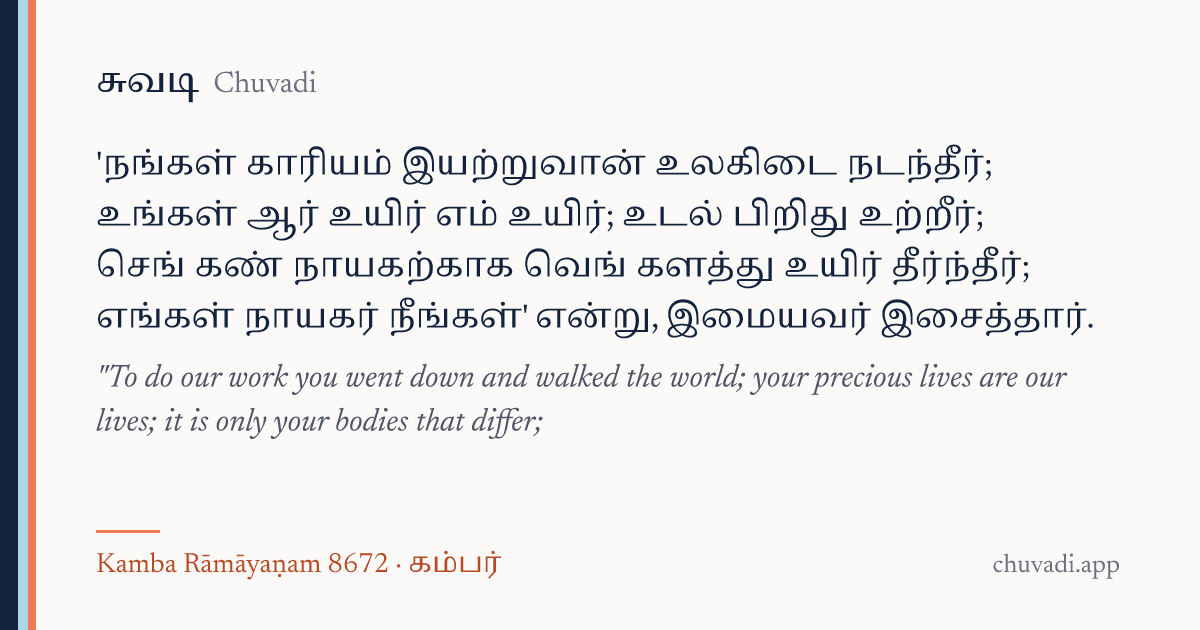
பாடல் · The poem
Tap a word to see its gloss in the commentary and where else it occurs.
பாட வேறுபாடு · Project Madurai reads
பொருள் · Meaning in Tamil
நங்கள் காரியம் இயற்றுவான் - (தேவர்களாகிய) நம்முடைய செயல்களை நிறைவேற்றுதற்காக; உலகிடை நடந்தீர் - நிலவுலகில் சென்று பிறந்தீர்கள்; உங்கள் ஆர் உயிர் எம் உயிர் - உங்களுடைய அரிய உயிர் எம்முடைய உயிரே; உயிர் பிறிது உற்றீர்- உடம்பு (மட்டும்) வேறாகப் பெற்றுள்ளீர்கள்; செங்கண் நாயகற்காக - (தாமரைபோலும்) சிவந்த கண்களை உடைய இராமபிரான்பொருட்டு; வெங்களத்து உயிர் தீர்ந்தீர் - கொடுமை மிக்க போர்க்களத்தில் உயிர் நீங்கப் பெற்றீர்; எங்கள் நாயகர் நீங்கள்” - எம்முடைய இறைவர் நீங்களே; என்று இமையவர் இசைத்தார் - என்று தேவர்கள் (வானரவீரரைப் புகழ்ந்து பாராட்டினர்.
ஆங்கிலம் · English translationAI
Translation
- "To do our work you went down and walked the world;
- your precious lives are our lives; it is only your bodies that differ;
- for the red-eyed Lord you have given your lives on the cruel field;
- you are our lords," so the immortals declared.
What the poem says
The gods praise the monkeys. The monkeys went to earth to carry out the gods' own purpose, the destruction of Irāvaṇaṉ. In the epic tradition the monkey heroes are gods born in monkey form.
The gods say their lives are one with the monkeys' lives and only the bodies differ. Because the monkeys have died for Irāmaṉ, the gods call them their own lords.