



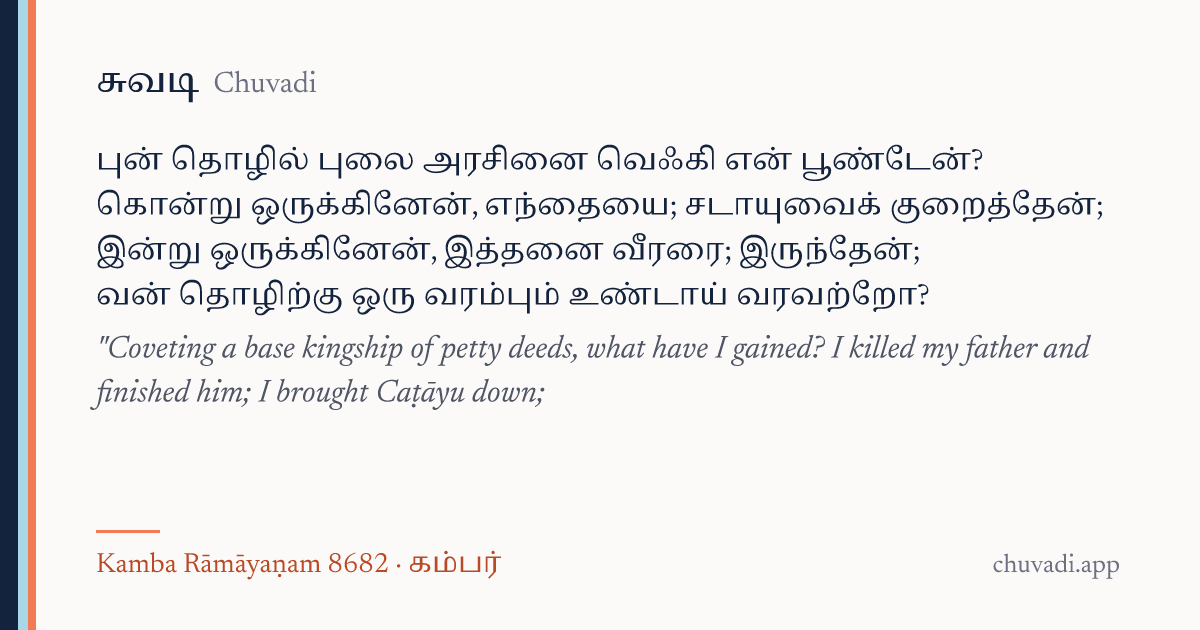
கம்பராமாயணம் 8682 · யுத்த 21.195
பாடல் · The poem
Tap a word to see its gloss in the commentary and where else it occurs.
பொருள் · Meaning in Tamil
புன் தொழில் புலை அரசினை - சிறுமையான செயலால் இழிந்த அரச பதவியினை; வெஃகி என் பூண்டேன் - விரும்பி என்ன (பெறுதற்கரிய பேற்றினைப்) பெற்று விட்டேன்? எந்தையைக் கொன்று ஒருக்கினேன் - (அதனால்) என் தந்தையைக் கொன்றழித்தேன்; சடாயுவைக் குறைத்தேன் - (என்தந்தைக்குச் சமமான சடாயுவை வீழ்த்தினேன்; இத்தனை வீரரை இன்று - (இப்போர்க்களத்தில்) இத்தனை வானரவீரர்களையும் இன்று; ஒருக்கினேன் இருந்தேன் - உயிர் நீங்கச் செய்தேனாய் (நான்மட்டும் உயிர் தாங்கி) இருந்தேன்; வன்தொழிற்கு - (இத்தகைய என்னுடைய) கொடிய செயல்களுக்கு; ஒருவரம்பும் உண்டாம் வரவற்றோ? - ஓர் எல்லையும் உண்டாகி அமையவல்லதோ? (இல்லை என்றபடி).
'புன்தொழிலால் புலைத்தன்மையை உடைய அரசு' எனக் கூட்டிப் பொருள் கொண்டால், ஆளுவோன் தன்னால் ஆளப் பெறுகின்ற உயிர் வர்க்கங்களின் வினைப்பந்தங்களில் தானும் தொடர்புடையவனாக நிற்றலால் புன் தொழிலாகவும், அரச செல்வம் பொறிபுலன்களுக்கேற்ற போக நுகர்ச்சிகளை வேண்டிய வண்ணம் கொடுக்கும் தன்மையதாகலின் புலைத் தன்மையதாகவும் கொண்டு பொருள்கொள்ளலாம். அங்ஙனமின்றி, புலை அரசினை வெஃகுதலாகிய புன் தொழில்' எனக் கூட்டியும் பொருள்கொள்ளலாம். தான் அரசினை ஏற்க ஒப்பியதை இங்ஙனம் பல்வேறு இடங்களிலும் இராமன் கடிந்து கூறிக் கொள்வதை நூலின் பிற பகுதிகளிலும் காணலாம்.
ஆங்கிலம் · English translationAI
Translation
- "Coveting a base kingship of petty deeds, what have I gained?
- I killed my father and finished him; I brought Caṭāyu down;
- today I have finished all these heroes; and I live on;
- is there to be no limit set to my cruel deeds?"
What the poem says
Irāmaṉ blames himself for every death. Because he once agreed to accept the throne, his father Tacarataṉ died of grief when he was exiled. Caṭāyu, the old vulture who was like a father to him, died defending Cītai. Now his allies lie dead for his sake, while he alone lives.
The commentary discusses why kingship is called base and its work petty. A ruler shares in the karma of those he rules, and royal wealth feeds the senses. It notes that Irāmaṉ often reproaches himself for having agreed to be crowned.